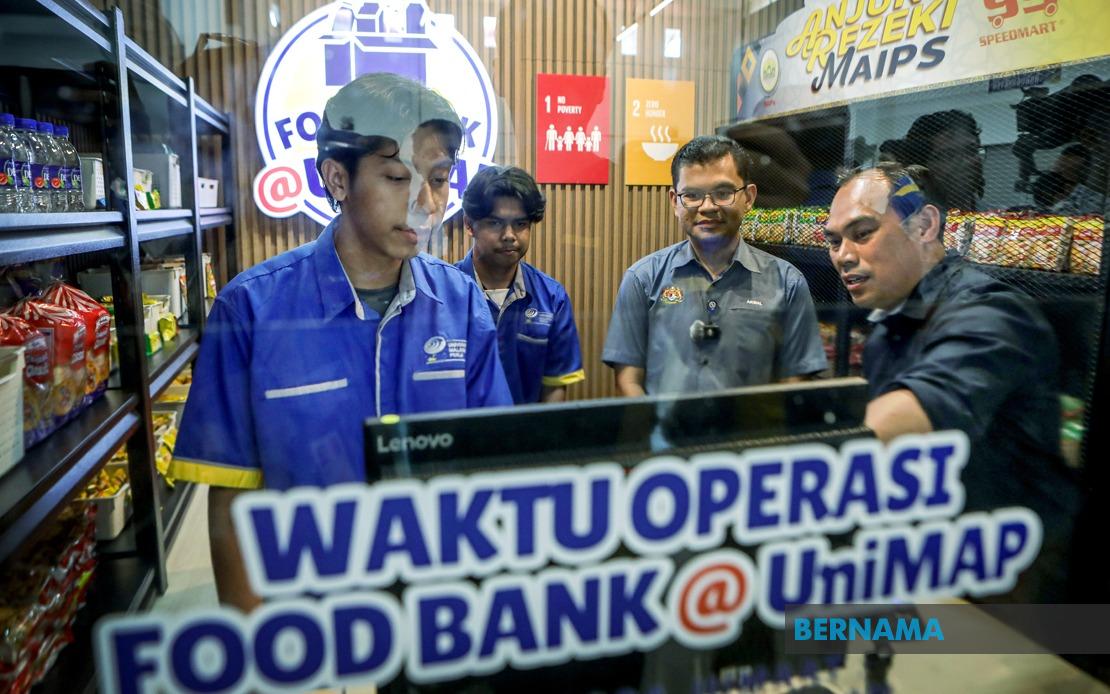
Malaysia's Economy Ministry has moved to extend the People's Income Initiative – Food Entrepreneur Initiative, known as IPR-INSAN, following evidence that the scheme delivers substantial benefits to low-income food vendors and consumers across university campuses. Economy Minister Akmal Nasrullah Mohd Nasir announced the decision during a visit to Universiti Malaysia Perlis on July 10, indicating that the ministry intends to petition the Ministry of Finance to prolong the programme beyond its current timeframe.
The IPR-INSAN initiative represents a targeted intervention designed to create sustainable income opportunities for business owners classified as B40 – Malaysia's bottom forty percent income bracket – while simultaneously providing university students with affordable meal options. By positioning vending machines as the distribution channel, the scheme tackles two concurrent challenges within the higher education ecosystem: entrepreneur financial vulnerability and student food affordability. This dual-benefit model aligns with broader government poverty-alleviation strategies that emphasize technology-driven solutions for income generation among marginalised economic groups.
During his campus visit, Akmal Nasrullah directly observed the programme's implementation at Universiti Malaysia Perlis, where two vending machine installations operate within student residential colleges. The minister examined both the operational mechanics of the entrepreneurship initiative and complementary welfare provisions, including the campus Food Bank and MADANI Dapur Siswa (student kitchen). This hands-on assessment allowed the minister to evaluate the programme's grassroots effectiveness rather than relying solely on administrative reports, providing evidence-based justification for the ministry's extension request to the finance authorities.
The revenue outcomes documented by UniMAP demonstrate the income-generation potential embedded within the vending machine model. Norleyana Nordin, operating from Tuanku Abdul Rahman Residential College, achieved average monthly sales of RM2,178.80, with a peak monthly figure of RM4,905 recorded in January. At the neighbouring Tuanku Tengku Fauziah Residential College, entrepreneur Noor Hasfalela Mohd Noor recorded notably higher average monthly sales of RM4,595, reaching RM10,012 at its January apex, followed by RM5,049 in February 2026 and RM4,868 in April 2026. These figures suggest that monthly income trajectories remain volatile but broadly substantial, providing entrepreneurs with revenue streams capable of supporting household expenses and potentially funding business reinvestment.
The programme's viability hinges on reducing entrepreneurial barriers that traditionally exclude low-income individuals from accessing commercial distribution networks. Campus vending machine placement eliminates several conventional obstacles: the financial burden of establishing permanent retail premises, the operational complexity of managing brick-and-mortar locations, and the logistical constraints of reaching geographically dispersed customers. Instead, the technology-enabled approach allows home-based food producers to scale their output systematically while maintaining minimal overhead, thereby preserving profit margins that might otherwise be consumed by rental and administrative costs.
For university populations, the initiative addresses documented food insecurity challenges affecting student cohorts, particularly those from economically disadvantaged backgrounds. By providing prepared meals at prices substantially below commercial campus food courts or external restaurant options, the vending machines enable students to allocate limited meal budgets more efficiently. This downstream benefit extends beyond individual student welfare, potentially improving academic performance and retention rates by reducing the psychological and physical stress associated with inadequate nutrition.
The extension request signals ministerial confidence in the IPR-INSAN model's scalability and replicability across Malaysia's university ecosystem. With the country operating numerous public and private tertiary institutions, each hosting student populations numbering in the thousands, the potential market for campus-based vending machines remains substantial and largely unexploited. Should the Ministry of Finance approve the extension, subsequent phases could involve expanding machine placements to additional campuses, diversifying product offerings beyond prepared foods, or introducing mentorship components that strengthen participants' business management capabilities.
Challenges to programme sustainability nevertheless warrant consideration. Product quality consistency, food safety compliance, and inventory management represent operational variables that could compromise participant viability if inadequately addressed. The seasonal nature of academic calendars may generate revenue fluctuations during semester breaks when student campus populations diminish. Competitive dynamics with established campus food vendors might also provoke resistance from stakeholders perceiving the initiative as market-disruptive. The ministry will likely need to implement robust quality assurance protocols and seasonal revenue stabilisation mechanisms if extension approval materialises.
For policymakers examining the programme's efficacy, the IPR-INSAN model offers valuable insights into technology-mediated poverty reduction strategies. Rather than direct income transfers, the scheme positions entrepreneurs as active economic agents while leveraging existing campus infrastructure to create market access. This approach resonates with current global development thinking that emphasizes employment creation and entrepreneurial capability-building over passive welfare provision, particularly as Southeast Asian economies navigate structural labour market changes.
The participation of Universiti Malaysia Perlis in hosting and documenting the initiative reflects a broader engagement by Malaysia's higher education sector in addressing regional economic inequality. Universities increasingly function as community economic anchors, and embedding social entrepreneurship programmes within campus environments positions institutions as vehicles for poverty alleviation whilst benefiting student populations. This institutional collaboration model could potentially be adapted across other campus settings, creating replicable templates for analogous initiatives targeting different entrepreneur demographics or consumer groups.
Looking forward, the ministry's extension petition represents a critical decision point for the programme's long-term trajectory. Finance ministry approval would signal sustained government commitment to income-generation initiatives targeting B40 populations and validate the vending machine distribution model as a viable intervention mechanism. Conversely, disapproval might necessitate programme restructuring or pivot toward alternative delivery mechanisms. The outcome will likely influence policy thinking regarding technology-enabled entrepreneurship schemes across Malaysia's broader poverty-reduction framework.

