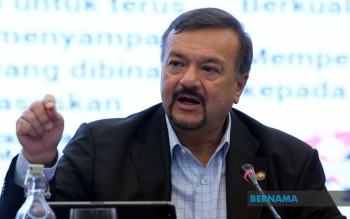
Malaysia's economic momentum is building momentum even as geopolitical tensions and trade uncertainties roil global markets, Finance Minister II Datuk Seri Amir Hamzah Azizan revealed at a policy briefing in Putrajaya. The southeast Asian nation is posting consecutive quarters of robust expansion, with the latest figures suggesting the economy is accelerating rather than slowing as external risks mount. This trajectory underscores how strategic policy intervention and domestic demand are insulating the country from the volatility affecting larger trading partners.
The numerical evidence tells a compelling story of consistency paired with acceleration. After expanding 5.2 per cent throughout 2024 and maintaining that pace in 2025, gross domestic product growth jumped to 5.4 per cent in the first quarter of this year. More significantly, the preliminary estimate for the second quarter stands at 5.8 per cent, bringing the average growth rate so far in 2025 to 5.6 per cent. These figures position Malaysia well above many peer economies and suggest the economy is shifting into a higher gear precisely when global conditions are most uncertain.
What renders this performance particularly noteworthy is the backdrop against which it is occurring. The world is contending with escalating trade frictions—most notably the United States trade tensions that dominated discourse throughout 2024—alongside persistent instability in West Asia. Emerging markets typically face headwinds during such periods as investors flee to safe havens and supply chains become disrupted. Yet Malaysia is navigating these obstacles while maintaining upward momentum, indicating that the underlying fundamentals remain sound and that policy frameworks are effectively buffering the economy from external shocks.
Amir Hamzah attributed this resilience to the systematic implementation of the MADANI Economy Framework, which has moved beyond theoretical articulation into tangible programmes generating measurable economic impact. The government's commitment to this comprehensive economic agenda is manifesting through concrete initiatives that are reshaping how capital, talent, and technology flow through the Malaysian economy. The Finance Minister's confidence that the framework is delivering results suggests policymakers have correctly identified and addressed the structural constraints that previously limited growth potential.
The GEAR-uP programme emerges as a cornerstone of this approach, channelling RM120 billion in domestic direct investment across the 2024-2028 period. Led by the Ministry of Finance, this initiative represents a deliberate pivot toward mobilising domestic capital and capabilities rather than relying solely on foreign investment flows. In an era of rising geopolitical risk and supply chain fragmentation, this self-reliance strategy makes considerable strategic sense. The programme's architecture explicitly targets gaps in Malaysia's industrial ecosystem, aiming to build competitive advantages that can be sustained independent of external financing conditions.
Crucially, the implementation responsibility rests with government-linked investment companies and government-linked companies—entities with deep sectoral knowledge and the capacity to move beyond simple capital allocation toward sophisticated value creation. These organisations function as more than passive investors; they serve as catalysts for industrial transformation by identifying investment opportunities that traditional market mechanisms might overlook or undervalue. Their involvement signals a recognition that merely injecting capital is insufficient; the quality and strategic placement of that capital determines whether economies graduate to higher-income status.
The Finance Minister articulated a sophisticated understanding of this distinction when he emphasised that attracting funds represents only a preliminary step. The critical measure of success lies in whether those funds translate into tangible benefits for ordinary Malaysians and generate sustainable competitive advantages for local industries. This philosophy aligns with Malaysia's long-standing objective of achieving high-income developed status—a goal that requires not simply accumulating capital but deploying it in ways that elevate productivity, build human capital, and create durable competitive positions in global markets.
The talent dimension deserves particular attention in understanding Malaysia's economic strategy. Amir Hamzah specifically highlighted how government-linked entities help Malaysian industries access skilled professionals while simultaneously attracting international expertise and capital. This approach addresses a perennial constraint in middle-income economies: the simultaneous need to develop local human capital while accessing global knowledge and investment. By positioning Malaysia as an attractive destination for skilled migrants and international investors, the government is attempting to transform the country into a node within global value chains rather than remaining peripheral.
For Malaysian readers and regional observers, the significance extends beyond headline growth figures. The country's ability to maintain expansion while others stumble creates opportunities for investment and business expansion. Companies operating in Malaysia benefit from stable macroeconomic conditions and a government actively investing in enabling infrastructure and human capital. Equally, the MADANI Economy Framework's emphasis on inclusive growth and sustainable development suggests that expansion is not concentrated among elites but distributed more broadly—a distinction that affects social stability and long-term prosperity.
The regional context further amplifies these developments' importance. As Southeast Asia navigates global economic fragmentation and repositioning, Malaysia's demonstrated capacity to grow steadily while managing external risks strengthens its position as an investment destination relative to neighbours facing greater volatility. The GEAR-uP programme and broader MADANI framework implementation serve as demonstrations of policy coherence and execution capability—qualities that matter enormously to international investors evaluating where to commit capital for the long term.
Amir Hamzah's expressed confidence in the trajectory reflects not merely optimism but assessment of tangible progress. The consistency of growth across quarters, the rising momentum evident in recent figures, and the institutional mechanisms being deployed to sustain expansion all suggest Malaysia is neither merely riding cyclical waves nor implementing temporary stimulus. Rather, the government is attempting structural transformation of how the economy functions—one that could permanently elevate growth potential and create conditions for sustained prosperity as the country progresses toward developed status.

