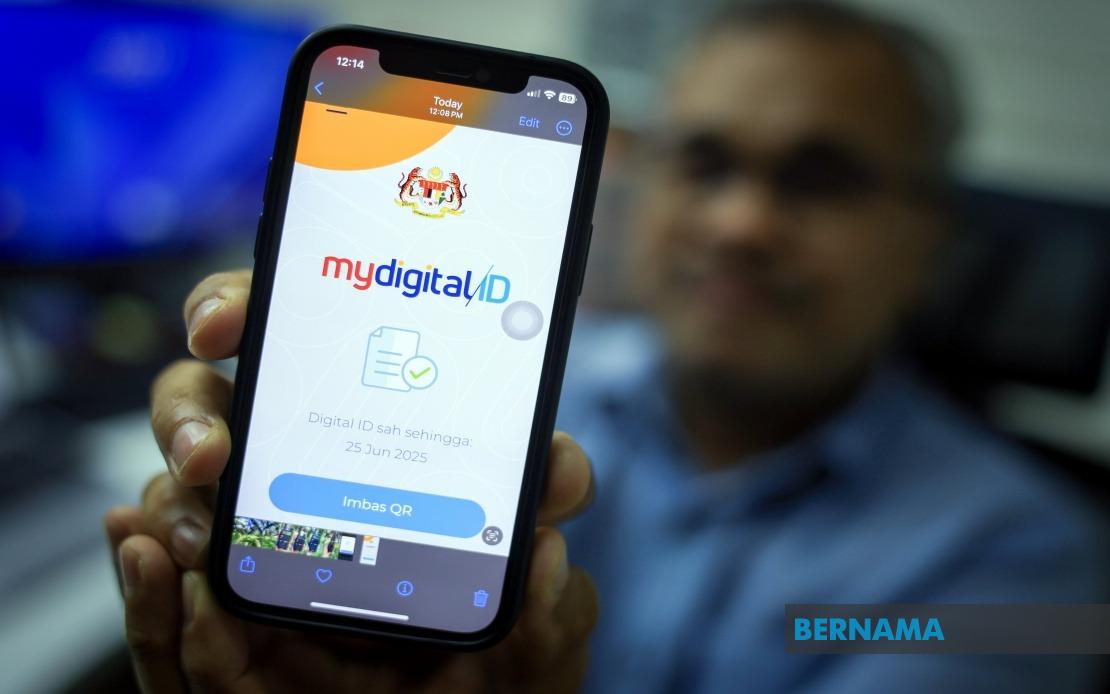
Malaysia's digital transformation initiative has crossed a significant milestone with 12 million citizens registered for MyDigital ID as of June 30, according to Deputy Prime Minister Datuk Seri Dr Ahmad Zahid Hamidi. The uptake represents a substantial commitment from the population to embrace digital authentication, with the system processing 16 million transactions encompassing registrations, renewals and cancellations since its launch. This volume of engagement signals growing public acceptance of centralised digital identity solutions, a prerequisite for the government's broader ambitions to streamline service delivery across the public sector.
The government's strategic direction has shifted decisively towards consolidating fragmented digital services into a cohesive ecosystem. Ahmad Zahid revealed that a formal directive from the Chief Secretary to the Government, issued on January 14, 2025, mandated all federal ministries, departments, statutory bodies, state secretaries and local authorities to adopt MyDigital ID as a single sign-on mechanism. This top-down approach ensures consistent implementation and removes jurisdictional barriers that previously hindered citizens attempting to access multiple government platforms using separate credentials. The directive represents a watershed moment in Malaysia's e-government journey, transforming digital identity from an optional convenience into an institutional requirement.
Integration progress demonstrates tangible progress in making the directive operational. As of June 25, 2026, the government has successfully linked 114 online services to the MyDigital ID infrastructure. These encompass widely-used platforms including MyJPJ for road transport matters, MyPTPTN for student loan administration, the SPA9 civil service recruitment portal and the Royal Malaysia Police's MyBayar payment system. Each integration represents hours of backend development, security certification and user testing, collectively reflecting substantial investment in technical capability. For ordinary Malaysians, the practical consequence is transformative: citizens can now authenticate once and access dozens of services without repeatedly entering credentials or navigating separate login systems.
The ecosystem extends beyond federal government structures into state administration, demonstrating how MyDigital ID functions as a bridge between different levels of government. Nineteen state-level applications have already integrated with the system, allowing residents to access services administered by state secretariats and local authorities through the same digital identity. This horizontal expansion across Malaysia's federal system has traditionally presented implementation challenges, yet the MyDigital ID framework appears to be overcoming historical coordination difficulties. An additional 28 state applications remain under active development, suggesting momentum will continue building throughout 2026 and potentially into 2027.
The MyGOV Malaysia platform serves as a central access point to this integrated ecosystem. Developed by the National Digital Department (JDN), MyGOV functions as a unified portal where users authenticate using MyDigital ID and subsequently navigate to desired services. This architectural approach parallels successful digital government models in Singapore and Estonia, where citizens access entire service catalogues through single authentication. For Malaysia, the model holds particular significance given the country's geographic dispersion and diverse population, many of whom struggle with multiple usernames and passwords across fragmented systems.
The implications for Malaysian citizens are far-reaching. Residents applying for business licences, renewing vehicle registrations, accessing social services or participating in government programmes can do so with minimal friction once MyDigital ID adoption becomes universal. Vulnerable populations, including elderly citizens and those with limited digital literacy, benefit substantially from simplified authentication processes and unified interfaces. Small businesses and entrepreneurs, who often interact with government systems for compliance and licensing, experience reduced administrative burden when accessing multiple services through single credentials. This efficiency dividend could indirectly improve business formation rates and regulatory compliance.
From an economic perspective, the integration strategy reduces operational costs across government agencies. Each ministry previously maintained separate authentication infrastructure, databases and cybersecurity protocols—redundant expenditure that consolidated identity systems eliminate. Freed resources can redirect toward service improvement and innovation rather than infrastructure duplication. Additionally, centralised authentication provides government planners with unprecedented visibility into service utilisation patterns, enabling data-driven decisions about which services require enhancement and where citizen demand concentrates.
Cybersecurity represents both opportunity and risk in this centralisation process. Concentrating 12 million citizens' digital identities within a single authentication ecosystem creates an attractive target for sophisticated attackers. However, properly designed centralised systems often feature stronger security than dozens of disparate platforms, each with varying security standards. The government's successful integration of 114 services without reported breaches suggests confidence in underlying technical safeguards, though continuous vigilance remains essential as the system scales.
Regional context illuminates Malaysia's positioning within Southeast Asia's digital transformation race. Singapore's SingPass and Thailand's initiatives have demonstrated competitive advantages accruing to nations that successfully integrate digital identity with service delivery. Malaysia's MyDigital ID trajectory places it favourably within regional rankings, particularly as integration accelerates through 2026. Early adoption of comprehensive digital government infrastructure positions Malaysia to attract digital enterprises and skilled professionals who value seamless administrative experiences.
The remaining challenge concerns digital divide considerations. The 12 million registered users represent approximately 44 percent of Malaysia's adult citizen population, leaving substantial segments unregistered. Rural populations, elderly demographics and economically disadvantaged groups may lack devices, internet access or technical confidence necessary for MyDigital ID adoption. Government plans to address these gaps through alternative authentication methods and community facilitation programmes will prove critical to ensuring equitable access. Without deliberate intervention, digital transformation risks deepening existing inequality rather than bridging it.
Looking ahead, the government's ambition to achieve comprehensive service integration across all government entities within defined timeframes will face technical, organisational and cultural obstacles. Legacy systems resistant to integration, inconsistent data standards across agencies and workforce training requirements all demand sustained attention. However, the documented progress—12 million registrations and 114 integrated services within a relatively compressed timeframe—suggests institutional commitment sufficient to overcome these hurdles. By establishing clear mandates and providing technical support infrastructure, the government has created conditions where integration becomes inevitable rather than aspirational.

