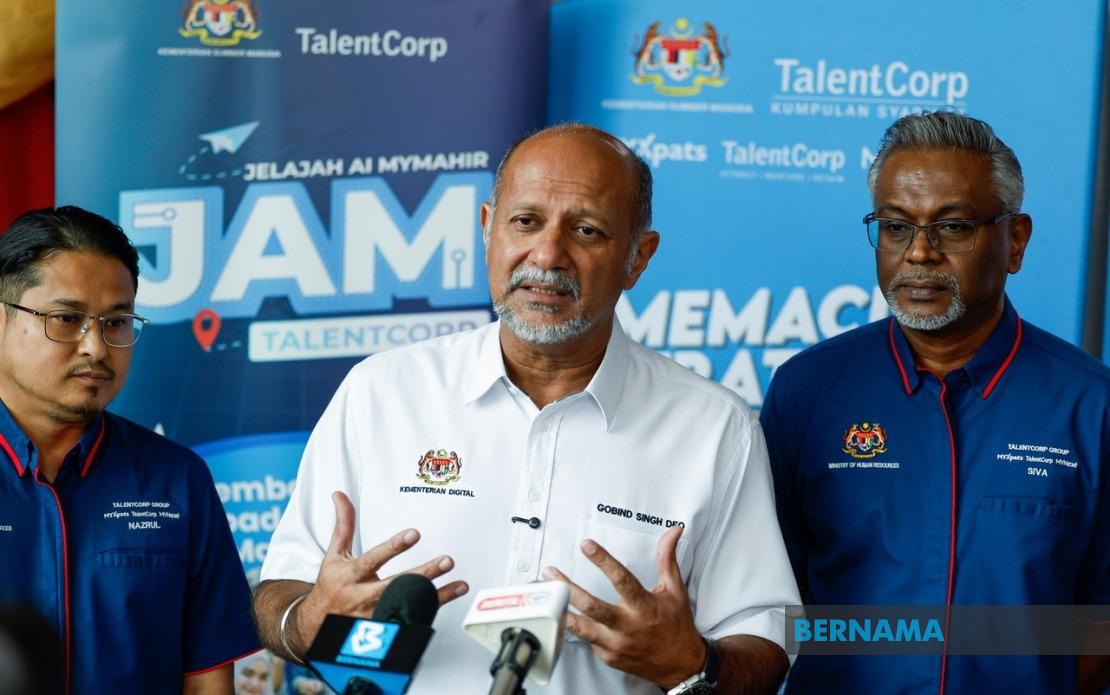
Malaysia's digital creative sector has matured into a substantial economic engine, generating more than RM92.5 billion in cumulative revenue whilst establishing itself as a significant employer across animation, games and digital content production. The sector has simultaneously attracted RM85.7 billion in direct investments and contributed RM12.1 billion to the nation's export earnings, underscoring the commercial viability of creative industries beyond their artistic merit. These figures, articulated by Digital Minister Gobind Singh Deo during the inaugural Borneo Animation and Games Festival in Kuching on August 21, reflect the sector's emergence as a critical component of Malaysia's economic diversification strategy.
The minister emphasised that Malaysia's success in developing globally recognised intellectual properties demonstrates the intersection of creative excellence and commercial opportunity. Franchises such as Upin & Ipin, Ejen Ali and Mechamato have transcended domestic boundaries, achieving international distribution and generating sustained revenue streams that extend far beyond initial content release. This trajectory illustrates how culturally rooted creative works can command premium valuations in global markets, particularly as international audiences increasingly seek content reflecting diverse perspectives and aesthetic sensibilities. The ability to export distinctly Malaysian narratives whilst maintaining universal appeal represents a competitive advantage in crowded global entertainment markets.
Government policy increasingly recognises that the creative industries cannot be evaluated solely through a cultural lens but must be understood as vehicles for economic growth and employment generation. The framing of digital content production as a source of high-value employment positions the sector alongside technology and finance as contributors to Malaysia's skilled workforce development. This recalibration has prompted federal authorities to allocate resources toward infrastructure, talent development and market access initiatives that extend beyond traditional arts funding, directing capital toward production capabilities, distribution networks and intellectual property protection.
The government has articulated an ambitious vision for the digital economy's contribution to overall GDP, targeting a 30 per cent share by 2030 whilst simultaneously committing to generate 500,000 high-value digital jobs within a four-year timeframe. These projections reflect confidence in the sector's scalability and underscore recognition that digital transformation across entertainment, business services and technology development can collectively reshape Malaysia's economic profile. Meeting these targets will require sustained investment in education, research infrastructure and competitive incentive structures that retain domestic talent whilst attracting international talent and production investment.
Sarawak has been identified as holding particular strategic importance in Malaysia's next phase of digital sector expansion. The state's distinctive cultural heritage, diverse storytelling traditions and emerging digital infrastructure position it as a potential regional hub for animation and games development. Unlike peninsular Malaysia's established production centres, Sarawak's development as a creative sector destination represents a deliberate geographic diversification strategy, potentially distributing economic benefits and employment opportunities across the nation's regions. This approach acknowledges that creative talent and production capacity need not concentrate in traditional urban centres.
The Borneo Animation and Games Festival, characterised as the region's first international event of comparable scale, serves as both a practical demonstration of Sarawak's ambitions and a platform for showcasing Southeast Asian creative work to global audiences. By establishing a festival of international standing in Borneo rather than exclusively in peninsula-based venues, Malaysian authorities signal commitment to developing creative ecosystems beyond established metropolitan areas. The festival's explicit focus on animation and games reflects deliberate sector prioritisation, given these industries' labour intensity, export orientation and potential for developing complementary services such as visual effects, character design and narrative development.
Federal-state collaboration features prominently in the minister's articulation of development strategy. Gobind Singh Deo outlined a partnership model wherein central government provides policy support and strategic guidance whilst state authorities leverage local assets and communities. This collaborative framework suggests recognition that digital sector development cannot be imposed uniformly across Malaysia's diverse regions but must accommodate local contexts, creative traditions and existing infrastructure capabilities. Sarawak's role encompasses both developing indigenous creative capacity and positioning itself as a gateway for regional talent seeking Malaysian market access and international distribution partnerships.
The government's commitment to connecting Sarawak's creative industry with opportunities across Malaysia, Southeast Asia and global markets addresses a critical challenge facing regional creative sectors: market access and distribution. Geographic isolation and smaller domestic markets have historically constrained South-east Asian creative producers' commercial potential. By explicitly facilitating connections across regional and international networks, federal policy aims to overcome these structural constraints. This approach acknowledges that creative products require robust distribution channels and audience access to realise their economic potential, suggesting government recognition extends beyond production subsidies to encompassing market development.
The strategic significance of homegrown intellectual properties reflects broader dynamics within global entertainment markets, where owned content generates superior returns compared to contract-based production work. By developing and protecting Malaysian-origin franchises, domestic producers capture value throughout the distribution chain rather than functioning primarily as service providers to international studios. This positions Malaysia differently within the regional creative ecosystem, potentially establishing the nation as an IP originator rather than merely a production cost-competitive location. The success of titles like Upin & Ipin provides evidence that Malaysian creative content can compete globally, justifying policy investments in talent development and production infrastructure.
The digital creative sector's employment generation capacity holds particular relevance for Malaysia's workforce composition and skills development priorities. The emphasis on high-value job creation reflects policy objectives that extend beyond simple employment growth to encompassing earnings quality and skill utilisation. Digital creative sectors typically employ tertiary-educated workers in technical, creative and management roles, contributing to knowledge economy development objectives. This employment profile distinguishes the sector from labour-intensive manufacturing, potentially accelerating Malaysia's transition toward higher-value economic activities.
For Southeast Asian countries observing Malaysia's sector development initiatives, the strategic choices evident in current policy may offer instructive lessons regarding digital economy positioning and regional creative sector development. Malaysia's emphasis on supporting indigenous content creation and intellectual property development, combined with explicit investment in geographic diversification and international market connectivity, represents a deliberate strategy for capturing value within the creative economy supply chain. The success or challenges encountered in implementing this approach will likely influence how neighbouring countries conceptualise and support their own digital creative sectors.

