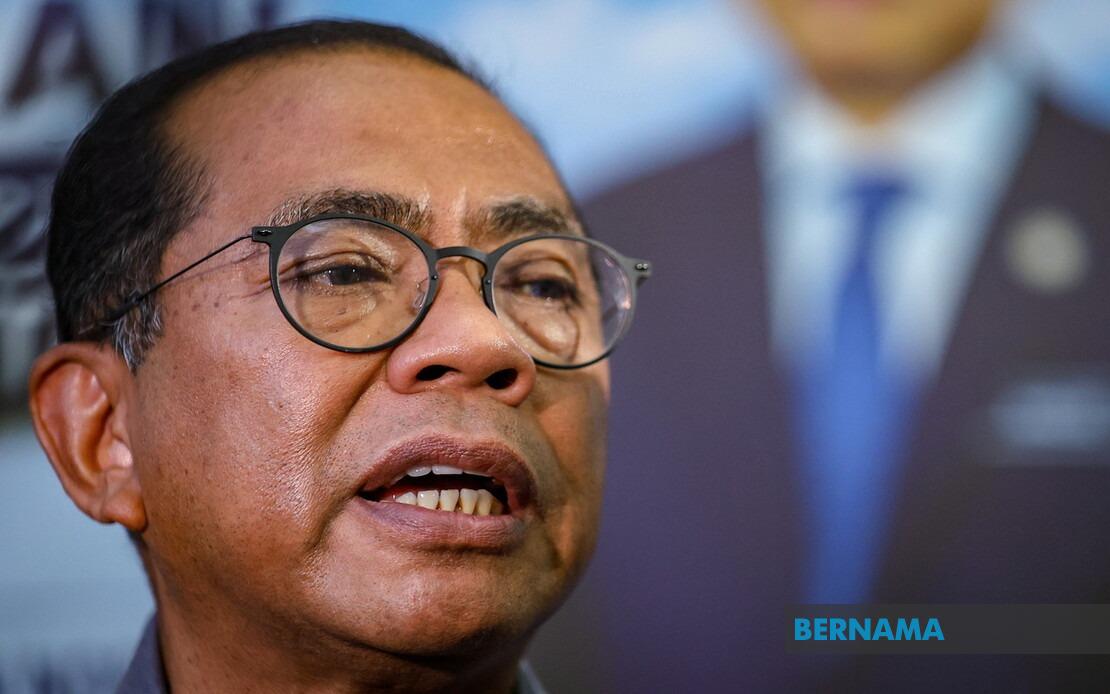
Datuk Seri Mohamed Khaled Nordin touched down in Hanoi on August 5 for a landmark two-day official visit that underscores Malaysia's commitment to strengthening defence partnerships across Southeast Asia. The Defence Minister's journey to Noi Bai International Airport marks a significant diplomatic moment, representing his inaugural official trip to Vietnam in his current capacity. The timing and nature of the visit reflect broader regional efforts to consolidate security relationships at a moment when stability and predictable partnerships have become increasingly valued among regional powers.
The minister's itinerary includes high-level engagements with Vietnam's top defence establishment. He is scheduled to hold discussions with Prime Minister Le Minh Hung and Deputy Prime Minister and Minister of National Defence Gen Phan Van Giang, conversations that are expected to chart the trajectory of Malaysia-Vietnam defence cooperation for the coming years. These meetings at the highest echelons of Vietnamese government signal the importance both nations place on their security relationship and their mutual interest in expanding areas of practical collaboration.
The foundation for this visit rests on institutional frameworks already in place between the two countries. Malaysia and Vietnam have cultivated defence connections spanning decades, rooted in shared regional interests and complementary strategic concerns. The renewal of the Memorandum of Understanding on defence cooperation in December 2023 crystallises this commitment, providing a formal mechanism through which both nations can coordinate their efforts across military training, joint exercises, intelligence sharing, and capacity-building initiatives. This agreement demonstrates that bilateral defence engagement is not episodic but rather the product of sustained diplomatic effort and mutual strategic calculation.
The broader context of this visit extends beyond Malaysia-Vietnam relations alone. Both nations are situated within a complex regional security environment where maintaining and deepening defence partnerships serves as a stabilising force. Vietnam, as a major power in Southeast Asia with significant geopolitical weight, represents a natural anchor for Malaysian defence strategy. For Vietnam, Malaysia's engagement signals commitment to a rules-based regional order and provides an avenue through which the larger Southeast Asian community can coordinate on shared security challenges. The visit thus carries implications that ripple across ASEAN and beyond.
Malaysia's defence establishment has prioritised strengthening relationships with Vietnam for several strategic reasons. Vietnam's experience managing complex regional relationships, its substantial military capabilities, and its role as a critical stakeholder in broader Indo-Pacific stability make it an invaluable partner. Through deepened defence cooperation, Malaysia can enhance its own security posture while simultaneously contributing to regional confidence-building measures. Joint military exercises, expert exchanges, and coordinated peacekeeping efforts represent concrete avenues through which this partnership can translate into tangible security benefits.
The Defence Minister's expressed aspiration to elevate Malaysia-Vietnam defence ties to higher levels suggests ambitions for expanded cooperation beyond existing frameworks. This could encompass new areas such as cyber security coordination, maritime surveillance cooperation, defence industry collaboration, or joint responses to transnational security challenges. The visit provides an opportunity to identify emerging areas where complementary strengths can be leveraged, whether in counterterrorism operations, humanitarian disaster response, or regional peace operations. Such expansion would reflect the sophisticated understanding both nations now have of interconnected security challenges.
Regional peace and stability represent the stated objectives anchoring this bilateral engagement. Both Malaysia and Vietnam operate within ASEAN's consensus-based framework, which emphasizes peaceful resolution of disputes and non-interference in internal affairs. The Malaysia-Vietnam defence relationship operates within these broader parameters, serving to reinforce ASEAN's collective commitment to maintaining a stable environment conducive to economic development and social progress. This alignment with ASEAN principles makes bilateral defence cooperation not merely a narrow national interest but also a regional public good.
The visit arrives at a juncture when Southeast Asia faces multifaceted security pressures. Maritime disputes, terrorism concerns, transnational crime, and geopolitical tensions between major powers create complex threat environments requiring coordinated regional responses. Malaysia and Vietnam, as two substantial Southeast Asian players, have particular responsibilities to model constructive security cooperation. Their engagement demonstrates that regional states can deepen bilateral relationships while remaining firmly committed to multilateral frameworks and peaceful conflict resolution mechanisms.
For Malaysian defence planners and policymakers, this visit represents an opportunity to position Malaysia as an active, committed partner in regional security architecture. The Defence Minister's personal engagement at the highest levels communicates seriousness about the relationship and willingness to invest political capital in furthering cooperation. Vietnamese leadership, for their part, will likely view the visit as confirmation of Malaysia's reliable partnership in addressing shared security interests and contributing to a stable Southeast Asian environment that benefits all regional states.
Looking forward, the agreements and understandings reached during this visit will likely establish the trajectory for Malaysia-Vietnam defence engagement over the coming years. Specific commitments regarding joint training initiatives, equipment cooperation, or information sharing will translate the political goodwill demonstrated by this visit into operational realities that strengthen both nations' security capabilities. The success of this visit will be measured not merely in immediate diplomatic statements but in the concrete cooperation frameworks that subsequently develop between Malaysian and Vietnamese defence institutions.
The visit ultimately reflects a mature understanding of regional dynamics. Both nations recognise that security challenges in Southeast Asia cannot be addressed unilaterally but require coordinated, multilateral responses grounded in bilateral partnerships of substance and durability. By investing in defence cooperation with Vietnam, Malaysia strengthens not only its own security position but also reinforces the institutional networks and patterns of cooperation that undergird regional stability more broadly. This visit exemplifies how bilateral defence diplomacy can serve simultaneously as a national interest and as a contribution to collective regional well-being.

