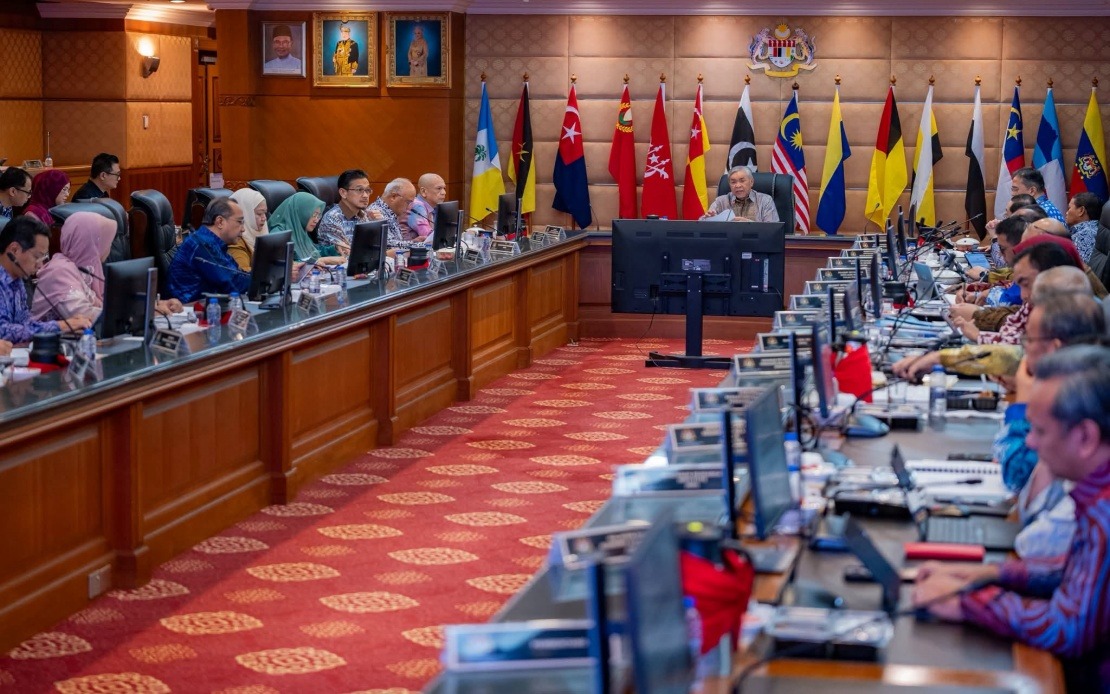
The National Cost of Living Action Council has signalled a cautious shift in its approach to managing food affordability and agricultural sustainability, with Deputy Prime Minister Datuk Seri Dr Ahmad Zahid Hamidi outlining a multi-pronged strategy that seeks to balance consumer relief against the survival of Malaysia's farming sector. At the council's 18th Executive Committee meeting in Putrajaya, the leadership endorsed a measured pathway for local white rice that prioritises protecting low-income households during what officials acknowledge will be a complex period of policy adjustment.
The council's framework extends well beyond the traditional focus on retail prices, reflecting a recognition that genuine cost of living relief demands intervention across multiple pressure points within the economy. Ahmad Zahid stressed that the government intends to address not merely what consumers pay at supermarket checkouts, but the deeper structural issues affecting production expenses, the efficiency of supply chains, and access to nutritional food. This holistic perspective also encompasses the affordability of healthcare and education, two sectors where rising costs have squeezed household budgets across income levels.
Central to the rice strategy is the introduction of a subsidised transition mechanism designed to shield vulnerable households from price shocks before wider policy changes take permanent effect. By front-loading support for those most exposed to food price volatility, the government appears intent on avoiding the social friction that abrupt policy shifts might otherwise trigger. The council recognised that local rice farmers and producers face genuine survival pressures in an environment of rising input costs and global market uncertainties, making a soft landing preferable to sudden deregulation that could devastate rural livelihoods.
The council has also endorsed a significant expansion of the Sumbangan Asas Rahmah programme, which currently focuses on cash assistance and essential staples. The proposal to extend SARA to include fresh produce—fruits, vegetables, and fresh protein sources—marks a conceptual shift from supplementing purchasing power toward actively steering consumption patterns toward healthier options. This proposal requires endorsement from the main NACCOL council chaired by Prime Minister Datuk Seri Anwar Ibrahim, but its advancement suggests that policymakers are increasingly viewing food security and nutrition as interconnected challenges rather than separate concerns.
The expansion of direct food assistance carries particular significance for Malaysia's lower-income households, where fresh produce remains inaccessible for many families despite the country's agricultural capacity. By incorporating perishables into subsidised aid schemes, the government acknowledges a gap between nominal income levels and the ability to afford nutrient-dense foods. This approach also creates potential demand stabilisation for domestic agricultural producers, potentially supporting farmers who cultivate high-value crops.
The council's deliberations reflect growing sensitivity to external economic shocks and their cascading domestic effects. Officials flagged the monitoring of geopolitical risks, volatility in West Asia, and import compliance costs as essential to preventing international pressures from translating into local inflation. This acknowledgement signals awareness that Malaysia, as an open economy vulnerable to commodity price swings and supply chain disruptions, cannot insulate its population from global economic forces but can cushion the impact through targeted intervention. The emphasis on continuous monitoring suggests the council intends to maintain flexible policy levers rather than lock itself into fixed positions.
Agricultural support mechanisms also drew attention, with the council directing relevant agencies to refine existing programmes targeting farmers and fishermen. The messaging here indicates recognition that agricultural producers themselves require shielding from input cost inflation and subsidy rationalisation effects. Without such support, the council appears concerned that farmers might respond to margin pressure by reducing output or shifting to lower-value crops, ultimately undermining food security objectives and rural economic stability.
Private healthcare cost containment emerged as another priority, with the council reviewing eleven initiatives under the RESET strategy framework designed to maintain affordability while expanding access and treatment options within public healthcare. This focus on the private sector reflects understanding that many middle-income Malaysians depend on private providers, particularly for non-emergency care, and that unchecked cost growth in that segment reduces overall system efficiency and consumer welfare. By addressing both public and private healthcare simultaneously, the government seeks to prevent cost-conscious patients from being squeezed out of care entirely.
Education funding patterns revealed through the council's review showed that tertiary education assistance schemes distributed RM589.6 million to approximately 62,937 Form Six and university students in the previous year. Ahmad Zahid's assertion that such support must be reinforced suggests the council recognises education financing as insufficient relative to demand, particularly for students from disadvantaged backgrounds. The framing of education as talent development rather than mere welfare spending indicates the government views educational access as an economic productivity issue as well as a social equity matter, with implications for Malaysia's long-term competitiveness.
The Cost of Living Action Plan 2030 referenced by Ahmad Zahid represents an attempt to move beyond reactive, sector-by-sector interventions toward an integrated framework addressing multiple cost drivers simultaneously. This represents a departure from historical approaches where different ministries handled food, healthcare, and education costs through separate programmes with limited coordination. The council's work suggests a maturation in policy thinking, recognising that vulnerabilities accumulate across multiple domains and that comprehensive relief requires coordinated action.
For Malaysian readers, the council's direction offers cautious optimism regarding targeted support mechanisms, though questions remain about the fiscal sustainability of expanded subsidisation and the timeline for structural improvements in food production efficiency. The rice policy transition framework particularly deserves scrutiny, as its success will largely depend on implementation details not yet disclosed and the government's ability to prevent parallel market distortions. The expansion of SARA to fresh produce, meanwhile, addresses a genuine gap in current assistance but will require careful programme design to ensure benefits reach intended recipients without creating supply chain disruptions.
The emphasis on vulnerable group protection and coordinated sectoral planning suggests the council is attempting to thread a difficult needle: providing relief without creating unsustainable fiscal commitments or dependency on permanent subsidisation. Whether this balancing act proves sustainable will likely determine the framework's effectiveness and whether Malaysia's cost of living pressures gradually stabilise or intensify over the coming years.

