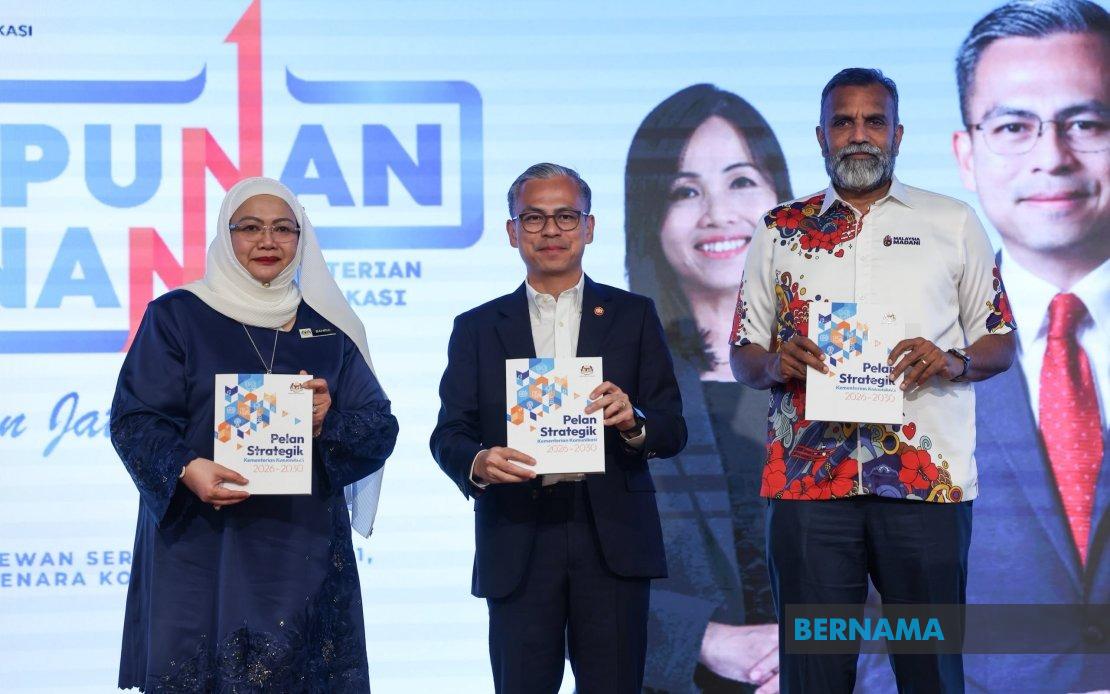
Communications Minister Datuk Seri Fahmi Fadzil has launched an ambitious five-year strategic roadmap designed to reshape Malaysia's digital landscape and creative output. The Communications Ministry Strategic Plan (PSKK) 2026-2030, unveiled in Putrajaya on July 20, represents a comprehensive framework that aligns the ministry's priorities with Malaysia's broader development agenda as outlined in the 13th Malaysia Plan and the Malaysia MADANI vision. The plan encapsulates decades of policy thinking and reflects the government's commitment to positioning Malaysia as a digitally advanced and culturally vibrant nation in Southeast Asia.
At its core, the strategic plan identifies three overarching priorities that will guide resource allocation and programme implementation across the ministry and its affiliated agencies. Better internet infrastructure forms the first pillar, acknowledging that reliable and widespread connectivity remains foundational to economic participation and social inclusion in an increasingly digital economy. The second priority centres on nurturing more creative content production, recognising Malaysia's potential to develop globally competitive entertainment and media industries. The third pillar emphasises combating misinformation through more accurate information dissemination, a critical concern in an era of digital manipulation and viral falsehoods. Fahmi noted during his remarks to reporters that these three priorities directly address the concerns most frequently escalated to the Communications Ministry and its various departments, suggesting they represent genuine pain points identified through stakeholder engagement.
The strategic plan projects an ambitious vision encapsulated in the phrase "A Connected, Informed and Creative Malaysia," which serves as a north star for all implementation activities through 2030. Rather than relying on vague aspirations, the plan translates this vision into concrete operational terms through three distinct missions that provide greater specificity about what the ministry aims to accomplish. The first mission involves strengthening the nation's communications connectivity infrastructure while simultaneously improving service delivery and regulatory oversight. This acknowledges that connectivity alone is insufficient; the regulatory environment and the quality of services delivered must evolve in tandem. The second mission focuses on fostering the spread of authentic and inclusive information, directly confronting challenges around misinformation and ensuring that accurate narratives reach diverse population segments. The third mission targets accelerating sustainable and competitive development within Malaysia's creative industries, from music to film to emerging digital content sectors.
Realising these three missions requires mobilising multiple government agencies and private sector partners through four distinct strategic thrusts. The first thrust emphasises reinforcing the national communications ecosystem to ensure that infrastructure investment yields truly inclusive, high-quality and secure connectivity for all Malaysians. This reflects growing awareness that infrastructure deployment must be accompanied by cybersecurity measures and network resilience, particularly as Malaysia's digital economy expands. The second thrust specifically targets enhancing the competitiveness of film and music industries, suggesting the ministry recognises these sectors as high-potential engines for cultural export and employment creation. The third thrust centres on transforming how information flows through government and public channels, moving towards more integrated delivery mechanisms that serve citizens more effectively. The fourth thrust commits to reforming how the ministry and its agencies interact with the public, shifting towards more responsive and customer-centric service models.
The comprehensiveness of the strategic plan becomes apparent when examining its scope: across its four strategic thrusts, the ministry has identified 94 distinct strategic programmes for implementation over the 2026-2030 period. This granular programme structure provides flexibility for adjustments while maintaining overall strategic coherence. The scale of programming suggests the ministry is prepared to tackle interconnected challenges simultaneously rather than pursuing sequential, siloed initiatives. For Malaysian readers and businesses, this breadth implies that the communications sector will experience significant evolution, from broadband coverage expansion to content production support mechanisms to information governance frameworks.
The timing of this strategic plan's launch carries particular significance for Malaysia's development trajectory. With the 13th Malaysia Plan establishing national priorities through 2025, the PSKK 2026-2030 ensures continuity while enabling the Communications Ministry to build on lessons learned during the current planning cycle. The Malaysia MADANI agenda, which emphasises prosperity, stability, and a welfare-oriented state, directly shapes how the communications strategy conceptualises its role. Rather than viewing communications purely through an infrastructure lens, the strategic plan positions communications as fundamental to achieving inclusive prosperity and societal stability. This represents a maturation of policy thinking that recognises information flows and creative industry development as economic priorities equivalent to physical infrastructure.
For Malaysia's digital economy and creative sectors, this strategic plan signals increased government engagement and resource commitment. Entrepreneurs and content creators can anticipate more structured support mechanisms, clearer regulatory pathways, and coordinated efforts to develop industrial ecosystems. Small and medium enterprises operating in digital content, telecommunications support services, and information technology may benefit from programmes designed to enhance industry competitiveness. International observers will note that Malaysia is deliberately positioning itself to compete with regional neighbours in both digital infrastructure and creative content production, areas where countries like Singapore and South Korea have already achieved significant momentum.
The announcement also reflects recognition that Malaysia's communications challenges extend beyond technical infrastructure. The emphasis on information accuracy and combating misinformation indicates the ministry understands that digital divides include not just access disparities but also information quality disparities. Citizens in underserved communities may face not only slower internet speeds but also greater vulnerability to false narratives and manipulated content. By integrating information authenticity into the strategic plan as a co-equal priority alongside connectivity, the ministry acknowledges this multidimensional challenge. This approach aligns with global best practices in digital policy while responding to distinctly Malaysian concerns.
The strategic plan's focus on creative industries reflects Malaysia's untapped potential in this domain. Unlike agricultural or manufacturing sectors where Malaysia has established competitive advantages, the creative industries remain relatively underdeveloped compared to the nation's cultural richness and talent pool. By dedicating specific strategic thrusts to film and music competitiveness, the ministry signals belief that these sectors can generate employment, foreign exchange earnings, and soft power influence. The plan's recognition of the creative sector as genuinely strategic represents a shift from treating culture as ancillary to treating it as central to national development. This positioning may catalyse private investment and entrepreneurial activity in content production and distribution.
Implementation success will depend on coordination among multiple stakeholders beyond the Communications Ministry proper. The strategic plan's emphasis on programmes involving "all agencies under its purview" indicates the ministry recognises that achieving objectives like universal broadband access requires collaboration with Malaysia's energy sector, local government authorities, and development agencies. Similarly, nurturing creative industries will require partnerships with the education sector, export promotion bodies, and financial institutions capable of funding large-scale production ventures. The ministry's willingness to articulate a plan spanning 94 programmes across four thrusts suggests confidence in its ability to convene and coordinate these diverse partners, though actual execution will present formidable challenges.
Malaysian citizens and businesses should view this strategic plan as indicative of the government's communication and digital priorities through the end of the current decade. Stakeholders seeking to influence or contribute to these policy areas now have clarity regarding the ministry's strategic direction. Academic institutions might align research and training programmes with identified thrust areas. Technology companies can better anticipate regulatory evolution and business opportunities emerging from the plan's implementation. Content creators can expect evolving support mechanisms and market development activities. As Malaysia navigates rapid technological change and intensifying regional competition, a well-articulated five-year communications strategy provides essential direction and predictability for both public and private sector actors investing in this critical domain.

