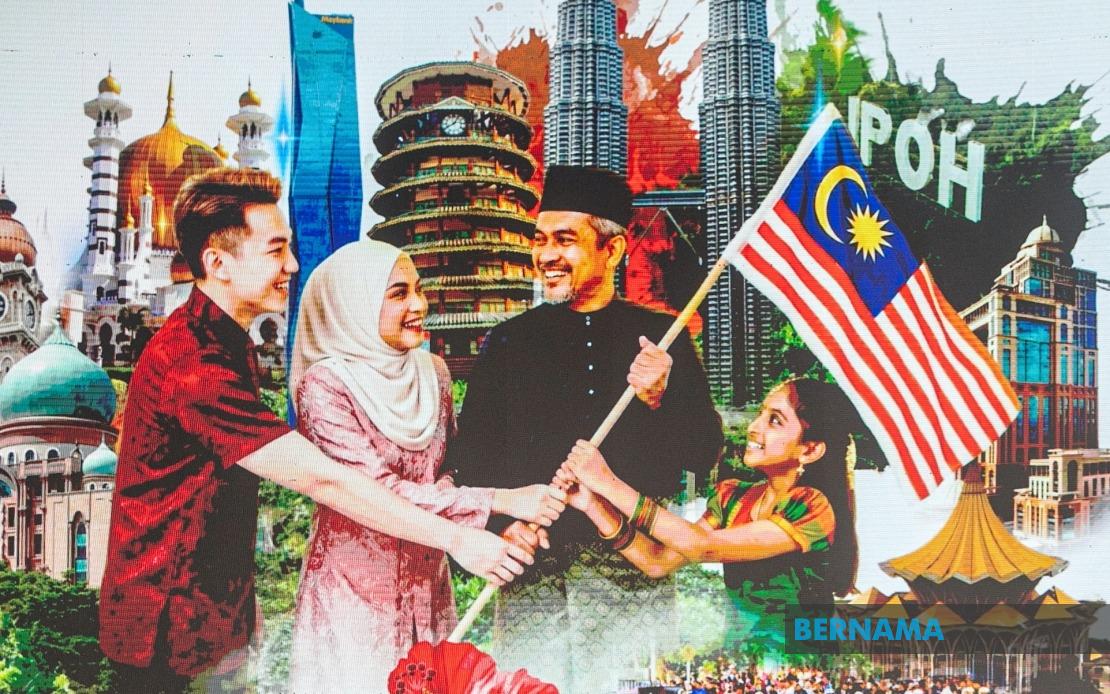
Communications Minister Datuk Seri Fahmi Fadzil has sounded an alert to the public about the risks of deploying artificial intelligence technology when creating content that features the Jalur Gemilang, urging greater diligence to safeguard the accurate representation of Malaysia's national flag. Speaking at the launch of the 2026 National Month and Fly the Jalur Gemilang campaign in Ipoh on July 19, Fahmi stressed that content creators and the broader public must remain vigilant when relying on AI tools, as these systems frequently produce visual errors that compromise the flag's iconic design elements.
The minister's concern zeroes in on a specific vulnerability in AI-generated imagery: the consistent omission or misrepresentation of the Jalur Gemilang's 14 horizontal stripes, a defining characteristic of the national emblem. This detail, while seemingly minor, carries substantial symbolic weight in Malaysia's national identity and protocols. Fahmi underscored that these errors are not merely aesthetic oversights but represent failures to accurately depict a symbol of profound national significance. The emphasis on this particular flaw suggests that AI systems have demonstrated a documented tendency to abbreviate or misconstruct the flag's stripe configuration when processing requests.
Beyond raising awareness, Fahmi outlined a comprehensive approach to managing AI-generated flag content through collaborative efforts with industry gatekeepers. The ministry intends to work closely with the Malaysian Press Institute and the Malaysian Media Council to establish quality assurance mechanisms that extend throughout the National Month period. This partnership strategy reflects an acknowledgment that addressing AI accuracy issues requires coordination across multiple stakeholder groups rather than reliance on government enforcement alone. By engaging media organizations directly, the ministry aims to embed proper flag representation practices into content production workflows before problematic material reaches public circulation.
The minister also encouraged Malaysians to invest time in understanding the correct protocols for displaying the Jalur Gemilang, suggesting that education and cultural literacy form a crucial complement to technical safeguards. This educational dimension recognizes that many AI errors stem from users lacking sufficient knowledge about the flag's precise specifications and may therefore fail to identify or correct computational mistakes. By promoting awareness of proper flag etiquette alongside warnings about AI limitations, the ministry addresses both the technological and human dimensions of the problem.
When pressed on enforcement mechanisms, Fahmi articulated a measured, graduated approach that prioritizes dialogue over punitive measures. The ministry's first response to instances of incorrect flag representation would be advisory rather than legalistic, involving direct contact with content creators to request voluntary correction. This approach acknowledges the reality that most errors likely stem from technological failure rather than deliberate disrespect, making correction through gentle persuasion more appropriate than invoking legal frameworks. Fahmi noted that while specific legislation governing flag representation exists on Malaysia's statute books, the government would exhaust advisory channels before contemplating formal legal action.
The enforcement strategy gains significance within Malaysia's legal environment, where the national flag enjoys specific protections under law. By signaling that the ministry will initially adopt a cooperative stance, Fahmi appears to be calibrating expectations and reducing the likelihood of widespread punitive actions that could chill legitimate creative expression. However, his reference to "further action" if corrections are not forthcoming indicates clear boundaries and the potential for escalation should creators persist in producing inaccurate depictions despite notification.
The Fly the Jalur Gemilang campaign itself represents a broader initiative to revitalize patriotic sentiment across Malaysian society during the run-up to Independence Day and Malaysia Day celebrations. Fahmi encouraged citizens to display the national flag from mid-July through at least September 16, extending the symbolic gesture across both commemorative occasions and into ordinary public spaces including residential areas, villages, and government facilities. This expanded display period aims to saturate the national environment with patriotic imagery, reinforcing collective identity during a culturally significant season.
The 2026 celebrations themselves will feature geographic dispersal designed to highlight Malaysia's federal composition and regional diversity. Prime Minister Datuk Seri Anwar Ibrahim, who officiated the campaign launch, will preside over National Day ceremonies in the federal capital Putrajaya, while Malaysia Day festivities will relocate to Sarawak, with specific venue arrangements still pending finalization. This distribution strategy acknowledges the distinct historical and political significance each observance carries and recognizes Sarawak's particular role in Malaysia's federation.
The campaign launch brought together senior figures from multiple government portfolios, including National Unity Minister Datuk Aaron Ago Dagang and Perak Menteri Besar Datuk Seri Saarani Mohamad, hosted at the Sultan Azlan Shah Ministry of Health Training Institute in Tanjung Rambutan. This gathering signaled whole-of-government commitment to the patriotic agenda and positioned the initiative as a matter of national importance transcending narrow ministerial responsibility.
For Malaysian businesses, content creators, and media organizations, Fahmi's guidance carries practical implications requiring immediate operational adjustments. Any entity producing digital content involving flag imagery should now implement quality review procedures specifically designed to verify AI outputs against the established specifications of the Jalur Gemilang before publication. This may necessitate developing internal checklists, training staff to recognize common AI errors, or implementing technical solutions that flag problematic outputs for human review. The prospect of ministry contact regarding corrections, while presented as non-punitive, likely carries reputational risks that incentivize proactive compliance.
The underlying tension in Malaysia's approach reflects a broader global challenge: how democracies can protect national symbols and patriotic expression while respecting creative freedom and technological innovation. By framing AI accuracy as a shared responsibility involving government, media organizations, and the public, the ministry sidesteps more coercive approaches while establishing clear performance expectations. This collaborative model may offer instructive lessons for other nations wrestling with similar questions about flag representation, digital content governance, and the role of artificial intelligence in public discourse.

