Malaysia's drive to digitise government operations has yielded tangible environmental and financial benefits, with the civil service reporting the elimination of over 116,000 reams of paper and corresponding cost reductions of RM1.99 million. The accomplishment was announced by Chief Secretary to the Government Tan Sri Shamsul Azri Abu Bakar during the Digital Economy and Fourth Industrial Revolution Council meeting led by Prime Minister Datuk Seri Anwar Ibrahim on June 29, underscoring the administration's commitment to modernising public sector workflows whilst reducing operational expenditure.
The paperless initiative represents a significant step in the government's broader digitalisation journey, which gained momentum when the civil service formally adopted a paper-free approach for routine transactions beginning in February. By streamlining administrative processes and shifting routine document handling onto digital platforms, the government has demonstrated that technological modernisation can deliver immediate, measurable improvements in both budgetary efficiency and environmental stewardship. The RM1.99 million saving, whilst substantial in isolation, reflects only the initial phase of what officials envision as a sustained transformation across the entire public administration apparatus.
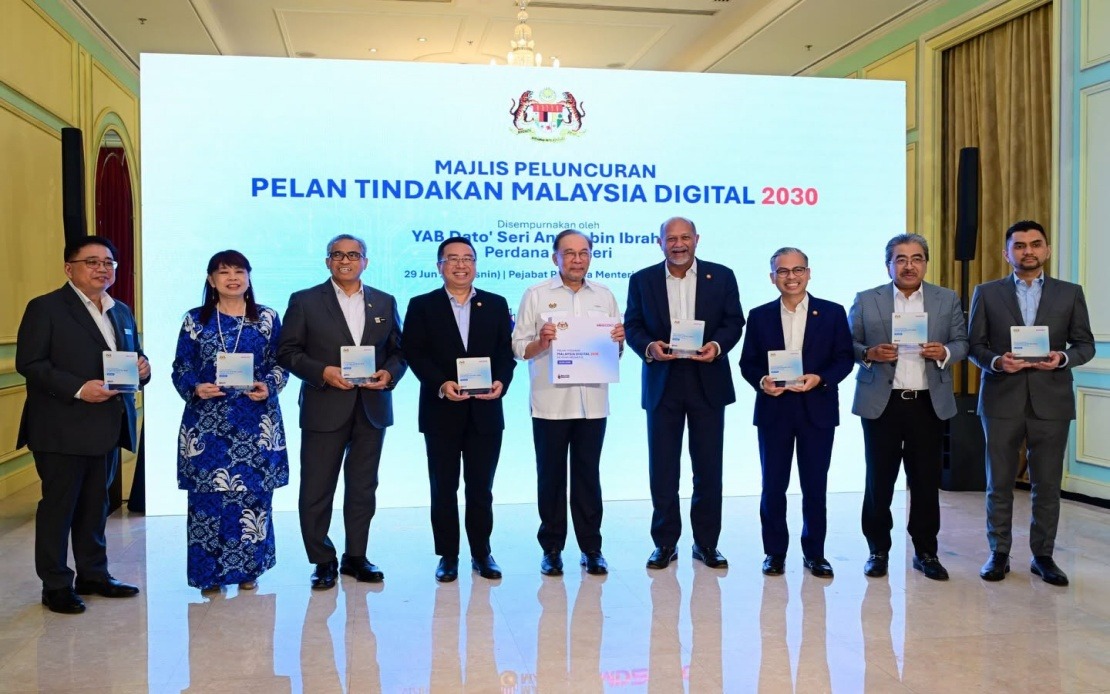
Shamsul Azri, who holds the position of Government Cluster Chairman, contextualised the paperless achievement within a significantly broader strategic framework. The government has articulated an ambitious vision to position Malaysia as an Artificial Intelligence-driven nation by 2030, a goal formally embedded within the Malaysia Digital 2030 strategy unveiled by Prime Minister Anwar Ibrahim at the same council meeting. This overarching roadmap extends well beyond simple cost reduction, instead seeking to fundamentally reimagine how government delivers services, collects and manages data, and engages with citizens through digital-first channels.
The council's deliberations reflected a multifaceted approach to digital advancement, with particular emphasis placed on two flagship initiatives: MyDigital ID and MyGov. These programmes aim to consolidate citizen identity verification and government service delivery into integrated digital ecosystems, reducing friction in interactions between residents and public institutions. The investment in these platforms represents a recognition that sustainable digital transformation requires not merely incremental improvements to existing systems but rather wholesale architectural redesign of government-citizen interaction models.
Equally prominent in the council's agenda was the expansion of digital infrastructure across Malaysia's tertiary education sector. By ensuring comprehensive digital access throughout universities and colleges, the government seeks to cultivate a workforce equipped with digital literacy and technical capabilities essential for an AI-centric economy. This educational dimension addresses a critical supply-side constraint: without sufficient numbers of digitally skilled workers, technological advancement remains constrained regardless of infrastructure investment or policy intent.
To support this workforce development objective, officials have established the MyMAHIR National AI Council for Industry, a coordinating body tasked with designing and implementing comprehensive programmes to develop advanced digital talent across sectors. Rather than leaving skills development to market forces alone, the government has positioned itself as an active orchestrator, attempting to align educational institutions, private employers, and training providers around shared objectives. This reflects an understanding that creating an AI-capable nation requires deliberate, coordinated investment spanning education, infrastructure, and industry engagement.
The paperless initiative itself emerged from a government directive issued in early February, when Shamsul Azri announced that the civil service would commence implementing paper-free procedures for straightforward administrative transactions commencing February 9. This measured introduction, rather than imposing immediate blanket restrictions across all government operations, allowed agencies time to adapt systems, train personnel, and troubleshoot technical issues before full-scale implementation. The substantial achievements reported just months into the rollout suggest that this phased approach has proven effective in minimising disruption whilst generating rapid returns.
For Malaysian businesses and citizens, the implications of this digital transformation extend beyond government efficiency metrics. A modernised, digitally sophisticated civil service promises faster turnaround times for permit applications, licence renewals, and regulatory approvals, potentially reducing friction costs that burden enterprises. The expansion of MyGov and similar platforms creates opportunities for smaller firms and individuals to interact with government institutions without navigating physical offices, effectively democratising access to public services regardless of geographic location or working hours.
The environmental dimension deserves particular consideration within Malaysia's broader sustainability commitments. The elimination of 116,405 reams represents not merely a discrete saving but symbolises a cultural shift toward recognising that government operations, traditionally resource-intensive, can be recalibrated to reduce their ecological footprint. Within the context of global climate commitments and domestic sustainability targets, demonstrable progress in reducing paper consumption across the public sector establishes precedent and normalises expectation that environmental considerations should inform operational decision-making.
The Malaysia Digital 2030 strategy positions the nation within regional and global digital transformation narratives. As economies throughout Southeast Asia pursue similar digitalisation objectives, Malaysia's institutionalised approach through dedicated councils and integrated strategy documents reflects recognition that uncoordinated technological adoption yields suboptimal outcomes. The establishment of frameworks explicitly linking AI development to talent cultivation, infrastructure expansion, and service delivery modernisation suggests strategic coherence increasingly absent from ad-hoc digitisation efforts.
Looking forward, the paperless initiative serves as both achievement and foundation. Having demonstrated that systematic policy intervention can deliver concrete results within government operations themselves, officials now face the larger challenge of extending these benefits systemically whilst simultaneously building the institutional capacity required for AI integration. The convergence of cost savings, environmental benefit, and demonstrated operational improvement provides both political capital and practical evidence supporting continued investment in digital transformation across Malaysia's public sector ecosystem.

