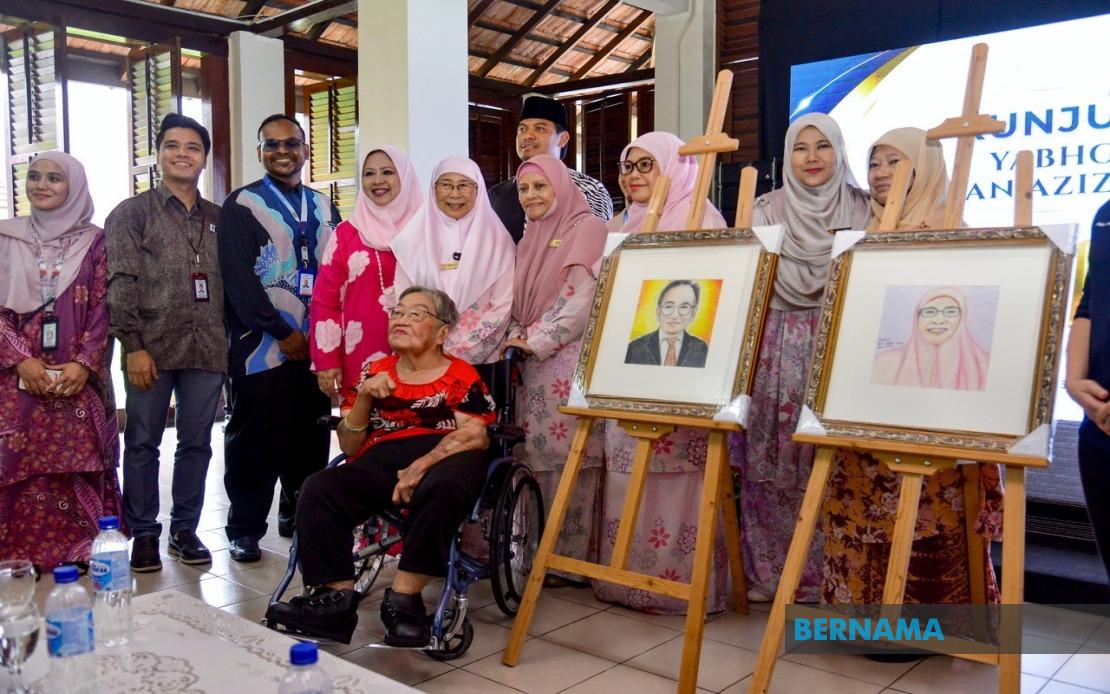
The National Leprosy Control Centre at Sungai Buloh Hospital, which reaches its 100th anniversary this year, warrants continued conservation as a vital symbol of Malaysia's healthcare legacy, according to Datuk Seri Dr Wan Azizah Wan Ismail, the Prime Minister's wife. During a recent visit to the facility, she underscored the importance of safeguarding the institution that was established in 1926 and has since become embedded in the country's medical narrative.
The PKKN holds particular significance within Malaysia's public health story, having achieved what many nations struggled to accomplish. The centre was once ranked as the world's second-largest leprosy isolation facility, a distinction that reflects both the scale of the challenge and the intensity of Malaysia's response to the disease. This historical weight means the physical structures and institutional memory housed within the facility represent more than bricks and mortar—they embody a chapter of national development that shaped modern Malaysia.
Malaysia's triumph over leprosy stands as a remarkable public health achievement. The country attained leprosy elimination status in 1994, a milestone that required sustained effort and institutional commitment spanning decades. Today, the prevalence rate has plummeted to 0.15 cases per 10,000 population, well below the threshold established by the World Health Organisation, demonstrating that the disease that once necessitated isolation centres is now manageable and no longer poses the societal threat it once represented.
Dr Wan Azizah, speaking in her capacity as both the Prime Minister's spouse and chairman of KASIH Malaysia, a welfare organisation focused on aiding vulnerable populations, articulated a nuanced view of the facility's future. She acknowledged that while leprosy may appear controlled, the centre remains relevant to contemporary healthcare discourse and deserves investment in both preservation and modernisation. This reflects a broader understanding that heritage sites need not be frozen in time but can evolve while retaining their historical essence.
The call for preservation encompasses more than nostalgia. The centre serves as an educational resource, demonstrating to medical students and public health professionals how Malaysia approached infectious disease management during an era when treatment options were limited and social isolation was deemed necessary. The physical plant itself tells stories of medical innovation, patient care protocols, and the social structures built around managing chronic illness in pre-modern Malaysia.
Public perception surrounding leprosy has transformed dramatically since the centre's founding, a change Dr Wan Azizah explicitly highlighted during her visit. The disease, once shrouded in fear and misconception, is now understood as non-transmissible in most circumstances and entirely manageable with modern antibiotics. This shift in understanding means the centre's residents and staff no longer carry the stigma that characterised earlier generations, enabling a more compassionate approach to institutional care and facility operations.
The centre has demonstrated flexibility beyond its original mandate. During 2020, when Malaysia grappled with the COVID-19 pandemic, PKKN was repurposed as a dedicated COVID-19 ward, illustrating how heritage institutions can adapt to contemporary health emergencies while maintaining their core identity. This adaptability suggests the centre could continue serving evolving public health needs while preserving its historical significance.
Dr Wan Azizah's visit involved substantive engagement with the facility, including tours of operational areas and direct interaction with staff and residents. She distributed necessities to those living at the centre and received a portrait painted by a resident, gestures that humanised her advocacy and demonstrated personal investment in the institution's welfare. These encounters underscore that preservation efforts must account for the dignity and needs of current residents, whose lives continue within these historic walls.
The preservation imperative extends to both physical infrastructure and institutional records. The centre's archives document medical approaches, patient outcomes, and epidemiological data spanning a century—resources invaluable to medical historians and public health researchers. Allowing these records to deteriorate or disappear would represent an irretrievable loss to Malaysia's documentary heritage and the global understanding of how tropical nations managed infectious disease.
Balancing heritage conservation with healthcare modernisation presents a practical challenge. Dr Wan Azizah explicitly stated that preservation should occur alongside ongoing service upgrades, suggesting that the facility need not choose between honouring its history and providing contemporary medical standards. This dual mandate requires sustained funding, skilled facility management, and government commitment extending beyond commemorative gestures.
The National Leprosy Control Centre's significance resonates beyond Malaysia's borders. For Southeast Asian nations still managing leprosy in endemic regions, the PKKN represents a model of disease control and institutional development worth studying. Preserving the centre strengthens Malaysia's regional leadership in public health while providing practical lessons to neighbours navigating similar challenges.
As Malaysia advances economically and technologically, the preservation of institutions documenting the nation's past becomes increasingly important. The PKKN embodies the often-overlooked story of how scientific and administrative effort transformed a public health crisis into a controlled condition, a narrative that deserves commemoration and continued relevance in contemporary discussions about disease management and social care.
Dr Wan Azizah's advocacy signals government recognition that heritage preservation and healthcare excellence are complementary rather than competing objectives. Whether this translates into dedicated funding, heritage designation, or policy commitments remains to be seen, but her intervention demonstrates that Malaysia's institutional past warrants official attention as the nation charts its future.

