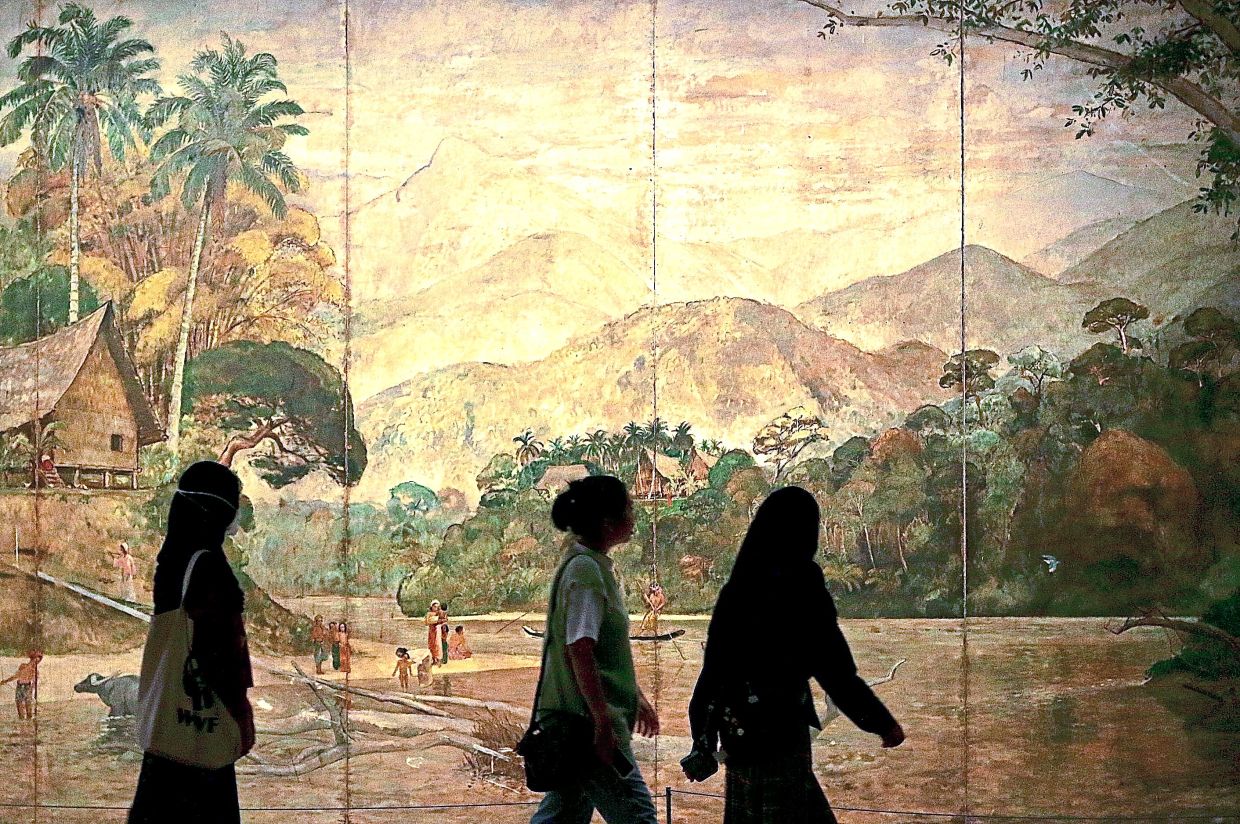
Malaysia's humid tropical environment and intense solar radiation present an ongoing threat to the preservation of artworks housed in galleries and heritage sites across the country, highlighting the urgent need for conservation approaches specifically tailored to Southeast Asian conditions rather than simply importing Western methodologies. According to Tan Hui Koon, senior chief curator of the Collection and Conservation section at the National Art Gallery, the material composition of valuable artworks—particularly organic materials like textiles, canvas and wood—degrades rapidly when exposed to Malaysia's distinctive climatic stressors, a challenge that extends beyond individual institutions to the entire regional art heritage sector.
The mechanisms of climate-induced damage operate silently and cumulatively over time. Organic materials readily absorb moisture in high-humidity environments, initiating cycles of repeated expansion and contraction that gradually compromise structural integrity and paint layers. This deterioration process is largely irreversible once material loss occurs, making prevention far more effective than restoration. Tan notes that artworks require protection equivalent to sunscreen for human skin, necessitating tinted glass or museum-standard glazing capable of filtering harmful ultraviolet radiation—a fundamental requirement that many Malaysian institutions have historically underinvested in or overlooked.
The implications of inadequate environmental control extend beyond aesthetics to questions of cultural identity and national heritage preservation. Malaysia possesses significant artistic legacies that demand sophisticated conservation infrastructure, yet many local museums and galleries have operated with conservation protocols designed for temperate climates with vastly different humidity and light profiles. The gap between global best practice and local implementation represents both a vulnerability and an opportunity for innovation. Tan emphasises that effective conservation transcends reactive damage repair, requiring instead a comprehensive preventive framework encompassing environmental monitoring, appropriate handling procedures, and strategic storage systems.
Recognising these challenges, the National Art Gallery is hosting the seventh Asia-Pacific Tropical Climate Conservation Art Research Network conference from December 7-9, bringing together conservation specialists from Malaysia, Thailand, Singapore, Australia and the Philippines to collectively examine how artworks—particularly Western paintings—respond to tropical conditions. This regional gathering represents a significant shift in conservation thinking, moving away from the assumption that Western practices constitute universal standards. By convening experts across national borders, the conference acknowledges that tropical nations share common environmental pressures and can develop collaborative solutions rooted in geographical and cultural specificity.
The conference programme reflects this reorientation toward local knowledge systems and practical adaptation. Participants will examine disaster response methodologies, materials research technologies, artificial intelligence applications in conservation, and ethical frameworks—but all within the context of how these approaches function in tropical environments. A special heritage site visit to Lenggong, organised in collaboration with the Islamic Arts Museum Malaysia, the Department of National Heritage, and People of Remarkable Talents, will ground the discussions in tangible Southeast Asian contexts. This field-based component ensures that theoretical frameworks remain connected to the actual conditions facing Malaysian conservators.
Intergenerational knowledge transfer emerges as a central concern throughout the conference agenda. The conservation field faces a critical challenge in Southeast Asia: experienced practitioners who possess accumulated wisdom about regional environmental challenges are approaching retirement, while younger professionals often receive training that prioritises international standards over local adaptation. Tan stresses that the research network functions as a knowledge repository and incubator for emerging conservators, bridging the gap between established expertise and the next generation of heritage professionals. This mentorship dimension addresses a systemic vulnerability in Malaysia's conservation capacity.
The emphasis on resource-sharing among institutions reflects practical realities facing Malaysian museums and galleries. Comprehensive conservation infrastructure—sophisticated climate control systems, specialised equipment, and trained personnel—requires substantial capital investment that individual institutions often cannot sustain independently. By facilitating collaboration and knowledge exchange across borders, the research network enables smaller institutions to access expertise and best practices without duplicating expensive infrastructure. This collaborative model proves particularly relevant for Southeast Asian countries with limited budgets but significant cultural heritage responsibilities.
Tan characterises the conference as a milestone moment for tracing Malaysia's conservation development trajectory since the network's founding in 2008. Over fifteen years, the field has evolved from nascent awareness of regional challenges toward increasingly sophisticated understanding of how tropical conditions interact with artistic materials. Malaysian conservators have developed practical knowledge about managing humidity fluctuations, preventing mould growth, and protecting textiles from insect damage—expertise that deserves recognition and documentation. This conference provides institutional validation for locally-generated conservation knowledge that often remains invisible in global conservation literature dominated by European and North American voices.
The strategic implications extend beyond institutional preservation toward Malaysia's international cultural positioning. By developing world-leading expertise in tropical climate conservation, Malaysia can position itself as a centre of excellence for Southeast Asian heritage preservation. This expertise becomes exportable knowledge, with Malaysian conservators potentially consulting on preservation challenges across the region. Tan notes that strengthening these international networks creates pathways for Malaysian artistic heritage and conservation expertise to gain global visibility, elevating the country's cultural standing while simultaneously addressing practical preservation imperatives.
The convergence of climate science, artistic preservation, and regional cooperation reflected in this conference suggests a maturing approach to heritage conservation in Malaysia. Rather than passively accepting that tropical conditions inevitably damage artworks, the National Art Gallery and its regional partners are actively researching, documenting, and implementing preservation strategies specifically designed for Southeast Asia's environmental realities. This proactive stance recognises that heritage preservation constitutes a legitimate and urgent national priority, requiring investment in both infrastructure and human expertise development across the coming decades.

