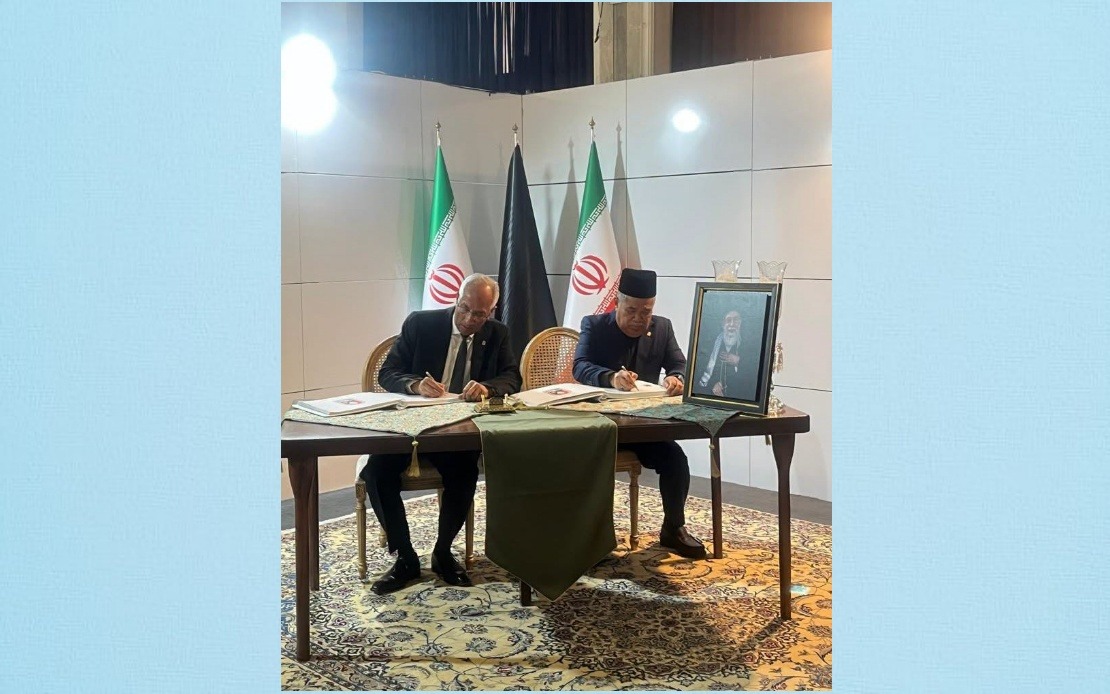
Malaysia sent a high-level government delegation to Tehran this week, with Agriculture and Food Security Minister Datuk Seri Mohamad Sabu presiding over the ceremony to pay final respects to Iran's former Supreme Leader Ali Khamenei. The tribute took place at the Grand Mosalla in the Iranian capital, marking a significant diplomatic gesture from Kuala Lumpur towards the Islamic Republic amid complex regional tensions.
The funeral proceedings represent a continuation of mourning activities that have unfolded across Iran's most sacred cities. Beginning in Tehran, the ceremonial route will extend through Qom, followed by the Shia holy cities of Najaf and Karbala in Iraq, before the remains are ultimately transported to the Imam Reza Shrine in Mashhad for interment scheduled for July 9. This multi-city procession underscores the symbolic importance accorded to Khamenei's passing within the Islamic world.
The timing of these ceremonies carries particular weight, occurring more than one hundred days after the events of February 28, when Khamenei died in an attack that Mohamad's statement attributes to joint action by the United States and Israel. The delay between the incident and the formal funeral observances reflects the complex political circumstances surrounding his death and the subsequent diplomatic arrangements required to honour such a significant figure in international Islamic politics.
Upon his arrival in Tehran, Mohamad received formal recognition from Iran's political establishment. Mohammad Bagher Ghalibaf, the Speaker of the Iranian Parliament, and Foreign Minister Abbas Araghchi both welcomed the Malaysian delegation, signalling Iran's appreciation for Malaysia's participation in the mourning ceremonies. These high-level receptions demonstrate that Tehran values Malaysia's diplomatic presence and the symbolic weight of Kuala Lumpur's formal acknowledgement of Khamenei's passing.
For Malaysia, the decision to dispatch a ministerial-level delegation carries several implications. As a Muslim-majority nation that has historically maintained pragmatic diplomatic relations with Iran despite ideological differences, Malaysia's participation reflects a measured approach to honouring religious and political figures across the Islamic world. The move also positions Malaysia as a bridge between different Islamic perspectives, neither fully aligned with Iran's Shia leadership nor distancing itself from acknowledgement of significant figures within the broader Muslim community.
The gesture holds particular relevance given Malaysia's complex position in regional geopolitics. While maintaining relationships with Gulf states that have historically viewed Iran with caution, Malaysia has also cultivated its own diplomatic channels with Tehran. This delegation, led by a senior government minister, demonstrates Kuala Lumpur's commitment to maintaining respectful engagement with Iran regardless of broader international tensions.
During the ceremony, Mohamad offered prayers seeking divine mercy for the deceased, requesting forgiveness of his transgressions and placement among the righteous. These religious observances align with Islamic mourning traditions and reflect the spiritual dimension of the diplomatic visit. Such practices are particularly significant when a Muslim-majority country like Malaysia formally participates in funeral rites, as they underscore shared religious values transcending political boundaries.
The extended funeral proceedings across multiple countries and cities represent a remarkable testament to Khamenei's influence throughout the Islamic world. The route through Iraq's holy cities, particularly Najaf and Karbala which hold deep significance in Shia Islam, highlights his standing within Shia theological and political circles. The eventual burial at the Imam Reza Shrine in Mashhad, Iran's second-largest city, further emphasizes the spiritual reverence accorded to his memory.
For Malaysia's foreign policy framework, such delegations serve multiple purposes beyond ceremonial respect. They provide opportunities for diplomatic engagement at various levels, facilitate dialogue with Iranian officials, and reinforce Malaysia's credentials as a respected voice within Islamic diplomatic circles. The presence of a cabinet minister sends a clear signal about Kuala Lumpur's assessment of the event's importance and its commitment to maintaining constructive bilateral relations with Tehran.
The international dimension of these funeral ceremonies also reflects the broader Islamic world's response to significant leadership transitions. Countries across Asia, the Middle East, and beyond have similarly dispatched delegations, creating a shared space for diplomatic engagement among Muslim nations. Malaysia's participation positions it as an active stakeholder in these networks of Islamic diplomacy and mutual respect.
Looking forward, the nature of Malaysia's engagement with Iran may be shaped by how Kuala Lumpur navigates the period following Khamenei's death and the anticipated succession process. The delegation's respectful presence at these ceremonies establishes goodwill that could facilitate smoother diplomatic interactions during a potentially turbulent transitional period in Iranian leadership and regional dynamics.
The broader context of this delegation also underscores Malaysia's commitment to maintaining non-aligned diplomatic principles within Southeast Asia and beyond. By extending formal mourning respects to Khamenei, Malaysia demonstrates its capacity to engage with multiple actors in the Islamic world while maintaining its independent foreign policy stance. This balanced approach reflects the complexity of contemporary Muslim-majority nation diplomacy in an increasingly multipolar global environment.

