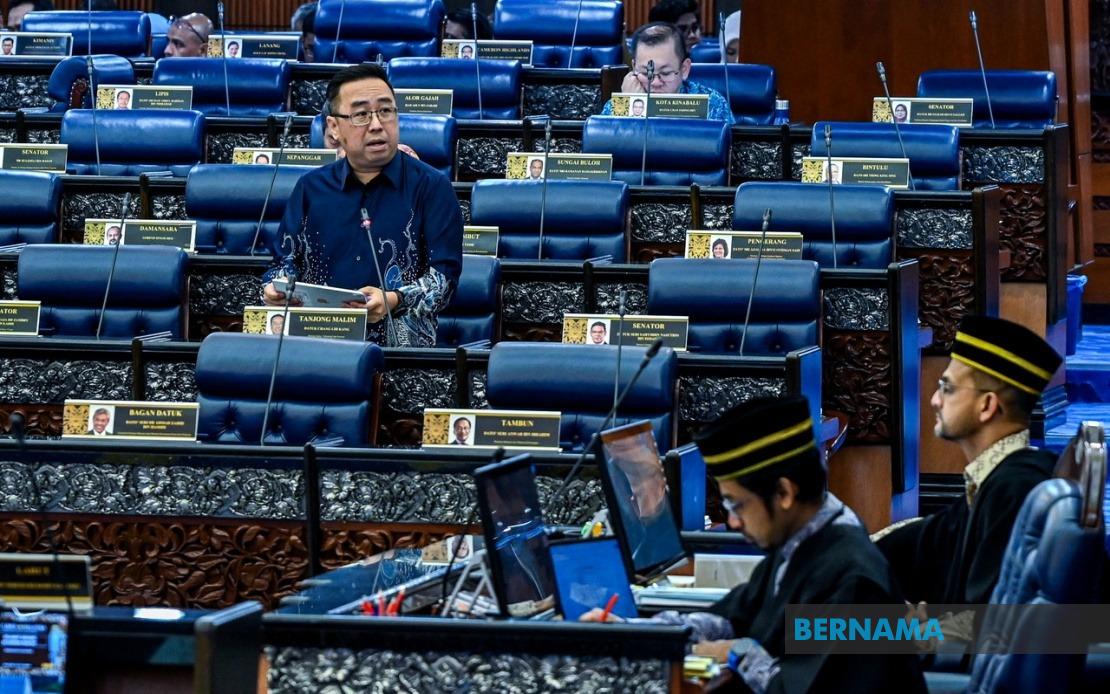
The Malaysian government has set an ambitious timeline to bring locally-developed advanced packaging technology to market within two years, marking a significant push to build domestic expertise in a critical segment of the semiconductor supply chain. Science, Technology and Innovation Minister Datuk Chang Lih Kang revealed during parliamentary proceedings that the RM185 million pilot initiative aims to transition the technology from laboratory conditions to commercial readiness, underpinned by a consortium model that pools resources from five local companies alongside government research institutions.
The investment structure represents a calculated approach to technology maturation. Rather than immediately targeting full commercialisation, the government is funding a two-year capacity-building phase designed to systematically elevate the Technology Readiness Level from TRL 5—where the technology has been validated in a laboratory environment—to TRL 9, the stage at which a system is ready for operational deployment in a market context. This staged progression allows domestic companies to develop competency in advanced packaging processes while still benefiting from government financial support during the most technically demanding phase.
Advanced packaging occupies a pivotal position within the semiconductor value chain, sitting between the design phase and the final product delivered to customers. It encompasses techniques such as chiplet integration, 3D packaging, and heterogeneous integration—all processes that command significantly higher margins than traditional assembly and testing services. By developing indigenous capabilities in this area, Malaysia aims to capture greater value from its existing electronics manufacturing base rather than remaining locked into lower-margin roles as a mere processor of components designed and packaged elsewhere.
The consortium approach distinguishes this initiative from previous standalone government projects. By requiring multiple local companies and institutions to collaborate rather than compete in isolation, the structure promotes knowledge-sharing and prevents the duplication of effort that has historically plagued Malaysian technology development programmes. This model also distributes financial risk across multiple participants and creates a sustainable competitive dynamic once government funding concludes, as the companies involved will already have established relationships and shared understanding of technical challenges.
Crucially, Minister Chang emphasised that government support carries a built-in expiration date. Once the technology reaches TRL 9 and the two-year transition period concludes, full responsibility transfers to the industry participants, who must then secure their own commercial customers and arrange private financing for scaling and operations. This exit strategy directly addresses a persistent weakness in Malaysia's innovation ecosystem—the tendency for government-funded projects to become dependent on continued public subsidies rather than achieving genuine commercial viability.
The strategic framing positions advanced packaging within the broader context of high-tech semiconductor applications that will define the next decade of industry competition. Artificial intelligence, data centres, and high-performance computing all depend on sophisticated packaging solutions that can deliver the thermal management, signal integrity, and interconnect density required by advanced processors. By developing expertise in these packaging methodologies, Malaysia positions itself to participate in this growing segment rather than risk being sidelined as semiconductor manufacturing becomes increasingly sophisticated and consolidated among a handful of global leaders.
The initiative carries particular relevance for Malaysia's existing strengths in assembly, testing, and manufacturing. The country has long served as a crucial hub for semiconductor back-end operations, with companies like Penang hosting major assembly and testing facilities. However, this expertise has gradually become commoditised, with price competition intensifying from lower-cost jurisdictions in Southeast Asia and beyond. Advanced packaging offers a path to higher-value activities that leverage Malaysia's existing manufacturing infrastructure, technical workforce, and supply chain relationships while commanding substantially improved margins and creating stronger barriers to competition from emerging alternatives.
The quantum leap in technological sophistication also aligns with Malaysia's broader positioning within regional supply chains for emerging technologies. Southeast Asia has become increasingly important to global semiconductor manufacturers seeking alternatives to concentration in Taiwan and South Korea, and countries that can offer not just manufacturing capacity but also local innovation capability gain significant negotiating power. By demonstrating proficiency in advanced packaging, Malaysia enhances its appeal to multinational semiconductor firms considering regional expansion or diversification.
However, the two-year timeline reflects an optimistic assessment of how quickly domestic companies can acquire proficiency in technologies that currently remain concentrated in the hands of a few global specialists. Advanced packaging demands not only capital investment but also highly specialised human expertise in areas such as thermal analysis, materials science, and process control. The capacity-building component must address potential bottlenecks in recruiting and retaining the technical talent necessary to sustain these operations beyond the government-funded pilot phase, particularly given competition from better-resourced multinational operations offering higher salaries.
The investment also implicitly acknowledges Malaysia's vulnerability within semiconductor geopolitics. With major powers increasingly viewing chip manufacturing as critical infrastructure, and with supply chain disruptions highlighting the risks of overconcentration, countries that can demonstrate indigenous capabilities in high-value semiconductor activities gain both economic benefits and strategic autonomy. Malaysia's investment in advanced packaging contributes to this broader goal of reducing reliance on imports of sophisticated semiconductor technologies while positioning domestic companies to participate more substantially in global value networks.
The RM185 million allocation, while substantial by Malaysian standards for a single technology development project, remains modest compared to the investments being deployed by other regional competitors and global semiconductor powers. South Korea, Taiwan, and increasingly China have all committed far larger resources to semiconductor technology advancement. This disparity suggests that Malaysia's advantage must come not from attempting to out-spend competitors but from leveraging its existing industrial base, regulatory pragmatism, and geographic position within Asian supply chains.
For Malaysian electronics manufacturers and component suppliers, successful execution of this programme could unlock new commercial opportunities and higher-margin business models. Companies participating in the consortium gain early exposure to advanced packaging techniques and the opportunity to position themselves as local experts in a capability that multinational semiconductor firms will increasingly require from their supply base. The ripple effects could extend beyond the five direct participants, as successful demonstration of advanced packaging capability attracts investment and encourages related technology development across the broader Malaysian electronics sector.
The government's insistence on eventual industry independence and self-financing signals a maturing approach to innovation policy. Rather than viewing technology development as an indefinite public responsibility, this framework treats government investment as seed capital for ventures that must ultimately stand on commercial merit. This distinction matters considerably for the long-term sustainability of Malaysian technological advancement, distinguishing between projects that generate genuine industrial capability and those that merely consume public resources without creating lasting competitive advantage.

