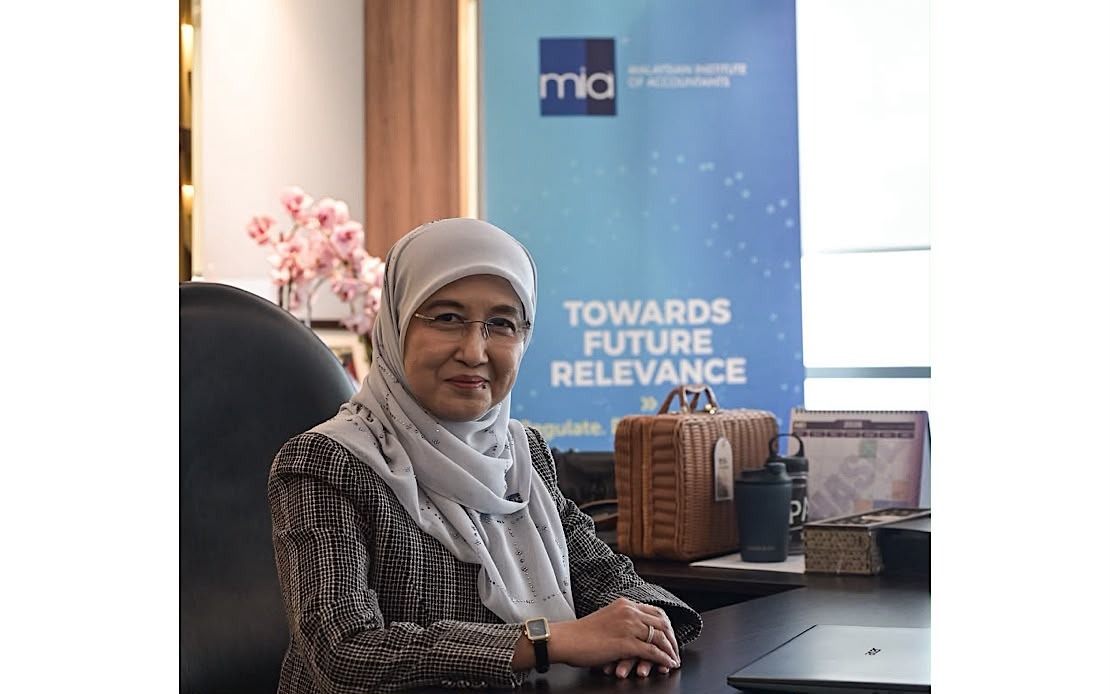
The Malaysian Institute of Accountants has issued a clarion call for the nation's accounting professionals to undergo fundamental transformation, positioning themselves as indispensable strategic advisers rather than mere compliance functionaries. Speaking in Kuala Lumpur, MIA leadership articulated a vision where accountants become central pillars of organisational trust and economic stability, navigating the twin pressures of rapid technological disruption and intensifying sustainability expectations. This strategic repositioning is essential for Malaysia to maintain its standing as a credible financial destination in an increasingly complex global business environment.
Datuk Saniza Said, elected as MIA's first woman president in December 2025, emphasised that contemporary accountancy extends far beyond traditional bookkeeping and financial record-keeping. The profession now encompasses business advisory roles, contribution to strategic corporate decision-making, and critically, the exercise of professional scepticism that protects stakeholder interests. This expanded mandate reflects a broader global recognition that accountants possess unique insights into organisational health, risk exposure, and value creation potential. For Malaysia specifically, this evolution positions the accountancy profession as a competitive advantage in attracting foreign investment and sustaining institutional confidence.
Central to MIA's philosophy is an unwavering commitment to ethical principles and integrity as the bedrock of professional legitimacy. Saniza stressed that building public trust demands consistent demonstration of transparency, accountability, and adherence to ethical standards. This emphasis carries particular significance in a regional context where financial misconduct and sophisticated fraud schemes continue to undermine investor confidence. By positioning ethics as non-negotiable, MIA seeks to reinforce Malaysia's reputation for financial governance and institutional reliability, distinguishing Malaysian accountants as trustees of public interest rather than mere service providers.
Technological disruption presents both opportunity and challenge for the profession. While artificial intelligence, data analytics, and automation are reshaping accounting workflows, MIA leadership rejects the fatalistic narrative that machines will render human accountants obsolete. Instead, Saniza articulated a complementary vision where technology handles routine, repetitive computational tasks while accountants concentrate on sophisticated professional judgement. This distinction is crucial: AI can systematise bookkeeping processes, but strategic counsel, risk assessment, and accountability judgements remain inherently human domains requiring experience, contextual understanding, and ethical responsibility.
G. Shanmugam, MIA's chief executive officer, positioned the current moment as a tipping point where the accountancy profession undergoes profound metamorphosis. Emerging technologies are fundamentally liberating accountants from administrative drudgery, enabling them to migrate toward higher-value functions including advanced data analysis, business strategy formulation, risk management, and executive advisory roles. This reallocation of professional effort aligns perfectly with organisational needs as businesses grapple with unprecedented volatility, regulatory complexity, and stakeholder expectations. Malaysian accountants who cultivate these enhanced capabilities will emerge as trusted business partners, not peripheral compliance officers.
The expanding role encompasses what Shanmugam termed "foresight capabilities"—the ability to anticipate emerging business challenges and opportunities. Modern management increasingly expects accountants to transcend backward-looking financial reporting and instead provide forward-looking intelligence about market trends, competitive threats, and strategic possibilities. This consultative dimension transforms accountants into thought partners in boardroom discussions, contributing distinctive perspectives grounded in financial and operational data. For Malaysian organisations seeking competitive advantage in regional and global markets, accountants equipped with predictive analytics and strategic foresight capabilities become invaluable.
Sustainability represents a parallel imperative reshaping accountancy's future trajectory. Environmental, social, and governance considerations now permeate investor decision-making and regulatory frameworks across Southeast Asia and beyond. MIA's recent launch of its Sustainability Blueprint for the Accountancy Profession and Sustainability Roadmap directly addresses this evolving landscape. Accountants developing expertise in sustainability reporting, impact measurement, and assurance over non-financial disclosures position themselves at the forefront of this transformation. This specialisation carries particular relevance for Malaysian firms operating in sectors vulnerable to climate risks or subject to stringent ESG scrutiny.
Continuing professional development emerges as instrumental to sustaining competitive relevance. With approximately 42,000 members experiencing annual growth between 1.5 and 2.0 percent, MIA has structured an ambitious upskilling infrastructure. The institute conducts roughly 1,000 Continuing Professional Development programmes annually, supplemented by conferences, online learning platforms, and professional networking initiatives. This commitment to continuous learning reflects recognition that technological obsolescence accelerates constantly. Malaysian accountants who actively engage in systematic professional development maintain currency with international standards and emerging best practices.
The implications extend beyond individual career progression to broader national economic competitiveness. As international investors evaluate opportunities in Malaysia, the credibility and sophistication of local accountancy professionals significantly influence their confidence. Independent financial assurance provided by competent, ethical accountants strengthens Malaysia's position as a trusted financial hub within the Southeast Asian region. Conversely, an accountancy profession perceived as technologically laggard or ethically compromised would undermine institutional credibility and competitive positioning. Shanmugam's assertion that automation enhances rather than diminishes accounting's attractiveness represents a reframing essential for talent recruitment and retention.
Younger accounting graduates should particularly benefit from this profession-wide transformation. As artificial intelligence and automation absorb routine computational labour, fresh talent can advance more rapidly into analytical, managerial, and advisory responsibilities typically reserved for experienced practitioners. This accelerated progression creates more engaging career pathways, offering intellectual stimulation and strategic influence earlier in professional journeys. Malaysian universities and accounting firms must recognise this opportunity to cultivate technology-enabled, strategically-minded professionals capable of leading Malaysia's accountancy profession into the coming decades.
The Malaysian Institute of Accountants' strategic positioning ultimately reflects sophisticated understanding that accountancy's future depends not on resistance to technological change but on thoughtful adaptation preserving and extending the profession's core value proposition. As data becomes increasingly voluminous and complex, demand for skilled interpretation and strategic analysis intensifies. Human accountants equipped with technological fluency, analytical capability, ethical foundation, and business acumen will find themselves more rather than less indispensable. For Malaysia's economic trajectory, ensuring that the accountancy profession evolves along these dimensions represents an investment in institutional credibility and competitive sustainability in an increasingly demanding global business environment.

