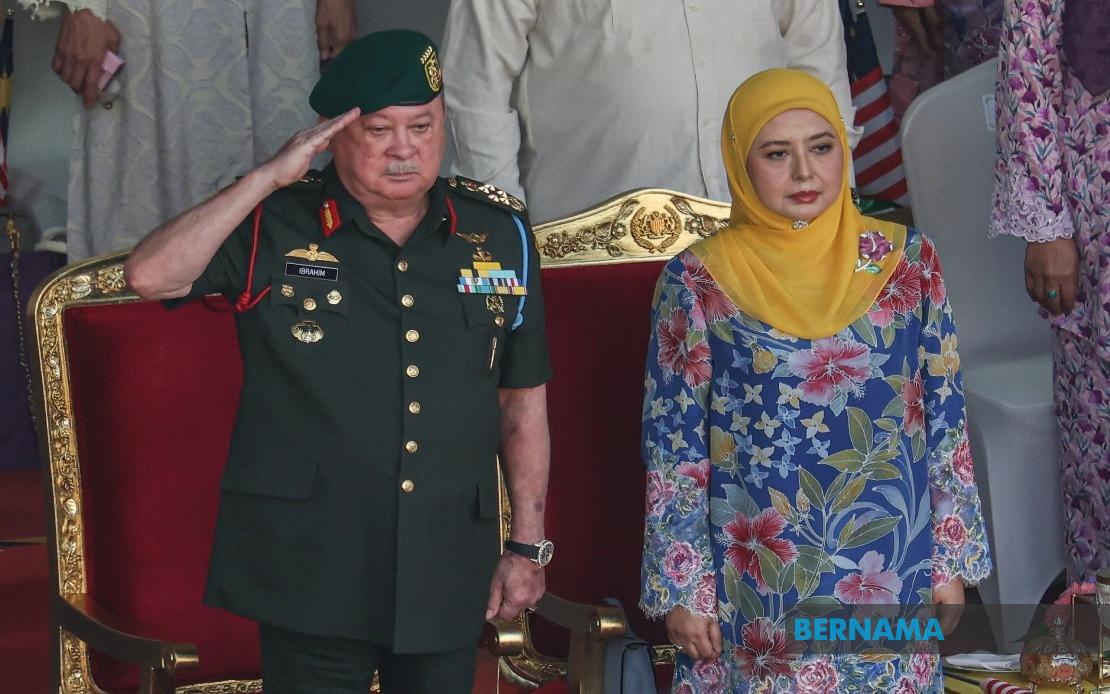
Putrajaya transformed into a sea of patriotic celebration on August 31 as the nation marked its 69th National Day, with tens of thousands of Malaysians converging on Dataran Putrajaya to commemorate their country's independence. The massive turnout reflected deep-rooted sentiments of national pride, with attendees spanning all ages, ethnicities, and backgrounds—a powerful demonstration of the unifying force that independence holds across Malaysia's diverse population. The atmosphere crackled with festive energy and genuine patriotic fervour, as citizens from across the peninsula and beyond made their way to the Federal Government's administrative capital to participate in this annual rite of national identity.
This year's celebration carried the theme "Malaysia MADANI: Kesejahteraan Dinikmati," emphasising the government's focus on shared prosperity and collective wellbeing. The selection of this theme signals an intention to frame independence not merely as a historical marker but as a continuing project oriented towards tangible improvements in citizens' lives. For Malaysians watching developments in the region—where economic pressures and social fragmentation pose mounting challenges—such messaging carries particular resonance. The emphasis on "kesejahteraan" (wellbeing) suggests official recognition that national unity requires more than ceremonial pageantry; it demands concrete commitment to economic opportunity and social cohesion.
Putrajaya's prominence as the venue underscores its role as Malaysia's political heartland and symbolic centre. The choice to return to Dataran Putrajaya represents the eighth time in recent decades that the administrative capital has hosted national-level celebrations, having previously staged the main event in 2003, 2005, 2018, 2019, 2023, 2024, and 2025. This frequency reflects both logistical considerations and a deliberate strategy to anchor national identity narratives in the seat of government. For many attendees, the journey to Putrajaya itself becomes part of the experience—a pilgrimage of sorts to the centre of national governance and administrative power.
Prime Minister Datuk Seri Anwar Ibrahim and his wife, Datuk Seri Dr Wan Azizah Wan Ismail, arrived at the royal stage at 7:53 am, setting the tone for proceedings with their presence. Their arrival was marked by the traditional "Hormat Perdana" musical accompaniment, establishing the formal ceremonial character of the day. Minutes later, at 8 am precisely, Their Majesties Sultan Ibrahim and Raja Zarith Sofiah arrived to lead the national celebration. The presence of both executive and constitutional leadership signified continuity and constitutional propriety—a reminder that in Malaysia's parliamentary monarchy, the sovereignty of the nation is shared between the King and the people's representatives.
The arrival of the royal couple triggered a spectacular aerial display that captured the imagination of the assembled crowd. Five military helicopters executed a coordinated flypast while trailing the Jalur Gemilang, creating a visual spectacle that commanded attention across Dataran Putrajaya. This aerial component, accompanied by the playing of Negaraku and the regal "Hormat Diraja," transformed a ceremonial moment into an unforgettable national experience. The symbolism was unmistakable: the national flag soaring above the capital, borne aloft by the instruments of state authority, projecting Malaysian identity across the skies.
The formal ceremonial proceedings commenced with the singing of Negaraku, followed by the raising of the Jalur Gemilang to a 14-gun salute—each report representing one of Malaysia's 14 states. This symbolic arithmetic reinforces the federal nature of the Malaysian state and the principle of equal representation among the constituent territories. The 41st Battery of the Royal Artillery Regiment (Ceremonial), under the command of Major Hafizan Mat Ghani, executed this ceremonial duty, connecting present celebrations to Malaysia's military heritage and institutional continuity.
A particularly moving moment arrived with the recitation of the Rukun Negara, Malaysia's foundational national principles. Led by Malaysian Fire and Rescue Department Deputy Commissioner Datuk Abdul Razak Muda, alongside 69 uniformed personnel from the JBPM and sign language interpreter Nur Alyanatasha, this section of the ceremony demonstrated inclusive national observance. The inclusion of a sign language interpreter signals official recognition that national identity embraces all citizens, regardless of ability—a subtle but important statement about the bounds of belonging in contemporary Malaysia. The presentation of 69 JBPM officers symbolically represented the 69 years of independence being commemorated.
The emotional crescendo came when the cry of "Merdeka" rang out seven times across Dataran Putrajaya following the Rukun Negara recitation. This sevenfold declaration, echoing the historic proclamation of independence, triggered a spontaneous wave of patriotic expression as Malaysians throughout the venue raised their mini Jalur Gemilang skyward. The moment captured something essential about National Day celebrations: the opportunity for individual citizens to participate physically and emotionally in national affirmation. For many attendees, this collective action represents a rare occasion when personal identity and national identity merge completely.
The attendance of Deputy Prime Minister Datuk Seri Dr Ahmad Zahid Hamidi, alongside cabinet ministers including Communications Minister Datuk Seri Fahmi Fadzil (who chairs the main committee for both National Day and Malaysia Day celebrations), underscored the government's full commitment to these proceedings. The presence of diplomats and foreign delegates highlighted the international dimension of Malaysian National Day—an opportunity for Malaysia to project its national narrative to the global community and reinforce its standing as a functioning, unified nation-state with ceremonial gravitas.
For Malaysia and Southeast Asia more broadly, such national celebrations carry meaning beyond ceremony. In a region where nation-building remains an ongoing project, where ethnic and religious diversity presents both enriching possibilities and potential fractures, and where external pressures constantly test state cohesion, the annual reaffirmation of national identity serves crucial functions. These moments allow citizens to rehearse their commitment to the national project, to experience viscerally the bonds connecting them to millions of strangers within common borders, and to receive official reassurance that unity remains possible and desirable. The 2026 celebration, grounded in the theme of shared prosperity, suggests that Malaysian leadership recognises this reality: independence alone is insufficient; citizens must perceive tangible benefits accruing from membership in the national community.

