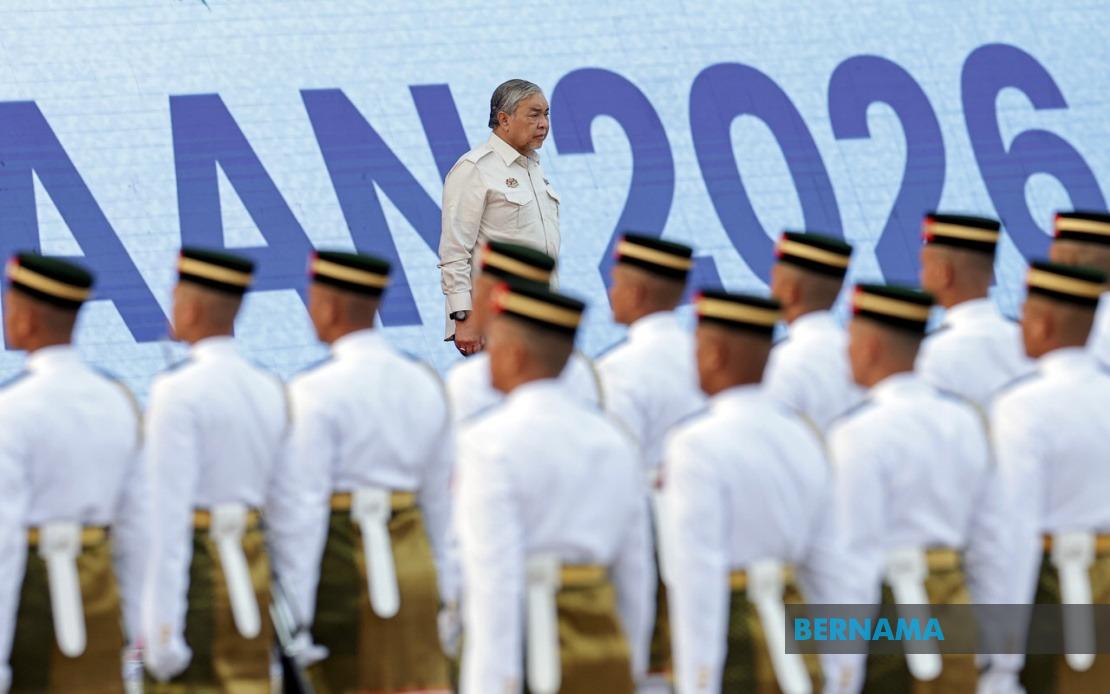
Malaysia's National Day celebration on August 31 at Dataran Putrajaya has been hailed as a watershed moment for the nation's patriotic sentiment. Deputy Prime Minister Datuk Seri Dr Ahmad Zahid Hamidi described the occasion as surpassing previous years' festivities in both scale and energy, signalling what he characterised as a tangible strengthening of national pride among the Malaysian population. Speaking to journalists immediately after the proceedings concluded, Ahmad Zahid attributed the heightened calibre of this year's commemoration to an unmistakable upturn in the patriotic consciousness of citizens across the country.
The magnitude of participation underscored the growing appetite for national commemoration events. Organisers reported that more than 100,000 members of the public converged on Dataran Putrajaya from the early hours to witness the proceedings unfold. The parade itself proved ambitious in scope, marshalling 10,819 participants distributed across 76 distinct contingents complemented by 22 marching bands. This logistical achievement required extensive coordination and reflected substantial institutional investment in delivering a spectacle befitting the nation's most significant annual civic occasion.
The theme selected for this year's celebration—"Malaysia MADANI: Kesejahteraan Dinikmati"—underscored the government's messaging priorities around inclusive prosperity and shared wellbeing. The choice of thematic framework represented a deliberate positioning of National Day not merely as a historical commemoration but as an occasion to reinforce contemporary governance philosophy and national aspiration. Ahmad Zahid's interpretation of the event's success as emblematic of rising patriotism appeared calibrated to connect the ceremonial grandeur with substantive national sentiment, suggesting the government views public enthusiasm for such occasions as a barometer of social cohesion.
The occasion drew Malaysia's highest dignitaries to Dataran Putrajaya in a display of institutional unity. His Majesty Sultan Ibrahim and Her Majesty Raja Zarith Sofiah, the King and Queen of Malaysia, presided over the festivities, their attendance lending constitutional gravitas to the proceedings. Prime Minister Datuk Seri Anwar Ibrahim attended alongside members of the Cabinet, signifying that the executive establishment had mobilised comprehensively to ensure the celebration succeeded. This convergence of the formal state apparatus—from the constitutional monarchy through to senior ministerial figures—demonstrated that the occasion carried significance beyond ceremonial formality.
Ahmad Zahid took time during the proceedings to engage directly with assembled members of the public who had invested considerable effort to attend. These interactions appeared intended to project accessibility and to foster organic connection between senior political leadership and ordinary citizens. Such personal engagement by a deputy prime minister at a public event carries symbolic weight in democratic contexts, potentially reinforcing perceptions of government responsiveness and connection to grassroots sentiment. The deputy prime minister's willingness to spend time mingling rather than maintaining formal distance suggested a conscious effort to authenticate the government's claimed alignment with popular patriotic sentiment.
The comparison Ahmad Zahid drew between 2026's celebration and those of previous years carries implications for understanding longer-term trends in Malaysian national consciousness. By explicitly noting improvement relative to prior iterations, he was positioning this year's event within a narrative arc of ascending civic engagement and national spirit. For Malaysian observers, such framing invites reflection on whether heightened participation genuinely reflects strengthened patriotism or whether factors such as improved organisation, marketing, public holidays, or weather conditions might have contributed to larger attendance figures. The interpretation of event success as patriotic indicator remains politically charged terrain.
From a regional perspective, Malaysia's emphasis on National Day as a platform for demonstrating social cohesion and shared national purpose resonates within Southeast Asian contexts where several nations navigate questions of national unity amid diversity. The participation of over 100,000 citizens in a coordinated national celebration represents a form of civic performative expression that governments across the region increasingly prioritise. The elaborate parade involving scores of contingents and marching bands functions as both entertainment and symbolic affirmation of national identity, projecting outward a vision of harmonious collective purpose.
The Deputy Prime Minister's explicit invocation of religious gratitude—"Alhamdulillah" (praise be to God)—when commenting on the patriotic sentiment on display reflected the manner in which Malaysian political discourse frequently weaves religious and national sentiment together. This rhetorical choice reinforced messaging that patriotism and faith are complementary rather than competing loyalties, a framing particularly significant in a Muslim-majority nation where questions of religious and national identity periodically surface in public discourse.
The organisational complexity involved in staging such celebrations—coordinating 10,819 parade participants, managing traffic and crowd control for over 100,000 attendees, synchronising protocol for royal attendance—underscores the substantial administrative infrastructure that Malaysia has developed for ceremonial occasions. This capability reflects institutional capacity and suggests that government agencies and organising committees have invested in training and systems that enable large-scale public events to proceed smoothly. The success of such logistics may itself contribute to positive public perception and willingness to participate in future occasions.
Moving forward, Ahmad Zahid's assessment that this celebration exemplifies rising patriotism will likely feature in government communications and political messaging. Whether subsequent National Day celebrations can maintain or exceed this year's apparent success will become a measure of sustained civic engagement. For Malaysian stakeholders—from policymakers to civil society observers—the 2026 National Day has been established as a baseline against which future national celebrations will be measured, with political implications attached to whether enthusiasm remains constant, grows further, or diminishes.

