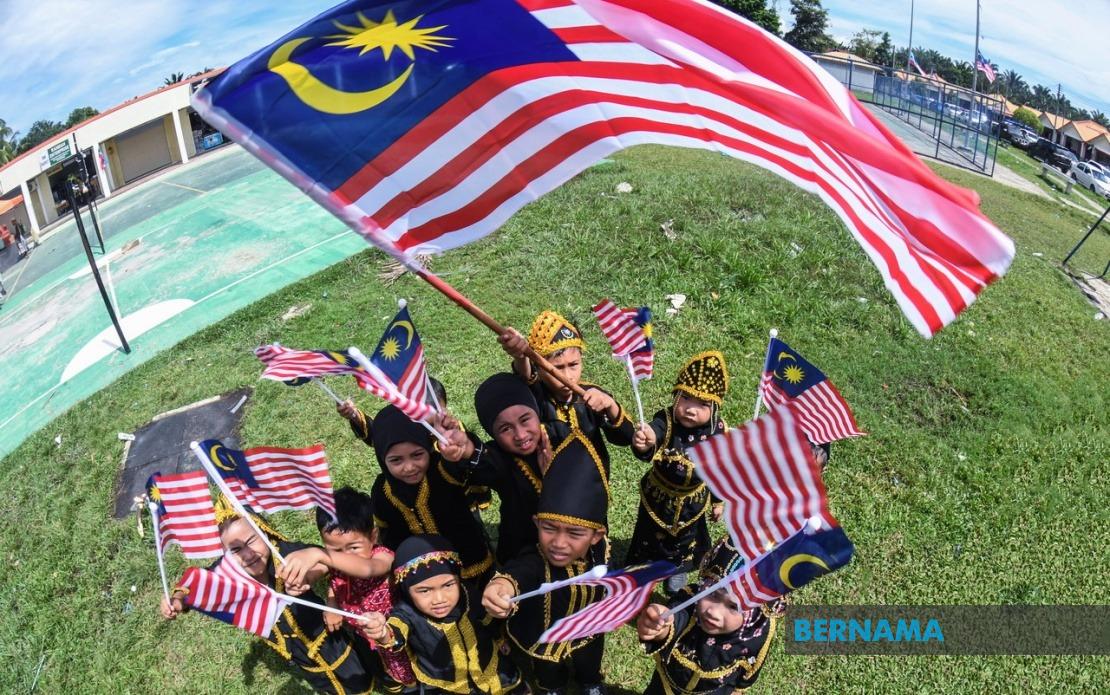
Malaysia will launch its 2026 National Month and Fly the Jalur Gemilang campaign with a scaled-back indoor ceremony this weekend, marking a deliberate shift in how the nation marks its most significant patriotic occasion. Scheduled for Sunday, July 19 at the Ministry of Health Training Institute Sultan Azlan Shah in Tanjung Rambutan, Ipoh, the event represents a recalibration of national celebrations in response to broader global pressures affecting the country and the wider region.
Muhammad Najmi Mustapha, director of the Communications and Community Development Division at the Information Department, explained that the decision to move away from large-scale open gatherings reflects contemporary challenges that extend beyond Malaysia's borders. The previous format, which brought thousands together at venues like Muar in Johor last year and Cyberjaya in 2024, gave way to a more intimate indoor setting this year, a choice informed by the global energy supply crisis and the ongoing conflict in West Asia.
Yet the apparent reduction in scale does not signal any diminishment in the government's commitment to fostering national pride. Prime Minister Datuk Seri Anwar Ibrahim is expected to lead the launch ceremony, scheduled to begin at 10 am, with the proceedings being broadcast live across Radio Televisyen Malaysia, BERNAMA, and digital platforms including Merdeka360, the Ministry of Communications' official channels, and the Information Department's social media presence. This extensive multimedia coverage ensures that Malaysians across the country can participate virtually, even as the physical gathering remains restricted to invited participants and government officials.
The choice of venue carries particular significance. The Ministry of Health Training Institute represents essential national infrastructure, embodying Malaysia's commitment to public welfare during a period marked by external economic headwinds. By situating the launch within a healthcare institution rather than a ceremonial or entertainment venue, the government signals that patriotism remains rooted in service to the nation's fundamental needs, even amid global turbulence.
Central to this year's National Month campaign is the continuation and expansion of the '1 Rumah 1 Jalur Gemilang' initiative, a grassroots movement encouraging households to display the national flag. This programme has evolved significantly since its introduction, now encompassing nine clusters rather than the original seven. Two new sectors—houses of worship and sports organisations—have been added alongside the existing education, higher education, health, security, community, industry, and government sectors. This expansion reflects an attempt to weave patriotic expression into the fabric of Malaysian civil society and institutional life, transcending the ceremonial boundaries of a single day or launch event.
Social media engagement has become integral to the campaign's success, a recognition that national sentiment in 2026 is shaped as much by digital platforms as by physical gatherings. Citizens are encouraged to adopt the Jalur Gemilang as their profile picture and share celebratory content using designated hashtags: #HKHM2026, #MalaysiaMADANI, #KesejahteraanDinikmati, and #Merdeka360. This grassroots digital strategy compensates for the smaller physical footprint, enabling millions to participate directly in shaping the national narrative around Independence and Malaysia Day.
The overarching theme for this year's celebrations, 'Malaysia MADANI: Kesejahteraan Dinikmati,' was previously announced by Communications Minister Datuk Seri Fahmi Fadzil. The concept of MADANI—often understood as connoting civilisation, prosperity, and shared wellbeing—positions the 2026 celebrations within a broader governance and development framework rather than focusing narrowly on ceremonial patriotism. This thematic approach suggests that the government views national celebrations not as standalone events but as touchstones for ongoing efforts to improve citizens' quality of life.
The Malaysia MADANI logo, established as the official emblem, will continue to represent the festivities through 2026, providing visual consistency across campaigns and communications. This extended visual identity helps maintain continuity of messaging across multiple years, a practical consideration for a nation managing diverse constituencies and rapidly shifting public discourse.
The subsequent National Day celebration itself, scheduled for August 31 at Dataran Putrajaya, will maintain the modest yet vibrant approach established by the launch ceremony. This decision to scale down public gatherings while preserving ceremonial grandeur reflects a nuanced understanding of contemporary Malaysian society. External pressures—whether energy constraints or regional instability—have prompted policymakers to reconsider how national unity is best demonstrated. The implicit argument underlying these changes is that patriotism need not be measured in crowd size or production spectacle but rather in the depth and authenticity of citizen engagement.
For Southeast Asian observers, Malaysia's approach offers instructive lessons about sustaining national narratives during periods of economic uncertainty. The region faces similar pressures regarding energy costs and geopolitical volatility, yet Malaysia's decision to maintain patriotic observance while acknowledging external constraints suggests a middle path between indifference and excess. By democratising participation through digital platforms and expanding institutional engagement through the cluster-based flag campaign, the government creates multiple entry points for citizens to express national pride regardless of their ability or willingness to attend large public events.
The emphasis on modest yet patriotic celebration also speaks to evolving generational attitudes toward national ceremonies. Younger Malaysians, increasingly present on social media rather than at physical venues, may find this distributed model more accessible and authentic. The integration of digital patriotism—profile pictures, hashtags, viral content—reflects recognition that contemporary national identity is constructed as much in online spaces as in public squares.
As Malaysia prepares for its 2026 commemorations, the country sets a precedent for how independence celebrations can adapt to contemporary challenges without abandoning their core purpose. The modest indoor launch and expanded digital engagement represent not a retreat from patriotism but rather its evolution into forms more resilient to external pressures and more inclusive of diverse participation styles. Whether this model proves sufficient to sustain collective national sentiment amid ongoing global challenges remains to be seen, but the approach itself demonstrates strategic thinking about the future of national identity in an uncertain world.

