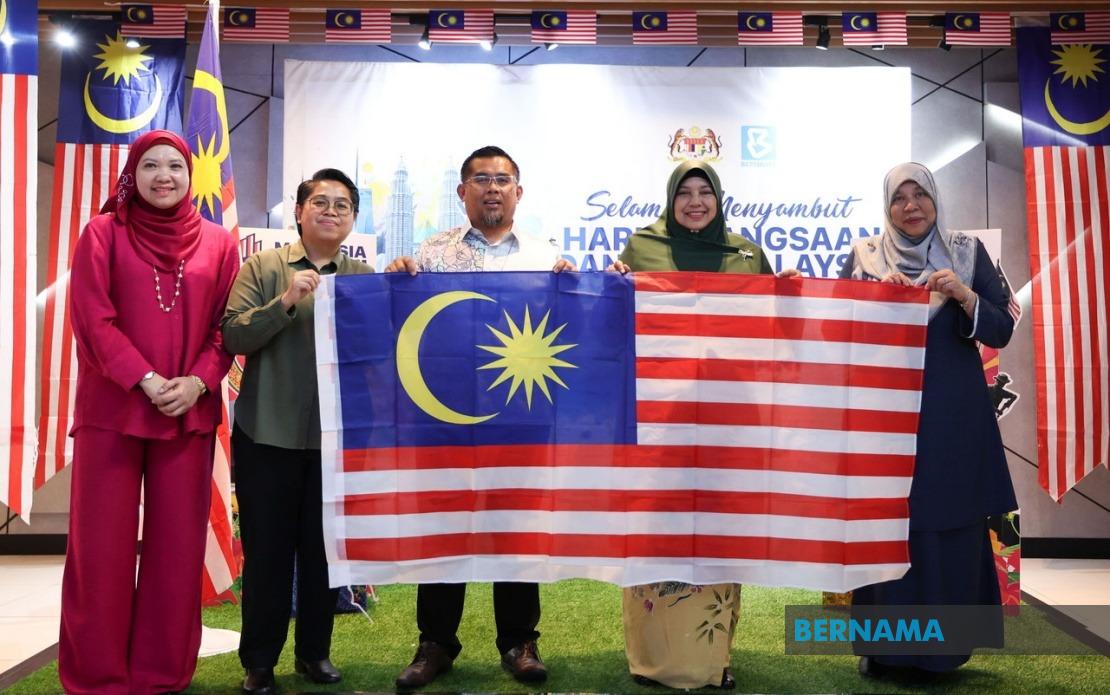
The Communications Ministry is preparing an expanded slate of festivities for Malaysia's 2026 National Day and Malaysia Day celebrations, with 16 new programmes designed to deepen patriotic sentiment and foster nationwide unity. The comprehensive initiative signals a deliberate shift in how the government approaches one of the country's most significant annual observances, moving beyond the customary centralised approach in Putrajaya to embrace a more distributed, community-focused model of engagement.
According to Harun Ali, secretary of the Communications Ministry's Management Services Division, the scheduled programmes encompass ventures such as Kembara Merdeka Jalur Gemilang, a National Month Decoration Competition, Ekspresi Merdeka, and the Kita MADANI Carnival, alongside various grassroots cultural and community initiatives. This eclectic mix reflects an explicit policy choice to make the festivities accessible to citizens across different demographics and geographic regions, rather than concentrating ceremonial focus in a single location or among specific audience segments.
The repositioning of the main Merdeka Eve Celebration from Putrajaya to Stadium Merdeka represents a symbolically significant decision with practical implications. The historic venue carries considerable weight in Malaysian national memory, having hosted independence-related events decades ago. By returning the principal celebration to this location, organisers are attempting to reconnect contemporary observances with the country's foundational historical moments, creating a bridge between past struggles and present-day nationhood. This geographical and symbolic realignment underscores a conscious effort to make independence celebrations feel more rooted in the nation's authentic history rather than confined to administrative spaces.
A particularly noteworthy component of the 2026 programme involves a special address by Prime Minister Datuk Seri Anwar Ibrahim at midnight on Merdeka Eve, timed to coincide with the transition into National Day itself. The staging of such a statement at that precise ceremonial moment carries weight beyond mere protocol—it positions the prime minister as a key voice articulating the contemporary meaning of independence and the government's vision for national unity. Such moments, broadcast nationally and discussed across media platforms, serve functions beyond their immediate content, reinforcing governmental messaging around patriotism and collective purpose.
Among the fresh attractions designed to capture public imagination is an aerial exhibition called "Melukis Senja," featuring acrobatic manoeuvres by Aero 3 that produce coloured smoke trails and coordinated fireworks displays across Putrajaya's skyline. This visual spectacle, presumably aimed at younger audiences and social media engagement, reflects how modern national celebrations increasingly integrate entertainment value with patriotic messaging. The aerobatic component also signals investment in novel, memorable experiences that distinguish the 2026 commemorations from routine iterations of past years.
Harun Ali's remarks emphasised that contemporary Malaysians should recognise the historical cost of the independence they presently enjoy, framing the various celebrations as opportunities to honour sacrifices made by earlier generations. This rhetorical positioning—connecting current festivities to historical struggle—serves a dual purpose: it encourages reflection on national identity while implicitly promoting respect for state institutions and national symbols. The invocation of historical struggle also subtly encourages participation across diverse communities, positioning the independence narrative as a shared inheritance rather than an exclusive concern of any particular group.
The ministry's deliberate appeal for Malaysians to display the Jalur Gemilang flag represents more than symbolic encouragement; it functions as a practical mobilisation effort, converting abstract patriotic sentiment into visible, tangible acts of national identification. Flag displays across residential areas, commercial spaces, and public venues create a landscape saturated with national symbols during the celebration period, reinforcing collective identity and participation. The official call for such displays also normalises public expressions of patriotism, potentially shaping social expectations around acceptable forms of national belonging.
The breadth and diversity of scheduled programmes suggest strategic thinking about engagement across different Malaysian demographic cohorts. While Stadium Merdeka appeals to those valuing historical continuity and formal ceremonial occasions, the Kita MADANI Carnival likely targets families seeking entertainment alongside patriotic messaging. Community and cultural activities ensure representation for grassroots civic participation, while competitions and decoration initiatives invite active rather than passive involvement. This differentiated approach recognises that contemporary Malaysians exhibit varied preferences for national celebration formats and seeks to accommodate such plurality.
From a regional perspective, Malaysia's emphasis on cohesion-building celebrations gains particular relevance given ongoing socioeconomic and communal complexities throughout Southeast Asia. By investing substantially in multifaceted national observances, the Malaysian government positions patriotic unity as a policy priority, communicating to both domestic and external audiences that national integration remains a central governmental concern. The scale and sophistication of the 2026 programme architecture suggests resource commitment commensurate with this stated priority.
The timing of these announcements, occurring well in advance of the actual celebrations, allows sufficient lead time for widespread promotion, logistical coordination, and public anticipation building. Media engagement around the programmes, culminating in the actual events themselves, creates extended opportunity for patriotic messaging and national identity reinforcement across multiple cycles of public discussion and engagement. This extended timeline also permits organisers to refine implementation based on preliminary feedback and logistical testing.
Looking forward, the 2026 HKHM celebrations appear positioned as a substantial undertaking reflecting contemporary perspectives on national identity construction and state-society engagement. The emphasis on accessibility, diversity, and novel attractions signals evolution in how Malaysia conceptualises major national observances, moving toward more inclusive, participatory models while maintaining ceremonial significance. Whether such comprehensive programming successfully achieves its stated objectives of fostering deeper patriotism and strengthened unity will largely depend on actual implementation quality and public receptiveness during the year-long lead-up and the celebrations themselves.

