Datuk Dr Zulkifli Hasan, the Minister in the Prime Minister's Department (Religious Affairs), has issued a clarion call to Malaysia's younger generation to channel the spiritual and moral lessons embedded in the Islamic concept of Hijrah as a pathway towards meaningful personal and societal development. Speaking in Putrajaya on June 16, Zulkifli emphasised that the country's youth possess considerable latent capacity that remains to be fully harnessed, and that reflecting deeply on Prophet Muhammad's transformative migration from Makkah to Madinah offers an invaluable blueprint for navigating modern challenges with integrity and purpose.
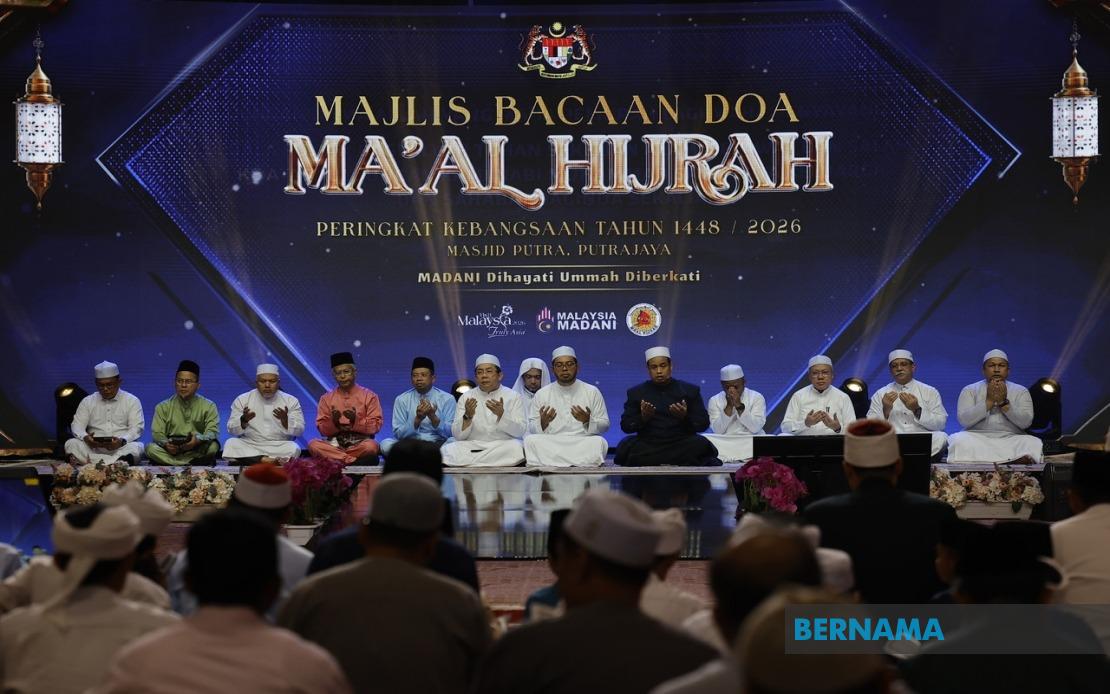
The minister's exhortation comes as Malaysia prepares for its national-level Maal Hijrah 1448H celebration, marking the Islamic calendar year corresponding to 2026 in the Gregorian system. Rather than delivering a conventional commemoration, organisers have deliberately restructured this year's programme to underscore the foundational significance of the Hijrah narrative. Zulkifli explained that the decision to anchor the celebration at Putra Mosque—rather than a secular or administrative venue—deliberately reconnects participants with the historical and spiritual context of Prophet Muhammad's journey. The mosque, he noted, symbolises far more than a place of worship; it represents the institutional bedrock upon which civilisation and communal cohesion are constructed.
The overarching theme of this year's Maal Hijrah observance, though partially obscured in the available sources, appears to centre on reinvigorating youthful commitment to positive societal transformation through Islamic principles. Zulkifli's commentary suggests that the celebration framework deliberately invites reflection on how contemporary Malaysian youth might translate ancient principles of resilience, moral conviction, and community-building into actionable responses to present-day pressures and opportunities. This interpretive approach diverges from purely ceremonial or nostalgic commemoration, instead positioning Hijrah as a living, dynamic concept applicable to navigating the complexities of twenty-first century existence.
Malaysia's decision to scale back the celebration's material dimensions reflects broader governmental sensitivity to global economic headwinds and resource constraints. By adopting what officials describe as a modest operational footprint, the organisers are demonstrating consistency between the values they promote—restraint, sustainability, and collective responsibility—and their practical programme execution. This alignment between message and method carries particular resonance in Southeast Asia, where energy security and environmental consciousness are increasingly salient public concerns. For Malaysian readers, the implicit lesson is that spiritual observance and pragmatic resource stewardship are not mutually exclusive, but rather complementary dimensions of authentic faith practice.
The commemoration programme extends beyond symbolic gestures to encompass substantive intellectual engagement. A keynote lecture series scheduled for June 18 at the JAKIM Auditorium will feature national and international scholars renowned for their expertise in Islamic history and contemporary applications of Hijrah principles. This gathering, anticipated to draw approximately 1,000 participants, aims to create a platform for dialogue between established religious authorities and broader public audiences. Such forums serve an important function in multicultural Malaysia, where informed public discourse about Islamic concepts helps build mutual understanding across communities and counters reductive or polarised interpretations.
The centrepiece of the 1448H celebration will unfold on June 17, coinciding with the Islamic date of 1 Muharam, at Putra Mosque beginning at 7 am. The event's formal component involves the presentation of national and international Maal Hijrah Figure awards, ceremonies intended to publicly recognise individuals who have exemplified the spirit of positive transformation through their personal conduct and community service. By honouring exemplars, organisers signal to Malaysian youth that the Hijrah ethos is not confined to historical narratives but remains alive in contemporary figures whose lives demonstrate its practical relevance.
The ceremonial proceedings will be presided over by the Sultan of Perak, Sultan Nazrin Shah, whose participation underscores the occasion's significance within Malaysia's official calendar and emphasises the convergence of religious observance with constitutional monarchy. This interweaving of spiritual and institutional authority reflects Malaysia's particular constitutional arrangement, wherein the Yang di-Pertuan Agong and state sultans hold formal custodial roles over Islam's practice within their respective jurisdictions. For international observers and regional audiences, such ceremonial configurations illustrate how Islamic observance operates within Malaysia's unique constitutional and cultural framework.
The timing and structure of this year's Maal Hijrah programme carry implicit messages about the trajectories organisers envision for Malaysian society. By emphasising youth engagement, intellectual discourse, and modest resource consumption, officials are articulating a vision wherein positive social change emerges through internationalised spiritual reflection, informed public conversation, and sustainable institutional practice rather than through grand gestures or resource-intensive spectacle. This approach resonates with long-standing Islamic emphases on niyyah—intention—and ihsan—excellence in action—suggesting that meaningful transformation originates from inner conviction and careful deliberation before manifesting externally.
For Malaysia's diverse population, the Maal Hijrah observance offers an opportunity for non-Muslim citizens to deepen their understanding of Islamic historical narratives and their contemporary relevance to Muslim compatriots. When framed around principles of community development, institutional integrity, and individual moral striving, the Hijrah narrative becomes accessible across sectarian boundaries as a meditation on universal human challenges: how individuals and communities navigate change, maintain ethical commitments during transitions, and construct enduring institutions reflecting their deepest values.
The emphasis on Putra Mosque's symbolic role also gestures toward Malaysia's ongoing negotiation of its relationship with Islamic heritage within a multicultural constitutional democracy. Rather than treating religious observance as privatised or segregated from public institutional space, organisers are claiming the mosque as a legitimate and appropriate venue for nationally significant commemorations. This positioning neither implies religious establishment in the Western constitutional sense nor diminishes Malaysia's commitments to plural coexistence; instead, it reflects the particular configuration wherein Islam holds a constitutionally recognised role while other religions enjoy protected freedoms.
Looking forward, the success of this year's Maal Hijrah celebration in meaningfully engaging Malaysian youth will likely shape future national observances. If the programme succeeds in translating historical principles into contemporary relevance, it may establish a template for other Islamic commemorations seeking to balance traditional reverence with modern applicability. For religious affairs officials across Southeast Asia, Malaysia's approach offers instructive examples of how official institutions can facilitate serious public engagement with Islamic concepts without imposing uniformity or suppressing critical reflection.
The underlying message from Minister Zulkifli—that Malaysian youth possess both the capacity and the responsibility to embody Hijrah principles for constructive social change—reflects broader confidence in the nation's demographic future. Rather than viewing younger generations with apprehension or resignation, officials are extending an invitation to purposeful engagement rooted in historical precedent and spiritual depth. Whether this invitation resonates will depend partly on whether the intellectual and programmatic offerings genuinely illuminate pathways for youth to translate abstract principles into concrete, meaningful action within their own communities and professional trajectories.