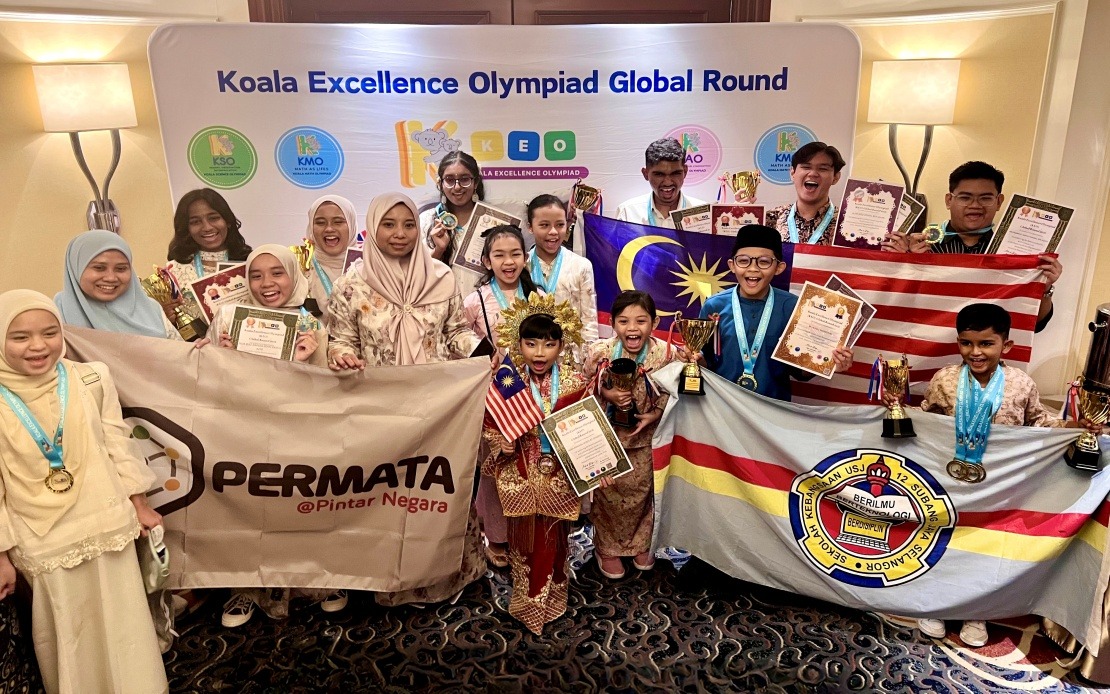
Malaysia's academic prowess received significant international recognition this week as seventeen students brought home an impressive haul of twenty-two medals from the Koala Excellence Olympiad (KEO) 2026, held in Macau. The contingent, which competed alongside representatives from multiple countries, secured five gold medals, six silver and eleven bronze across four key disciplines, underscoring the calibre of young talent emerging from Malaysian schools and higher education institutions.
The Malaysian Young Scientists Organisation (MYSO), which coordinated the national effort, fielded competitors from a diverse range of educational backgrounds. The delegation comprised four students from Kolej PERMATA@Pintar Negara Universiti Kebangsaan Malaysia (UKM), six from Sekolah Menengah Kebangsaan (SMK) Ungku Aziz, two from Sekolah Sultan Alam Shah, three from Sekolah Kebangsaan (SK) Convent (2) Bukit Nanas, and individual representatives from SMK Convent Teluk Intan, SK USJ 12, SK Seri Hartamas and SK Convent Sentul 1. This geographically and institutionally spread representation reflects the depth of academic excellence across Malaysia's education system.
Aidah Misran, who coordinated the Malaysian contingent and served as MYSO's lead official at the competition, highlighted that the olympiad brought together top young scholars to demonstrate their capabilities in English, Mathematics, Science and Arts. Organised in partnership with KEO and Miss Man International Group, the event provided Malaysian students with valuable exposure to international academic standards and competitive benchmarking opportunities that extend beyond the domestic educational landscape.
The standout performer at the competition was Year Six pupil Mukridz Mardzuki from SK Seri Hartamas, who claimed the overall Science Olympiad championship in the primary school category—a remarkable achievement that positions him among the world's top young scientific minds in his age group. This victory carries particular significance as it demonstrates that excellence in science education is being cultivated effectively at the primary level within Malaysia's school system.
Secondary school representation also proved formidable, with two students securing runner-up positions in the Science Olympiad categories. Sarah Isabel Maryam Ahmad Suhael from SK Convent (2) Bukit Nanas achieved overall runner-up status in the primary school Science Olympiad, while Alfie Rizq Danial Azlan from Sekolah Sultan Alam Shah secured the same honour in the secondary category. These results indicate consistent strength across both primary and secondary levels in scientific knowledge and problem-solving approaches.
Beyond the science disciplines, Malaysian students demonstrated versatility across the competition's breadth. Ayra 'Adani Muhammad 'Aizat from Kolej PERMATA@Pintar Negara at UKM achieved overall runner-up honours in the English Olympiad, signalling that linguistic proficiency and literary competency are being developed to international standards within Malaysia's education institutions. This achievement gains relevance in an increasingly English-dominant global knowledge economy where advanced language skills represent a critical competitive advantage.
Third-place awards were distributed among five additional competitors, reflecting a broad base of high-achieving students. Marvyn Zef Mark Philip emerged particularly distinguished by capturing two category victories within the third-place group—winning in both Science and English—demonstrating exceptional cross-disciplinary capabilities. P Prem secured third place in Science, Muhammad Khairul Mauidz Khairul Azman achieved the same ranking in Mathematics, and AK Shashini in English, collectively illustrating that Malaysian achievement spans all four competition disciplines.
The Koala Excellence Olympiad itself merits attention as an increasingly influential international platform. Developed by Australian educational experts, the competition explicitly aligns with curriculum standards that prioritise critical thinking, creativity, and practical application over memorisation—pedagogical principles that mirror global shifts toward twenty-first century learning competencies. For Malaysian participants, exposure to assessment methodologies emphasising conceptual understanding rather than rote recall provides valuable training applicable across higher education and professional contexts.
The success of Malaysia's contingent carries implications beyond individual student achievement. It demonstrates that the country's education institutions—ranging from primary government schools to specialised tertiary programmes—are implementing pedagogical approaches competitive with international standards. The representation from both urban and suburban schools, and from both public and elite institutions, suggests that academic excellence is not confined to privileged enclaves but distributed across the education system.
For Malaysian education policymakers, these results provide evidence that investment in science, technology, and language programmes is yielding measurable returns on the global stage. The ability of primary and secondary students to compete successfully against international peers in rigorous olympiad formats indicates that curriculum content and instructional quality meet or exceed international benchmarks. This validation becomes particularly significant given the government's ongoing emphasis on strengthening STEM education.
Looking forward, sustained success in international academic competitions requires continued investment in teacher professional development, updated learning resources, and structured pathways for identifying and nurturing talented students. The diversity of participating institutions suggests that support mechanisms must be accessible across different school contexts rather than concentrated in elite centres. Building on this year's performance will require systematic attention to ensuring that exemplary practices evident in top-performing schools become embedded across the broader education system.
The returned medals represent more than individual honours. They signal Malaysia's capacity to develop young minds capable of sophisticated analysis, creative problem-solving, and articulate expression in international contexts. As regional education systems increasingly compete for recognition and as Malaysian graduates enter a globalised workforce, such validations of academic excellence strengthen the country's human capital foundation and provide confidence in the pipeline of talent entering tertiary education and professional fields.

