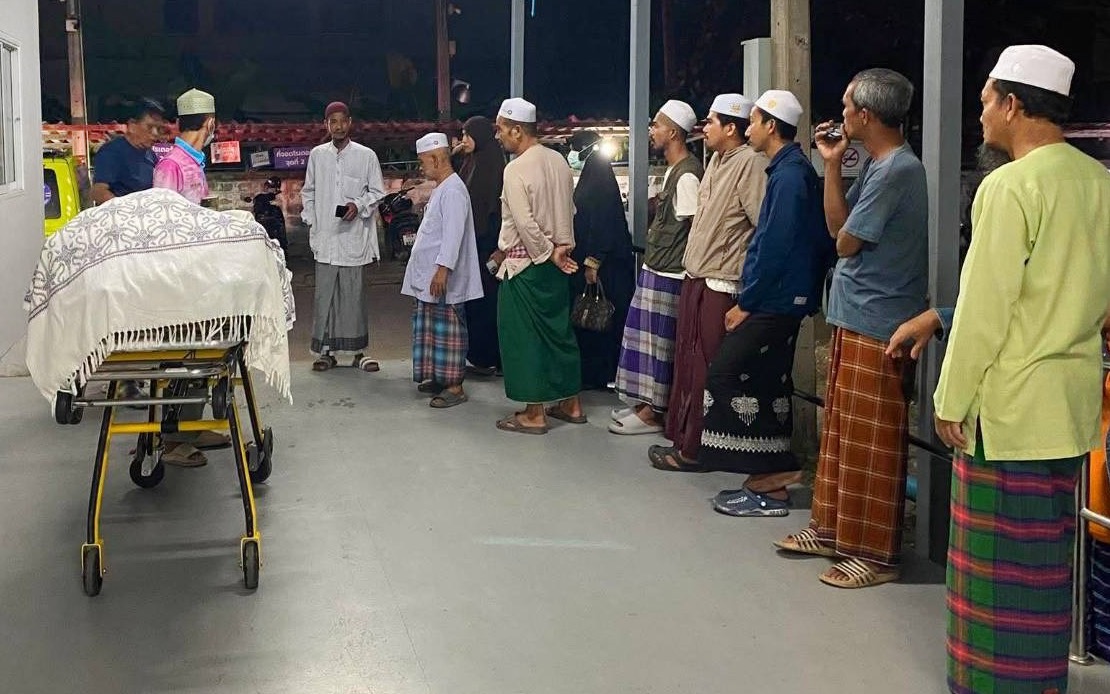
A tragic accident in Thailand's southern Yala province has claimed the life of a young Malaysian student, highlighting the ongoing safety concerns facing Thai-Malaysian border communities. The fatal collision occurred on Saturday afternoon in the Bannang Sareng area of Mueang Yala district when a motorcycle carrying two Malaysian nationals struck an electricity pole. The incident marks another casualty among the significant population of Malaysian students pursuing Islamic religious education across the southern Thai border region.
The deceased victim, identified as a 20-year-old pillion passenger from Perlis, sustained catastrophic head injuries from which he could not be revived, according to police records. The motorcycle's driver, a 22-year-old resident of Kuala Kedah in Kedah, suffered serious injuries and currently remains unconscious in the intensive care unit at Yala Central Hospital, where his condition is described as critical. Preliminary findings from investigating officers under Mueang Yala Police Chief Col Chatchai Sakdee indicate that the driver lost control of the motorcycle before colliding with the roadside pole, though authorities have not yet provided full mechanical or environmental details of the incident.
Both young men were students at Pondok Padang Pusu, a residential Islamic educational institution located in Yarang District, Pattani province. They were en route to the pesantren when the accident occurred, suggesting they were making a routine journey between their accommodation and the school. The decision by Malaysian families to send their children to such institutions across the Thai border reflects the deep cultural and religious ties between Malaysian communities and Thailand's Islamic education sector, a practice that has become increasingly common over the past two decades.
The Malaysian Consulate in Songkhla has confirmed the nationality and identity of both victims and is now managing the administrative aftermath of the tragedy. Officials from the consulate indicated they are awaiting contact from next of kin to facilitate the necessary documentation and arrangements, including potential repatriation procedures. This consular response underscores the established protocols Malaysia maintains for handling citizen casualties abroad, particularly in neighbouring Thailand where such cases occur with regularity.
The incident raises persistent questions about road safety standards in Thailand's southern provinces, where the infrastructure connecting residential Islamic schools to communities often involves challenging driving conditions. The loss of control leading to a pole collision suggests either mechanical failure, speed-related factors, or environmental hazards—details that Malaysian authorities may pursue through bilateral channels to better understand the circumstances and prevent similar tragedies. The narrow roads servicing these educational institutions have historically been sites of concern for both Thai and Malaysian transport safety advocates.
For Malaysia's Muslim communities, the death represents a sobering reminder of the risks inherent in cross-border religious education. Thousands of Malaysian students currently study at pesantren institutions throughout southern Thailand, pursuing formal Islamic curricula including Quranic memorization programmes. The fatal accident will likely reignite discussions within Malaysian educational and parental circles about safety protocols, transportation practices, and the adequacy of support systems for students living in foreign jurisdictions.
The injured survivor faces a prolonged recovery period should he emerge from his critical condition. His unconscious state in the ICU leaves his long-term prognosis uncertain, and his family will confront difficult medical and logistical decisions regarding his care in a foreign healthcare system. Should he survive, rehabilitation could extend across months, complicating both his academic pursuits and family circumstances. The financial and emotional burden on his relatives will be substantial, particularly if the recovery proves protracted.
Thailand's relationship with the sizeable Malaysian student population in its southern provinces has generally been cooperative, with both governments recognizing the educational value and cultural significance of these institutions. However, individual tragedies like this one occasionally create diplomatic nuance, as Malaysian authorities take interest in the circumstances surrounding citizen deaths. The consulate's involvement signals that Malaysia will likely seek full transparency regarding the investigation's conclusions and any recommendations for preventing future incidents.
The broader context includes Thailand's overall road safety record, which consistently ranks poorly in Southeast Asian and global comparisons. Motorcycles, often the primary transportation for students and lower-income residents, feature prominently in Thai traffic fatalities. The casual attitude toward protective equipment, speed enforcement, and maintenance standards documented in many Thai communities contrasts sharply with Malaysian regulatory frameworks, potentially explaining why accidents involving Malaysian citizens in Thailand occasionally occur despite reasonable precautions.
Moving forward, this tragedy may prompt Malaysian authorities and parents to evaluate transportation arrangements for students at border-region institutions more rigorously. Some families may reconsider placements at Thai pesantren facilities, while others will likely implement stricter rules regarding motorcycle use or require institutional provision of safer transport options. Educational leaders in both countries will face pressure to address safety systematically rather than treating accidents as isolated incidents.

