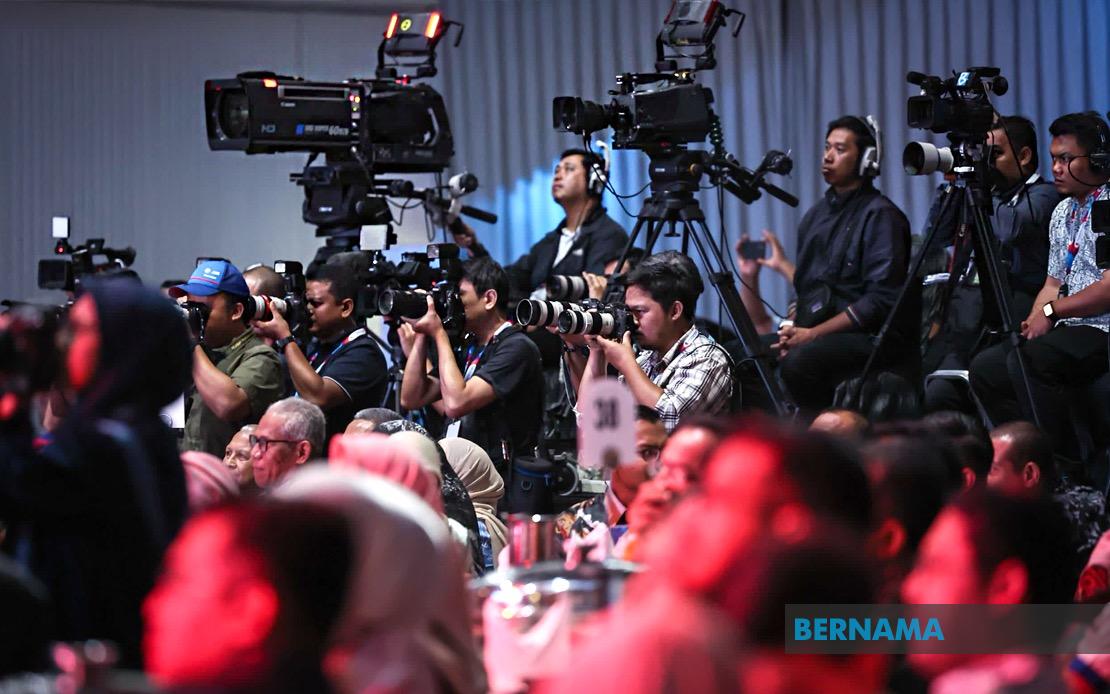
The Malaysian Media Council (MMM) has given its backing to Prime Minister Datuk Seri Anwar Ibrahim's recent directive that complaints lodged against journalists working for recognised media organisations should undergo review by the Council before any subsequent legal or administrative action proceeds. The statement represents a significant affirmation of the Council's institutional role in mediating disputes within Malaysia's media landscape and reflects broader efforts to establish a structured approach to press accountability that balances media freedom with professional standards.
In its formal response, the MMM framed the Prime Minister's remarks as recognition of independent media self-regulation's importance to the Malaysian democratic system. The Council characterised the directive as supporting a process that is simultaneously fair to complainants, transparent in its operation, and professional in its application—objectives that the MMM argues can only be achieved when disputes are filtered through bodies equipped to understand journalism's contextual complexities rather than being escalated immediately to courts or enforcement agencies.
The Council's interpretation of its mandate places it as an intermediary institution designed specifically to address grievances rooted in journalistic practice, media ethics, reporting accuracy, and the enforcement of reply and correction rights. This functional separation matters considerably: by positioning itself between initial complaints and formal legal proceedings, the MMM aims to prevent what it characterises as arbitrary or disproportionate responses to media coverage. The Council emphasised that this buffer function does not exempt journalists or media organisations from Malaysia's legal framework, but rather ensures that journalistic activities are evaluated through principles of proportionality and democratic necessity.
For journalists and media organisations across Southeast Asia, where press freedom remains contested terrain, this procedural distinction carries practical implications. The MMM's framework essentially argues that complaints about journalism should be treated differently from other civil or administrative grievances—a position that reflects international best practices in media self-regulation but remains controversial in jurisdictions where government authorities view media accountability through a narrower legalistic lens. By securing Prime Ministerial endorsement for this differentiated approach, the Council has reinforced its authority to serve as gatekeeper for journalistic disputes.
The Council's complaints mechanism operates through distinct stages designed to filter out matters falling outside its jurisdiction before advancing to substantive review. When complaints are received, the Secretariat first determines whether they involve actual journalistic practice or media conduct rather than other issues that might be more appropriately resolved through standard legal channels. For eligible complaints, the relevant media organisation receives notice and opportunity to respond, clarify, or take corrective action independently. Only when preliminary resolution fails does a complaint proceed to formal assessment against the Council's Code of Conduct and recognised journalism principles.
This layered approach reflects an underlying philosophy that media accountability and media freedom need not function as zero-sum propositions. The MMM argues that responsibility and freedom should be strengthened concurrently rather than treated as competing interests requiring constant trade-off calculations. This framing directly addresses one persistent tension in Malaysian media policy: how to maintain legitimate mechanisms for addressing genuine harms caused by journalism without enabling weaponisation of complaint procedures against critical reporting. By emphasising that the Council's mechanism is designed to provide structured remedies—clarifications, corrections, or appropriate remedies—rather than criminal liability or censorship, the MMM positions itself as protecting both public interests and media pluralism.
The Prime Minister's statement gains additional significance when considered against Malaysia's recent performance in global media freedom assessments. The World Press Freedom Index has chronicled Malaysia's declining standing internationally, a trend the government has sought to address through various policy interventions. The MMM's statement explicitly acknowledges this concern, suggesting that establishing robust self-regulatory processes and encouraging stakeholders to utilise them represents a potential pathway toward improving Malaysia's international media freedom credentials. For Malaysian policymakers concerned about the country's regional reputation as a destination for investment, talent, and media operations, demonstrating functioning independent press regulation carries strategic value beyond purely domestic journalism management.
The Council's call for stakeholders—including government agencies, elected officials, and public institutions—to channel media disputes through professional mechanisms rather than resorting to public campaigns, official threats, or bureaucratic harassment represents an implicit critique of practices that remain common within Malaysian political culture. By framing resort to the MMM's procedures as preferable to confrontational approaches, the Council attempts to create normative pressure for institutional restraint. Whether such appeals prove effective depends partly on whether the MMM's actual complaint resolutions are perceived as fair and whether they generate sufficient remedies to satisfy complainants who might otherwise pursue more aggressive responses.
For civil society organisations and international observers monitoring press freedom in Malaysia, the significance of this moment lies in whether procedural endorsement translates into substantive protection. The MMM's framework is only as strong as stakeholders' willingness to respect its determinations and accept its boundaries around what constitutes legitimate action against journalists. Government agencies, corporate actors, and political figures could theoretically acknowledge the Council's role while simultaneously pursuing parallel legal or administrative strategies against journalists. The real test of whether this statement represents meaningful institutional advancement will emerge through specific cases over coming months and years.
The Malaysian context for this development differs significantly from established media self-regulation systems in mature democracies where institutional frameworks enjoy long histories of stakeholder respect and statutory backing. The MMM must operate within a political ecosystem where media regulation remains contested and where some government officials maintain scepticism toward independent press oversight. However, the Prime Minister's public endorsement creates political space for the Council to enforce its procedures more assertively, potentially enabling it to reject out-of-hand complaints filed directly with enforcement agencies rather than through proper channels. This representational shift could gradually reshape Malaysian norms around journalist treatment and complaint handling.
Moving forward, the Council has committed to intensified engagement with government bodies, parliamentary representatives, media organisations, civil society groups, and the general public to operationalise this framework effectively. This outreach function matters because procedural legitimacy requires not merely formal rules but genuine stakeholder internalisation of their logic and acceptance of their outcomes. For Southeast Asian journalism more broadly, Malaysia's attempt to strengthen independent media self-regulation against the backdrop of government and commercial pressure offers instructive lessons about both the potential and persistent vulnerabilities of professional self-governance as a press freedom safeguard.

