A Malaysian man has received a 16-month jail sentence for his brief involvement with a sophisticated Cambodian scam operation that preyed on Singaporeans through impersonation schemes. Yip Chee Ming, 30, entered the criminal enterprise in late 2024 through a friend's introduction but lasted merely three days before being terminated, ironically for his complete inability to successfully cheat victims. The case exemplifies the transnational nature of Southeast Asian cybercrime networks and their reliance on international recruitment strategies.
Yip pleaded guilty to a single count of membership in an organised crime syndicate when he appeared in court on June 26, with a separate cheating charge considered during sentencing. He was arrested in Singapore on September 9, 2025, following a coordinated enforcement operation between Singapore Police and the Cambodian National Police against the wider criminal network. His participation in the scheme, though extraordinarily short-lived, was sufficient to trigger prosecution under Singapore's organised crime legislation, which carries penalties of up to five years imprisonment and fines reaching $100,000.
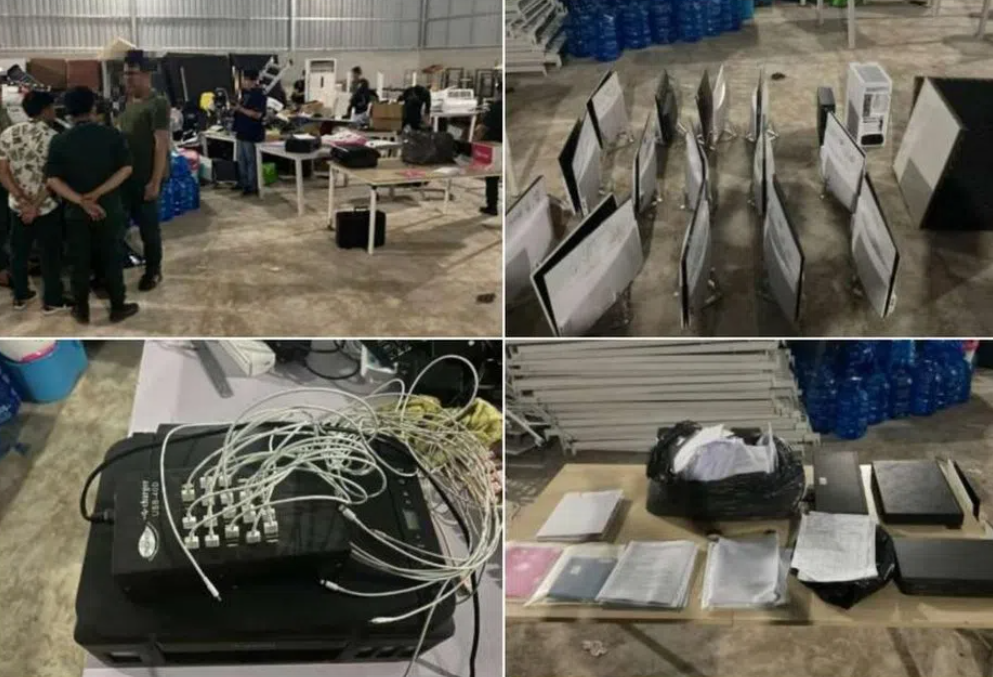
The Phnom Penh-based syndicate that employed Yip operated with military-style hierarchical structure and remarkable scale. Between September 3, 2024, and September 5, 2025, investigators linked the group to at least 528 reported fraud cases totalling approximately S$52.5 million in losses. The operation centred on government official impersonation schemes, with callers instructed to pose as banking or regulatory personnel to extract money from victims. The syndicate maintained a five-storey compound in Cambodia staffed with security guards, reflecting substantial capital investment and professional organisation uncommon in typical fraudulent enterprises.
Internal hierarchy within the criminal group demonstrated sophisticated operational management. Leadership handled strategic direction and commission disbursement, while supervisors and trainers oversaw daily caller activities. Trainers provided scripts and coaching on deceptive techniques, including instruction on adopting Singaporean accents to enhance credibility with victims. A dedicated money laundering division converted illicit proceeds into cryptocurrency, enabling rapid asset movement across borders and jurisdictions. The court heard evidence of at least 78 suspected members within the broader syndicate, suggesting an operation of considerable complexity.
Yip's recruitment pathway mirrors recruitment patterns observed across Southeast Asian scam networks. His friend Jason learned of the scam caller position through informal social networks and approached Yip with a proposition to join. Both were subsequently integrated into encrypted Telegram communications by Tang Soon Wah, identified as a syndicate leadership figure. Tang personally facilitated their relocation, arranging and financing a trip to Cambodia to tour the operational compound. This direct personal recruitment and investment in bringing new operatives indicated confidence in the network's sustainability and profitability.
Despite attractive remuneration offers—US$1,800 monthly in cryptocurrency plus commission-based income—Yip proved entirely unsuited to the deceptive work. Beginning his role on November 22, 2024, he was assigned to impersonate banking personnel whilst following prepared scripts. Despite diligent adherence to provided materials, he failed to successfully deceive a single target. His second day produced identical results. Tang responded by terminating Yip's employment on November 23, systematically deleting their message history to cover tracks. Court documents offered no explanation of how Yip returned to Malaysia or the circumstances preceding his arrest in Singapore months later.
The wider enforcement action that apprehended Yip revealed the geographic and demographic complexity of such criminal networks. Twelve individuals were ultimately charged as syndicate members. Nine were Singapore citizens, while the group also included two Malaysians—Yip and Muhamad Asyraf Anuar, 29—and a Filipino woman, De Villar Rizalyn Panganiban, 34. Their ages ranged from 25 to 39, suggesting recruitment across generational lines. The September 9, 2025 operation represented coordinated action between Singapore and Cambodian authorities, reflecting growing law enforcement cooperation against transnational cybercrime.
Government official impersonation scams have become increasingly prevalent despite overall fraud statistics improving in 2025. These schemes more than doubled in reported incidence from 1,504 cases in 2024 to 3,363 in 2025, making them the fifth most common scam category. The dramatic increase suggests criminals have identified impersonation tactics as particularly effective against Asian populations, who may show greater deference toward authority figures. Impersonating government agencies rather than financial institutions appears to trigger different psychological compliance responses, with victims more likely to comply when framing focuses on legal obligations or regulatory penalties.
The case carries broader implications for Malaysia's role within Southeast Asian cybercrime ecosystems. Yip's willingness to travel to Cambodia, combined with recruitment through Malaysian social networks, underscores how Malaysia functions as both a source of criminal talent and a transit point for operations targeting other countries. The Malaysian connection to this Singapore-focused Cambodian operation demonstrates the absence of clear geographic boundaries in digitalised fraud networks. Authorities across the region increasingly recognise that scam operations targeting one nation frequently recruit from multiple countries, complicating investigation and prosecution efforts.
For Malaysian authorities, the Yip case presents lessons regarding preventive measures and community awareness. Recruitment into scam operations often occurs through seemingly innocent social introductions, with friends and acquaintances serving as initial contact points. The relatively high salaries offered—US$1,800 monthly significantly exceeds average Malaysian wages—make these positions attractive to economically vulnerable populations. Enhanced public education regarding scam recruitment tactics, coupled with targeted outreach to high-risk demographics, could reduce Malaysian participation in such schemes. Financial institutions should similarly strengthen customer awareness regarding impersonation attempts and verification procedures.
Yip's conviction and imprisonment, though his criminal involvement lasted only 72 hours, reinforces that participation in organised crime structures triggers serious consequences regardless of individual productivity or duration of service. The organised crime charge carries greater severity than simple fraud offences, reflecting legislative recognition of syndicate-based criminality's systematic threat to community security. As transnational criminal networks persist in adapting recruitment and operational strategies, Southeast Asian jurisdictions must maintain enforcement intensity whilst developing preventive mechanisms addressing root economic vulnerabilities that render certain populations susceptible to such recruitment approaches.

