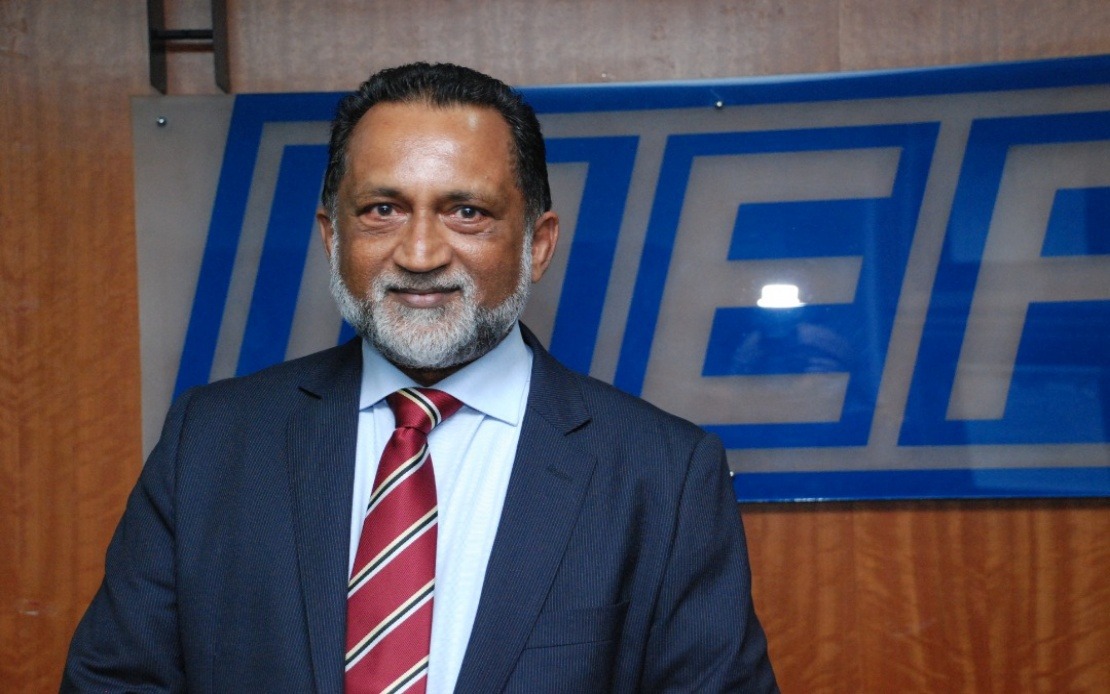
Malaysia's business community faces a mounting challenge as artificial intelligence reshapes the hiring landscape—a transformation that brings efficiency gains but also creates unprecedented opportunities for deception. The Malaysian Employers Federation has sounded an alarm about the risks accompanying this technological shift, calling on employers nationwide to establish firmer safeguards against credential fraud and digital manipulation. MEF president Datuk Dr Syed Hussein Syed Husman has issued a clear message: while AI-powered recruitment tools have streamlined application screening and candidate identification processes, the same technology now enables job seekers to fabricate or exaggerate their qualifications with alarming sophistication.
The federation's concerns are grounded in concrete data. A recent analysis using the National Background Screening Risk Index, compiled from approximately 300,000 screening records across 20 industries, revealed that 15 per cent of candidates screened had at least one discrepancy in their employment history, academic credentials or identity documentation. These findings underscore a troubling trend: as generative AI makes it easier to produce polished, professional-looking application materials within minutes, distinguishing genuine qualifications from fabricated ones has become exponentially more challenging for hiring teams. The discrepancies identified during screening ranged from inaccurate employment histories and falsified qualifications to identity-related issues, financial irregularities and reputational concerns—a spectrum of deception that threatens hiring integrity across sectors.
The emergence of generative AI tools capable of crafting compelling resumes and cover letters represents a qualitative shift in recruitment fraud. Historically, job seekers attempting to misrepresent themselves faced time constraints and the need for sophisticated knowledge. Today, anyone with access to AI applications can generate highly convincing application materials that mask genuine skill gaps or experience deficits. Syed Hussein emphasised that while candidates have always sought to present themselves advantageously, the speed and polish of AI-generated content has fundamentally altered the calculus for employers attempting to assess authentic capabilities. This technological democratisation of deception means that traditional resume screening—already a blunt instrument—has become virtually unreliable as a standalone evaluation method.
Beyond written materials, employers face escalating threats from deepfake technology and digital identity manipulation, challenges that have intensified as remote and hybrid work arrangements proliferate across Malaysian organisations. Virtual interviews, once a convenient screening tool, now harbour risks of impersonation, manipulated video feeds and synthetic voice replication. These emerging threats extend the vulnerability window well beyond the application stage, potentially allowing fraudulent candidates to deceive employers even during interactive assessments. For multinational corporations and growing Malaysian firms relying on virtual hiring processes, the implications are substantial—a single hire of an unqualified or dishonest candidate can disrupt team dynamics, compromise project outcomes and create legal liability.
Recognising these multifaceted challenges, the MEF has articulated a balanced approach that preserves efficiency without surrendering oversight. Rather than abandoning AI-driven recruitment tools, the federation advocates for their deployment as supporting instruments within a framework dominated by human judgment. This philosophy reflects a pragmatic understanding that technology alone cannot be trusted to make high-stakes decisions about candidate suitability. Syed Hussein has recommended that employers implement multi-layered verification processes beginning with robust identity confirmation, including validation of official identification documents and, where appropriate, live video interactions or in-person assessments for positions carrying significant responsibility.
The federation has further advised employers to move beyond resume-centric evaluation by incorporating comprehensive assessment methodologies. Technical tests, skills assessments, work samples, case studies and competency-based interviews serve as practical validation mechanisms that reveal whether candidates can actually perform required functions. These approaches create friction that deception struggles to overcome—an AI-generated cover letter might pass initial screening, but synthetic credentials typically falter under practical testing that requires demonstration of genuine expertise. By structuring hiring processes around skills verification rather than credential accumulation, employers establish more defensible hiring decisions and reduce exposure to costly mismatches between candidates and role requirements.
Credential verification deserves particular emphasis in the Malaysian context, where educational institutions, certifications and employment history serve as foundational trust markers. The MEF has stressed the importance of directly validating academic qualifications and employment histories through reference checks, credential validation with issuing institutions and confirmation of previous work records. This labour-intensive approach represents a necessary counterbalance to the speed and scalability advantages that recruitment AI provides. Employers must view verification not as a bureaucratic burden but as essential risk mitigation—the cost of conducting thorough background checks pales against the expense of hiring an unqualified or dishonest employee.
Armed with awareness of AI-enabled deception tactics, recruiters and hiring managers require training to detect inconsistencies and red flags that signal potential manipulation. Syed Hussein has advocated for equipping hiring personnel with knowledge and tools to identify disconnects between application materials, interview performance and demonstrated competencies. A candidate whose resume showcases expertise they cannot articulate during technical assessment, or whose references cannot confirm attributed accomplishments, warrants heightened scrutiny. This investigative mindset—skepticism tempered by fairness—represents a critical human capability that cannot be automated away.
The broader implications for Malaysian employers extend beyond individual hiring decisions. Companies that establish hiring integrity become employers of choice for genuine talent, attracting honest candidates who appreciate rigorous vetting processes that validate their true qualifications. Conversely, organisations that prioritise speed over verification risk building teams populated by individuals whose capabilities do not match their credentials, undermining productivity, team cohesion and company reputation. In Malaysia's competitive knowledge economy, where talent retention and organisational capability increasingly determine competitive advantage, hiring integrity functions as a strategic asset.
The Malaysian context introduces additional considerations. As the country pursues its Digital Economy Blueprint and positions itself as a regional technology hub, the credibility of its talent pipeline matters profoundly for attracting foreign investment and multinational presence. Widespread hiring fraud undermines confidence in Malaysian workers and organisations, potentially disadvantaging the country in global talent competition. Conversely, Malaysian employers known for rigorous hiring practices and authentic credentials establish competitive advantages in both talent acquisition and stakeholder trust.
Moving forward, the MEF's recommendations reflect a mature understanding that technological innovation must be coupled with institutional safeguards. While innovation should continue without discouragement, appropriate controls preserve trust in recruitment systems and protect both employers and honest job seekers. This balanced approach acknowledges that AI will continue advancing and that job seekers will explore new deception methods—the challenge is ensuring that hiring practices evolve at equivalent pace. Malaysian employers who embrace comprehensive verification, multi-stage assessment and human oversight while leveraging AI's efficiency gains will establish themselves as leaders in responsible talent acquisition, ultimately building stronger organisations and contributing to broader economic resilience.

