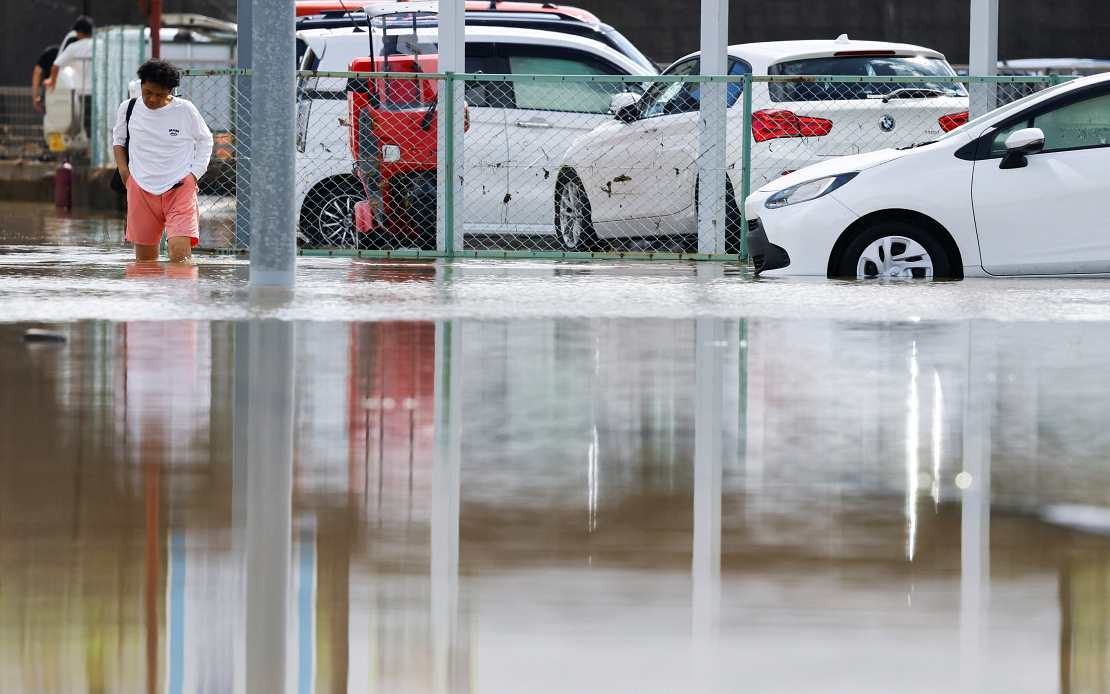
The Malaysian Embassy in Tokyo has issued a formal travel advisory urging all Malaysian nationals currently in Japan to minimise non-essential movement and remain cautious as the Kanto region grapples with unprecedented rainfall that has unleashed severe flooding across Chiba Prefecture and surrounding areas. The warning, issued Friday through official diplomatic channels, reflects mounting concerns about the scale of disruption unfolding across Japan's eastern industrial heartland, where traditional transportation networks have been overwhelmed by the deluge.
Road and rail infrastructure has suffered extensive damage, leaving thousands of travellers in limbo across the region. Most severely affected has been Narita International Airport, Japan's primary gateway near Tokyo, where approximately 7,000 passengers found themselves stranded overnight as flooding severed the highway and rail connections essential for airport access. The disruption highlights the vulnerability of critical transport hubs to extreme weather events and underscores the cascading effects such disasters can have on regional mobility.
The meteorological situation has proven exceptionally severe by Japanese standards. The Japan Meteorological Agency deployed its highest alert status—Level 5 rain warning—across more than one-third of Chiba Prefecture's municipalities, a threshold rarely issued and typically reserved for the most catastrophic weather events. This classification signals conditions where rainfall intensity and volume have exceeded historical precedents, creating unprecedented environmental hazards. The death toll has reached at least eight confirmed fatalities, according to Kyodo News, though authorities warned the figure may rise as rescue operations continue and damage assessments proceed.
The human impact extends far beyond immediate casualties. Evacuation orders, issued at their peak for more than 400,000 residents, represent one of the largest displacement events in recent Japanese history. Such mass evacuations place enormous strain on local government resources, emergency services, and temporary accommodation facilities. For Malaysian nationals scattered throughout the region—whether residing permanently, working temporarily, or travelling—these disruptions create genuine safety concerns and logistical challenges in accessing essential services or leaving affected areas if necessary.
The embassy's guidance reflects diplomatic best practice in crisis situations, emphasising the fundamental principle that nationals should avoid flooded zones and low-lying terrain where water accumulation poses the greatest hazard. Beyond this immediate warning, the advisory instructs Malaysians to maintain heightened situational awareness and actively monitor updates from Japanese authorities, who maintain real-time information about evacuation procedures, safe routes, and weather developments. This emphasis on self-directed monitoring recognises that conditions change rapidly during such events, and official announcements from local government bodies typically supersede initial guidance.
The Malaysian Embassy has provided multiple channels through which affected nationals can seek assistance or obtain updated information. The main diplomatic line, +81-3-3476-3840, operates during standard office hours and represents the primary contact mechanism for non-emergency matters requiring consular intervention. However, recognising that crises extend beyond business hours, the embassy has activated an emergency hotline at +81-70-1471-9756 to handle urgent situations including lost contact with family members, requests for shelter assistance, or medical emergencies. This dual-channel approach ensures continuous accessibility during the crisis period.
Beyond the embassy itself, Malaysian nationals have been directed toward the Japan Meteorological Agency's English-language portal at www.jma.go.jp/jma/indexe.html as the authoritative source for real-time weather intelligence. The JMA provides hourly rainfall measurements, wind speed data, and issued warnings specific to individual prefectures and municipalities, allowing residents to make informed decisions about movement and shelter. For Malaysian nationals unfamiliar with Japanese emergency management systems, this guidance provides a clearly identified reference point amid the confusion that typically accompanies natural disasters.
Email communications have also been established as an asynchronous contact method, particularly suitable for non-urgent inquiries or situations where telephone lines may be congested. The embassy maintains two email addresses—[email protected] for general consular matters and [email protected] for broader embassy affairs—permitting nationals to document requests and maintain written records of communication with diplomatic officials.
From a regional perspective, this flooding event illustrates the increasing frequency and intensity of extreme weather phenomena affecting East Asia, a trend closely monitored by Malaysian meteorologists and disaster management specialists. The displacement of 400,000 residents and death toll, while severe, underscore both Japanese disaster response capacity and the absolute scale of events that modern infrastructure must accommodate. For Malaysia, where tropical rainfall and monsoon-season flooding remain persistent challenges, Japan's experience offers instructive lessons in early warning systems, evacuation coordination, and transport network resilience.
The incident also highlights the vulnerability that Malaysians abroad face during natural disasters in host countries, particularly when language barriers or unfamiliarity with local emergency protocols could impede access to critical information or assistance. The embassy's proactive advisories and provision of multiple contact channels demonstrate diplomatic efforts to bridge this gap, though such crises inevitably test the limits of embassy capacity to assist large numbers of nationals simultaneously.
For Malaysian travellers considering visits to Japan in the coming weeks, the flooding serves as a reminder that even highly developed nations with sophisticated infrastructure remain vulnerable to extreme weather events. Travel insurance provisions, awareness of local emergency procedures, and maintenance of contact information with one's embassy represent sensible precautions for any Malaysian citizen abroad. The current advisory is expected to remain in effect until Japanese authorities confirm that transport networks have been restored and water levels have receded to safe levels, though full infrastructure rehabilitation typically requires weeks following major flooding events.

