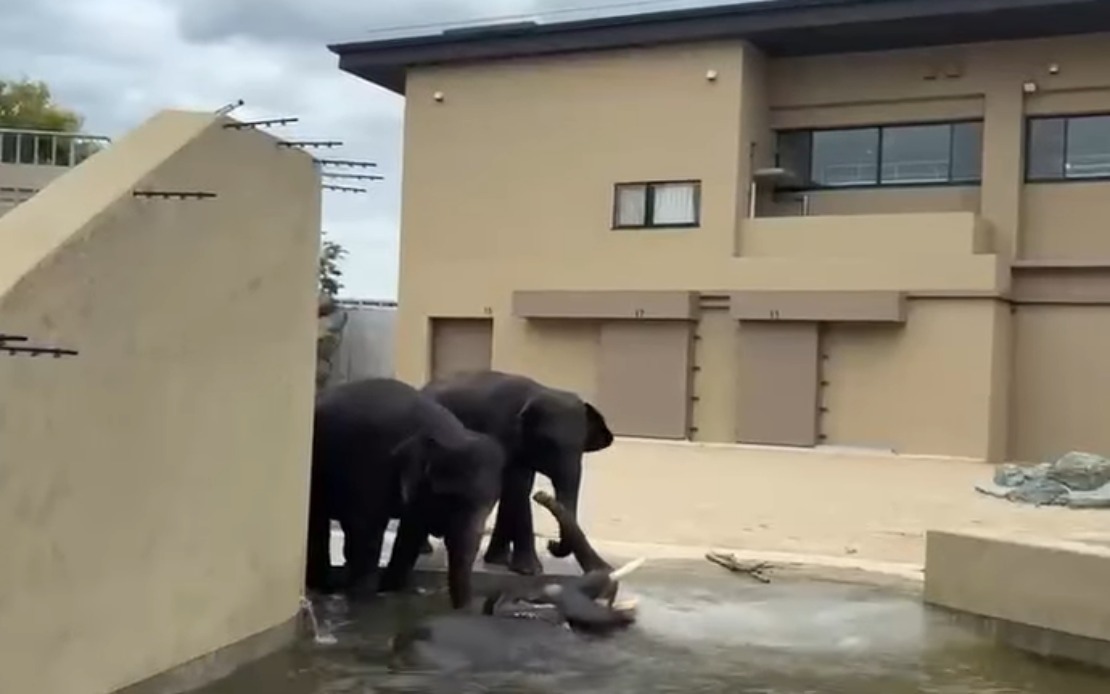
Three female elephants named Dara, Amoi and Kelat residing at Tennoji Zoo in Japan are making steady progress in their new environment, according to the latest health assessments shared by the Taiping Municipal Council. The positive developments recorded over recent months underscore the collaborative success of an international wildlife partnership that has drawn considerable public attention across Malaysia.
The most recent veterinary reports paint an encouraging picture of the animals' physical condition. Kelat has gained 260 kilogrammes since arrival, substantially outpacing the weight increases recorded by her companions. Dara and Amoi have each added 35 kilogrammes and 30 kilogrammes respectively to their body weight, indicating that all three pachyderms are adapting well to their new habitat and receiving appropriate nutrition. These metrics serve as tangible markers of the care standards being maintained at the Japanese facility.
Taiping Municipal Council president Mohamed Akmal Dahalan emphasized that nutritional management forms the cornerstone of the elephants' welfare programme. The animals receive a carefully balanced diet that reflects the specific biological requirements of their species, overseen by qualified animal care professionals and veterinary supervision. Their daily intake comprises multiple varieties of hay as the primary fibre source, supplemented with bamboo shoots, fresh vegetation including cabbage, and specially manufactured elephant pellets formulated to meet their complex dietary needs.
The care arrangement represents a formal institutional commitment that extends well beyond temporary animal placement. Tennoji Zoo and Zoo Taiping & Night Safari, operating under the Taiping Municipal Council's authority, finalized their cooperation agreement through documents signed in May and October of 2022. The partnership is structured as a quarter-century commitment, establishing a framework for sustained collaboration in elephant management and conservation programming across the decades ahead.
Monitoring responsibilities remain distributed among Malaysian authorities working in concert with their Japanese counterparts. The Department of Wildlife and National Parks, Peninsular Malaysia—known locally as Perhilitan—maintains ongoing oversight alongside the municipal council to verify that welfare standards, health protocols and overall animal management continue to meet benchmarks established at the agreement's inception. This dual-jurisdiction approach reflects Malaysia's serious engagement with international animal welfare protocols.
Mohamed Akmal's statement carried an implicit acknowledgement of the scrutiny surrounding the programme, noting that the council remains receptive to public concern about elephant welfare. However, he pointedly distinguished between legitimate inquiry and unsubstantiated allegations, emphasizing that assertions regarding animal care should rest upon factual foundations, corroborated evidence, and assessments conducted by qualified professionals. This distinction carries particular weight in an era when viral claims about zoo animals can circulate globally without rigorous verification.
The council has signalled an active commitment to institutional transparency, making clear its willingness to cooperate with relevant authorities conducting formal reviews, investigations, or information requests related to the bilateral programme. This posture suggests confidence in the management practices being deployed while demonstrating responsiveness to oversight mechanisms. Such openness may partially reflect awareness that Malaysia's international reputation in wildlife conservation depends substantially on demonstrable commitment to ethical animal stewardship.
The broader context involves Malaysia's strategic interest in maintaining productive relationships with international zoological institutions. Zoo partnerships serve multiple purposes beyond animal welfare—they facilitate genetic diversity management for endangered species, support conservation research, and enhance educational outreach about wildlife protection. Tennoji Zoo's engagement with Malaysian elephants positions both institutions within a global network of conservation-focused facilities, potentially attracting resources and expertise that might otherwise remain inaccessible.
Public perception matters considerably within this framework. The council's statement explicitly acknowledges that Malaysian citizens retain legitimate rights to voice concerns and seek clarity regarding elephant management. This recognition reflects evolving social expectations around animal welfare transparency in Southeast Asia, where zoo practices increasingly face scrutiny from environmentally conscious populations. However, the council simultaneously appeals for evidence-based discourse, cautioning that inaccurate narratives risk undermining genuine conservation initiatives that depend upon international goodwill and bilateral trust.
The weight gains reported by veterinary staff at Tennoji Zoo suggest that the elephants have successfully acclimated to Japanese climatic conditions and institutional routines. For animals transitioning between geographic regions and facilities, such physiological indicators carry significance beyond simple numerical gains. Consistent weight progression typically reflects stable emotional states, adequate physical activity, and successful dietary adjustment—factors that collectively indicate an animal's broader wellbeing rather than merely nutritional intake.
Moving forward, the programme's long-term viability will likely depend upon maintaining this visible evidence of animal flourishing while preserving institutional transparency. Malaysia's conservation community, international zoological bodies, and domestic animal welfare advocates will presumably continue monitoring developments across the quarter-century commitment period. The three elephants at Tennoji Zoo thus represent not merely individual animals in institutional care, but rather living symbols of Malaysia's participation in transnational conservation networks that increasingly define modern wildlife protection.

