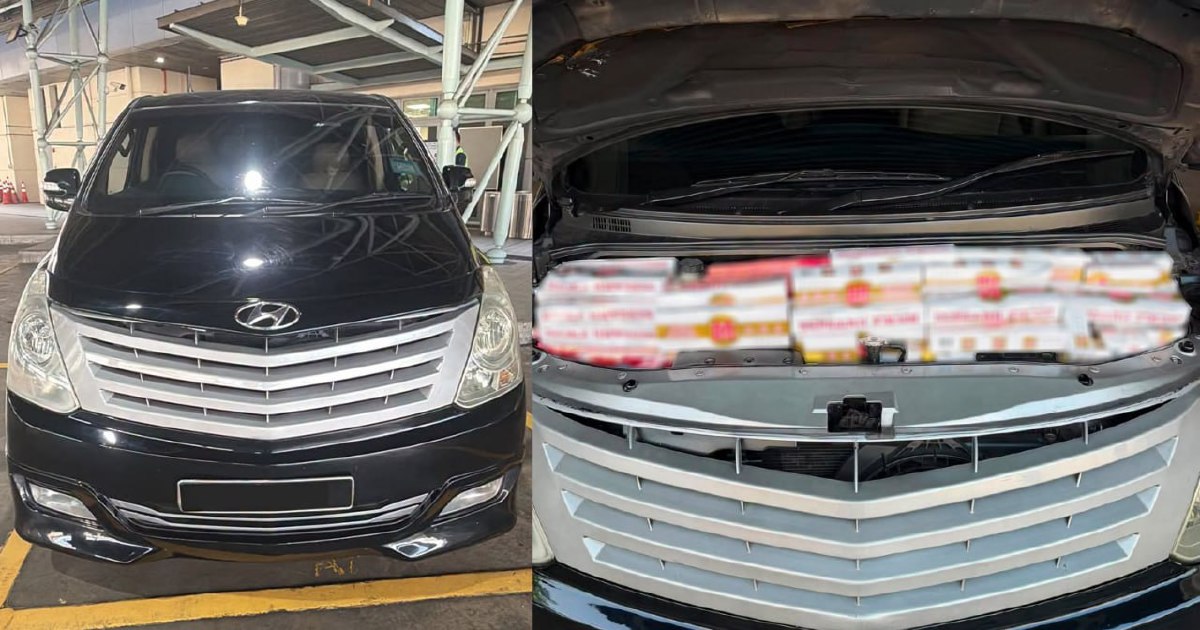
A 26-year-old Malaysian has been arrested following the discovery of a substantial stash of duty-unpaid cigarettes at Singapore's border, marking another case of cross-border smuggling in the region. Officers from Singapore's Immigration and Checkpoints Authority (ICA) detected the contraband—comprising more than 600 cartons and 900 individual packets—hidden beneath the floorboard of the driver's multipurpose vehicle during a routine inspection.
The seizure underscores the continuing challenge of illicit cigarette trafficking across the Malaysia-Singapore border, where large price differentials between the two countries create powerful incentives for smuggling operations. Cigarette excise taxes in Singapore are significantly higher than in Malaysia, making cross-border smuggling a persistent problem for both nations' tax authorities. The concealment method employed here—storing contraband under a specially modified floorboard—is a well-established technique used by trafficking networks seeking to evade detection at checkpoints.
Singapore's border enforcement apparatus has intensified scrutiny of vehicles crossing into the island nation, particularly targeting common smuggling corridors used by Malaysian drivers. The ICA conducts thousands of vehicle inspections monthly, with officers trained to identify suspicious modifications and behavioral patterns indicative of contraband transport. The discovery of this shipment illustrates the effectiveness of these surveillance measures, though it also reflects the scale of smuggling activity attempting to penetrate the checkpoint system.
The confiscation of the multipurpose vehicle represents a substantial financial penalty for the accused individual, adding significant consequences beyond criminal charges. Singapore's customs enforcement regime treats cigarette smuggling seriously, with penalties escalating based on the quantity of contraband seized. The severity of enforcement reflects government concern about tax evasion and the association between illicit tobacco markets and organized crime networks operating across Southeast Asia.
For Malaysian readers, this incident highlights the legal risks accompanying cross-border smuggling operations. While price differences make contraband cigarettes economically attractive, individuals caught transporting them face prosecution in Singapore under the Customs Act, with potential imprisonment and substantial fines. The case serves as a reminder of the checkpoints' capacity to detect sophisticated concealment methods, deterring would-be smugglers from attempting similar operations.
The incident occurs within a broader context of regional law enforcement cooperation addressing transnational smuggling. Both Malaysian and Singaporean authorities maintain intelligence-sharing arrangements and coordinate border operations to disrupt trafficking networks. Smuggling organizations adapt their methods constantly, employing more elaborate vehicle modifications and employing decoy shipments to distract enforcement efforts. However, technological advances in scanning equipment and increased staffing at busy checkpoints have gradually improved detection rates.
Cigarette smuggling generates substantial profits for criminal enterprises and represents a significant revenue loss for governments. Singapore loses hundreds of millions annually through illicit tobacco trade, while Malaysia's internal market is also affected by smuggling operations designed to avoid local taxation. The untaxed cigarettes flooding regional markets undermine legitimate retailers and manufacturers, creating unfair competition and reducing tax compliance across the supply chain.
The broader implications extend to public health considerations, as illicit cigarette markets often lack proper regulation and quality control. Smuggled products may contain counterfeit branding or inferior tobacco compositions, exposing consumers to unknown health risks. Additionally, the organized crime networks facilitating cigarette smuggling frequently engage in other illegal activities, including human trafficking and drug distribution, making border enforcement efforts multifaceted in their crime-prevention objectives.
As Malaysia-Singapore trade integration deepens and cross-border movement increases, customs authorities face mounting pressure to balance facilitation of legitimate commerce with interdiction of contraband. The checkpoint system must process hundreds of thousands of vehicles monthly while maintaining vigilance against increasingly sophisticated smuggling techniques. This case demonstrates that despite these challenges, enforcement operations continue yielding significant seizures, suggesting that determined smugglers still face substantial risks of apprehension and prosecution at established border crossings.

