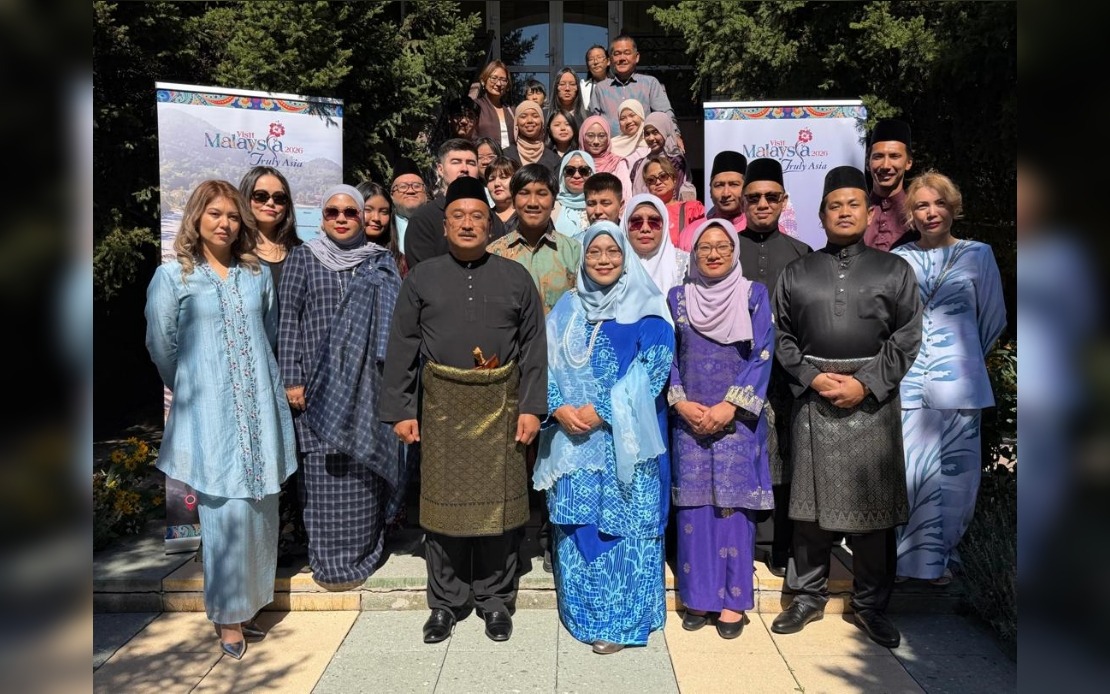
Thousands of kilometres from home, Malaysians residing in Kazakhstan demonstrated their enduring connection to the nation through a National Day ceremony held at Malaysia House in Astana on Saturday. The event, coordinated by the Embassy of Malaysia in Astana, brought together diplomats, students, professionals and alumni to reaffirm Malaysia's values and strengthen community bonds abroad. The gathering underscored how Malaysian expatriate communities maintain their patriotic commitment despite geographical distance, serving as cultural ambassadors in their adopted countries.
The ceremony commenced with the ceremonial raising of the Jalur Gemilang, followed by the singing of Negaraku and a recitation of the Rukun Negara. These foundational rituals formed the ceremonial spine of the proceedings, grounding the celebration in Malaysia's constitutional and national identity. For many expatriates, particularly younger Malaysians studying or working in Central Asia, such ceremonies provide essential touchstones to home and reinforce their sense of belonging to the broader Malaysian family, regardless of their current location.
Malaysian Ambassador to Kazakhstan Mohd Adli Abdullah used the occasion to articulate the overarching theme for Malaysia's 2026 National Day and Malaysia Day celebrations: "Malaysia MADANI: Prosperity Enjoyed". This framing represents a deliberate conceptual shift in how the nation measures progress and development. Rather than fixating on economic indicators or infrastructure metrics alone, the MADANI paradigm directs attention towards the qualitative experience of citizens and whether the fruits of national advancement are distributed equitably across society.
The Ambassador elaborated on this philosophical position during his address, emphasising that genuine national progress requires measuring not merely what a country produces, but how comprehensively those benefits permeate across all social strata. This inclusive development model resonates particularly in Southeast Asia, where rapid industrialisation has often generated concerns about wealth concentration and social inequality. By positioning inclusive prosperity as a central national narrative, Malaysia signals its commitment to addressing these regional challenges through both policy and diplomatic messaging.
Amb. Adli called upon the Malaysian diaspora in Kazakhstan to become living embodiments of MADANI values whilst abroad. He encouraged them to demonstrate the qualities of industriousness, moral integrity, self-discipline, social courtesy and reciprocal assistance—principles that extend beyond individual conduct to shape how Malaysia is perceived internationally. The message effectively conscripted expatriates as informal diplomats, tasking them with being ambassadors not merely through formal representation but through everyday conduct and community engagement.
The event drew participation from a diverse Malaysian constituency in Kazakhstan, encompassing embassy personnel, tertiary students, beneficiaries of the Malaysia Technical Cooperation Programme and individuals with professional or personal connections to Malaysia. This demographic heterogeneity reflects Malaysia's multifaceted presence in Kazakhstan, spanning government relations, academic exchange and commercial linkages. The diversity of attendees also illustrated how Malaysian expatriate communities tend to be internally networked, frequently intersecting through shared institutional affiliations or professional sectors.
Concurrently with the National Day observance, the embassy hosted the MTCP Alumni Get-Together 2026, merging two complementary agendas into a single event. The Malaysia Technical Cooperation Programme represents one of Malaysia's most enduring South-South cooperation initiatives, having operated continuously since 1980. As a capacity-building mechanism, the MTCP extends training, institutional development support and advanced study opportunities to professionals from developing economies, thereby positioning Malaysia as a peer-mentor within the Global South.
The inclusion of a dedicated MTCP alumni component underscored the significance of human capital development in Malaysia-Kazakhstan bilateral relations. By 2025, approximately 196 Kazakh officials had participated in various MTCP-administered programmes, creating a substantial cadre of individuals with direct exposure to Malaysian institutional practices and professional methodologies. These alumni networks frequently become informal channels for diplomatic engagement and technical knowledge exchange long after formal training concludes, creating durable foundations for bilateral cooperation.
From a strategic perspective, Malaysia's engagement with Kazakhstan through the MTCP exemplifies how Southeast Asian nations leverage development cooperation to deepen diplomatic influence in Central Asia. Kazakhstan, as the region's largest economy and a pivotal geopolitical actor, represents a significant partner for Malaysian interests spanning energy security, trade diversification and regional connectivity initiatives. By nurturing professional relationships with Kazakhstani officials through sustained capacity-building partnerships, Malaysia cultivates goodwill and technical familiarity that translate into cooperative frameworks on broader foreign policy objectives.
The embassy's statement characterised the MTCP as an essential platform for mutual exchange in human capital development and professional expertise. This framing reflects how contemporary development cooperation has evolved beyond unidirectional aid provision towards reciprocal knowledge-sharing among developing economies. Malaysia's positioning as a technical knowledge provider enhances its regional standing whilst simultaneously building the institutional capacity of partner nations, creating mutual benefits that strengthen bilateral relations across multiple sectors.
The coordinated celebration of Malaysia's National Day and the MTCP alumni gathering illustrated how diplomatic missions strategically cluster related activities to amplify messaging and maximise attendance. By integrating patriotic observance with professional networking and people-to-people engagement, the embassy reinforced multiple dimensions of the Malaysia-Kazakhstan relationship simultaneously. This multifaceted approach reflects contemporary diplomatic practice, wherein ceremonial occasions serve as convenient scaffolding for advancing substantive bilateral agendas.
Looking forward, the embassy's commitment to expanding Malaysia-Kazakhstan cooperation hinges substantially on strengthening governmental strategic coordination, deepening personal networks between citizens and facilitating expertise exchange. The National Day ceremony functioned as a publicly visible reaffirmation of these commitments, demonstrating to both the Malaysian diaspora and Kazakhstani interlocutors the seriousness with which Malaysia approaches the bilateral relationship. For Malaysian expatriates in Central Asia, such events provide meaningful moments of national connection whilst simultaneously reinforcing their role as custodians of Malaysia's international reputation.

