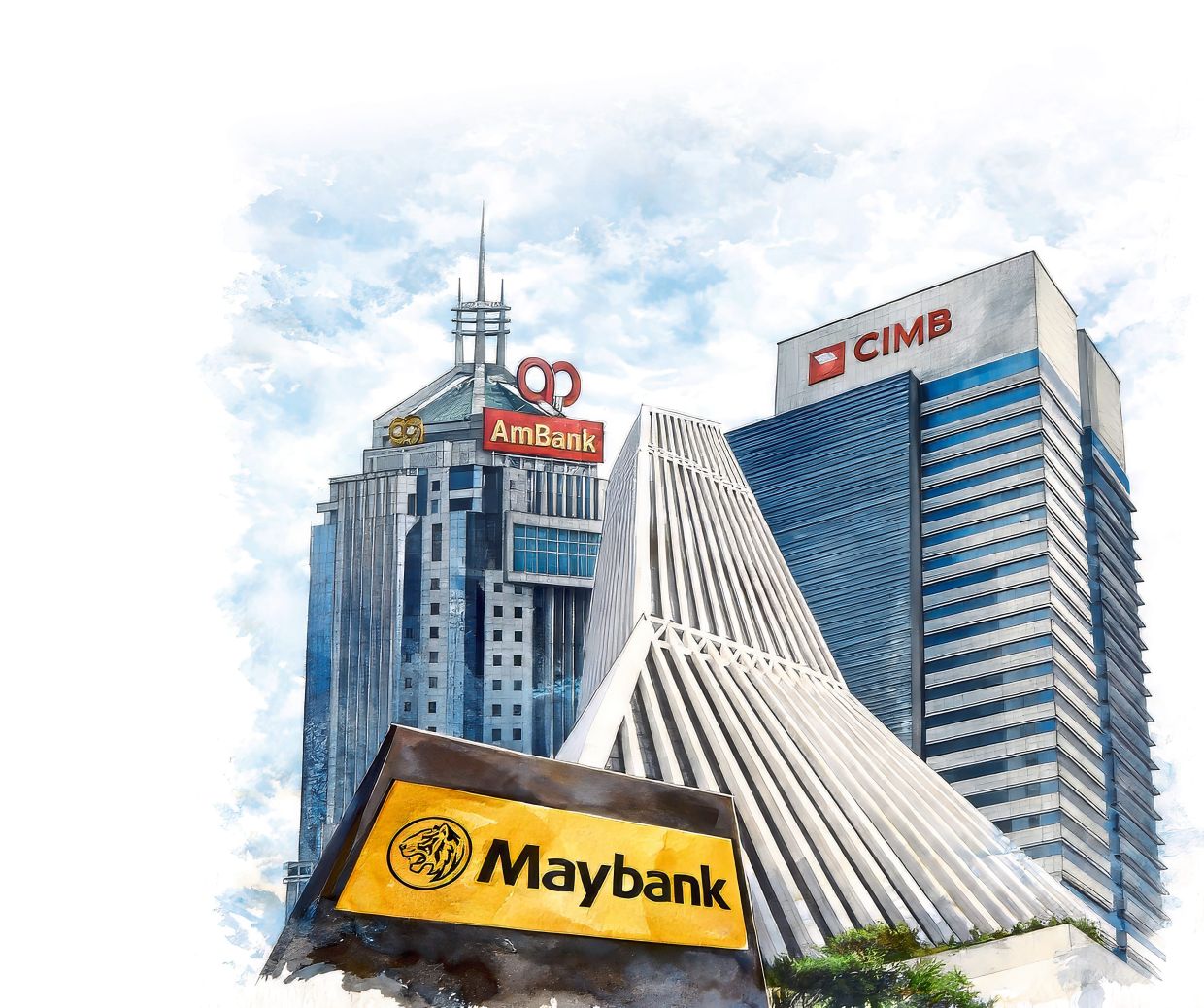
The Malaysian banking sector stands at a critical juncture entering the second half of 2026, caught between the retreating threat of severe geopolitical disruption and the persistent reality of a global monetary environment that central banks show no immediate sign of softening. After years of benefiting from elevated interest rate regimes and stable economic expansion, lenders across the region have watched their defensive appeal diminish as international tensions have periodically unsettled investors and clouded earnings outlooks. The latest quarter's results for Malaysia's banking institutions, while broadly holding their own, revealed concerning fault lines that have prompted market participants to reassess their positions, leading to notable selloffs in banking stocks as uncertainty clouds the sector's near-term trajectory.
The pressures mounting on Malaysian banks reflect a confluence of external and domestic factors that have gradually eroded sentiment despite the underlying fundamentals remaining adequate. Geopolitical flashpoints, particularly the Iran crisis and subsequent de-escalation roadmap, have injected volatility into global financial markets and created downstream risks for supply chains and energy markets that ultimately flow into corporate loan portfolios and consumer credit quality. Investors, noticing the weakness in recent earnings reports even as macroeconomic conditions remained relatively stable, have taken defensive action by trimming their banking exposures. This pullback suggests growing concern that the benign environment supporting bank profitability over recent years may be shifting, though the extent and timing of any deterioration remain contested among market watchers and analysts.
A notable divergence exists between those who maintain a relatively sanguine view of 2H26 outcomes and those counselling greater caution. Sammeer Sharma, managing director and head of consumer financial services at OCBC Bank (M) Bhd, has articulated a base case scenario in which interest rates globally, including in Malaysia, will remain stable through the remainder of the year. This perspective rests partly on the observation that Malaysia's own policy stance has diverged from the aggressive tightening cycles pursued by major developed economies, meaning local lenders have experienced comparatively muted margin pressure relative to their peers in more hawkish jurisdictions. Sharma points out that for OCBC Malaysia specifically, the direct impact of geopolitical disturbances has been negligible, a position that reflects the bank's geographic and sectoral positioning within the Malaysian economy.
However, this benign assessment masks a deeper set of concerns that analysts believe warrant attention as the year progresses. Ei Leen Tan, banking analyst at CIMB Research, has highlighted that any sustained pivot toward a more hawkish Federal Reserve stance could fundamentally reshape the calculation underpinning Malaysian bank valuations and earnings prospects. A higher-for-longer interest rate environment, particularly one that defies current market expectations for cuts, would introduce significant tail risks that could manifest through multiple channels: increased volatility in bond markets, currency turbulence, tighter global liquidity conditions, and the uneven distribution of capital flows across emerging markets. While Tan acknowledges that these pressures originate primarily from market dynamics rather than fundamental credit deterioration, the distinction offers limited comfort to investors bracing for extended periods of earnings headwinds.
The critical unknown facing both banks and their stakeholders involves the lag time before real economic consequences from geopolitical shocks filter through to balance sheets. Industry observers note that the energy-related disruptions and inflationary impulses triggered by the Iran situation during the first quarter will likely not reveal their full impact on Malaysian households and businesses until two or three quarters hence. This temporal disconnect creates a period of heightened uncertainty during which current financial metrics may not fully reflect emerging credit risks. Small and medium enterprises, a crucial component of Malaysia's lending ecosystem, face particular vulnerability should energy costs remain elevated and supply chain disruptions persist, potentially constraining their cash flows and capacity to service debt obligations without deterioration.
The path of asset quality metrics will ultimately determine whether 2H26 becomes a story of resilience or disappointment for Malaysian banking. Current loan loss provisions and capital buffers appear robust enough to absorb moderate credit stress without forcing strategic pivots, yet the question of whether stress will manifest depends heavily on factors beyond the banking sector's direct control. Consumer spending patterns, corporate investment intentions, and employment trends across Malaysia's key economic sectors will either validate the optimistic assumptions embedded in analysts' forecasts or expose gaps between current pricing and underlying risks. Both Tan and independent analysts emphasise that June quarter results will prove pivotal, as they may signal whether banks are beginning to observe the tentative signs of asset quality deterioration that would necessitate more defensive positioning.
CIMB Research's updated outlook incorporates the assumption that the de-escalation of US-Iran tensions meaningfully reduces the probability of a severe, prolonged oil shock disrupting Malaysia's credit cycle, permitting analysts to shift focus back toward earnings fundamentals rather than asset quality downside scenarios. This analytical reset allows for a constructive narrative around net interest margin expansion and controlled credit costs, supported by the sector's current capital adequacy ratios and loan loss reserves. Tan contends that while tail risks associated with higher-for-longer rates warrant careful monitoring, they do not presently point toward a systemic banking crisis, a relatively high bar that most developed banking systems appear capable of clearing even under moderately adverse scenarios.
The dividend and capital management flexibility enjoyed by Malaysian banks entering 2H26 provides additional ballast against uncertainty. Unlike some peers in more constrained regulatory environments, Malaysian lenders possess meaningful optionality regarding capital deployment and shareholder distributions, allowing them to navigate periods of earnings volatility without forced cutbacks that might trigger sharp valuation repricing. This flexibility, combined with the incremental margin opportunities still available as loans reprice upward and new customer acquisitions occur at higher rates, underpins analyst conviction that the sector can deliver acceptable returns through 2H26 even if growth moderates from recent norms.
Yet Malaysia's banks cannot entirely escape the gravitational pull of global monetary policy and geopolitical developments. Singapore's own rapid adjustment to the international interest rate environment, undertaken in tandem with global markets despite Malaysia's different policy path, underscores how deeply interconnected the region's financial systems have become. Cross-border capital flows, foreign exchange exposures, and the international dimensions of Malaysian corporate funding all create transmission channels through which global rate shocks inevitably reach domestic lenders. Whether Sammeer Sharma's optimistic assessment regarding stable rates proves accurate or whether Tan's warnings about tail risks from higher-for-longer conditions dominate will materially influence banking sector performance through year-end.
The consensus view emerging from both bank management and research analysts suggests cautious optimism tempered by genuine uncertainty. Malaysia's banking sector enters 2H26 with adequate capital, manageable credit quality, and earnings power sufficient to weather moderate economic headwinds, yet significant risks remain unresolved. The intersection of geopolitical de-escalation, which reduces catastrophic downside scenarios, and persistent interest rate pressures, which constrain growth in profitability, creates a narrower corridor for successful execution. Banks must navigate between the Scylla of margin compression from sustained rate elevation and the Charybdis of credit deterioration from delayed economic weakness. The coming quarters will determine whether Malaysian banks' underlying strength proves sufficient to overcome these competing pressures or whether the sector's valuation retracement reflects genuine concerns about earnings sustainability.

