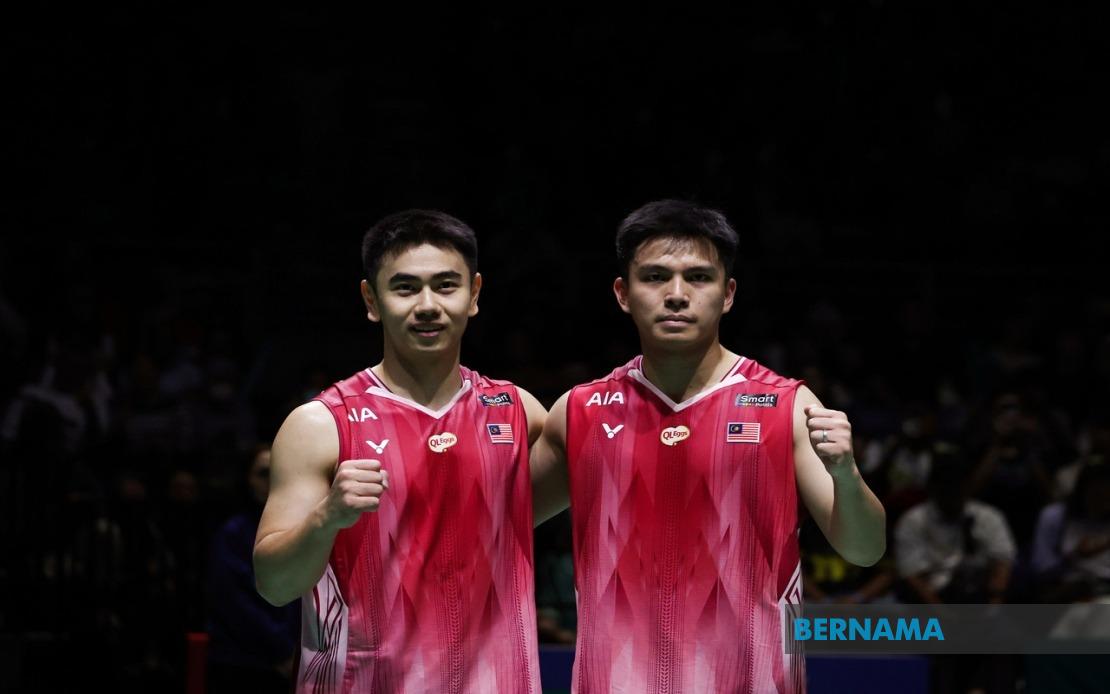
Malaysia's badminton contingent delivered a commanding performance at the Japan Open 2026 in Tokyo, with two pairs advancing to the semifinals and keeping the nation's medal hopes alive in one of the sport's premier international tournaments. The strong showings underscore the country's continued competitiveness in mixed and men's doubles disciplines, where Malaysian shuttlers have traditionally excelled on the regional circuit.
In a stunning quarterfinal upset, the unseeded partnership of Jimmy Wong and Cheng Su Yin dismantled Denmark's third-seeded pair Mathias Christiansen and Alexandra Boje with a commanding 21-17, 21-17 victory in just 39 minutes. The clinical performance saw the Malaysians neutralise their higher-ranked opponents through disciplined court positioning and decisive shot-making, evening their head-to-head record against the Danish duo to 1-1. The win represents a significant scalp for Jimmy-Su Yin, who will now face Hong Kong's seventh seeds Tang Chun Man and Tse Ying Suet in the semifinals—a matchup neither pair has contested previously.
The Malaysian mixed doubles success comes as the sport continues to witness unpredictable results across traditional powerhouse nations. Mixed doubles has emerged as a particularly competitive arena in recent seasons, with emerging pairings regularly challenging established seedings. For Malaysia, which has produced accomplished mixed doubles players over the past decade, the advancement of an unseeded combination into the final four demonstrates the depth of talent available domestically and the tactical sophistication these players can deploy under pressure.
Meanwhile, the fifth-seeded men's doubles combination of Goh Sze Fei and Nur Izzuddin Rumsani navigated a gruelling 50-minute quarterfinal contest against American duo Chen Zhi Yi and Presley Smith, ultimately prevailing 21-18, 15-21, 21-13 in a three-set encounter. The Malaysian pair's victory marked their fourth consecutive triumph over the United States combination, a statistical advantage that underscores their familiarity with the American side's patterns and weaknesses. The extended nature of the match, however, may raise questions about stamina heading into their semifinal assignment.
Sze Fei-Izzuddin's path to the final four became significantly more complex when they drew the tournament's top-seeded South Korean pairing of Kim Won Ho and Seo Seung Jae in the semifinals. The Korean combination, ranked number one globally, presents a formidable obstacle for the Malaysian duo. However, the Malaysians carry considerable confidence into this matchup, having previously defeated Won Ho-Seung Jae at the Indonesia Open 2026 and currently holding an even 2-2 head-to-head record. That recent victory provides tangible evidence that the Malaysian pair possesses the tactical repertoire and technical capability to compete with the sport's elite, suggesting the semifinal will be closely contested.
The appearance of Sze Fei-Izzuddin in the semifinals continues Malaysia's strong tradition in men's doubles at Asian tournaments. The partnership has developed into a reliable and consistent presence at major competitions, characterised by their ability to absorb pressure and execute crucial shots in decisive moments. Their aggressive baseline play and net mobility have become recognisable hallmarks, though they will need to carefully manage their court positioning against the Korean top seeds, whose own attacking prowess is acknowledged across the professional circuit.
Earlier proceedings witnessed Malaysia's hopes for a third semifinal appearance evaporate when the domestic partnership of Kang Khai Xing and Aaron Tai fell to Kim Won Ho and Seo Seung Jae in the quarterfinals. The Korean seeds proved overwhelming in that matchup, securing a straight-sets victory with scores of 21-13, 21-10. While the Malaysian pairing displayed competitive spirit, the gulf in execution and court control proved decisive, illustrating the significant gap between aspiring younger combinations and the established world-class operators.
For Malaysian badminton stakeholders, the tournament represents both achievement and learning. The advancement of two Malaysian pairs ensures the nation maintains a substantial presence in Tokyo through the knockout stages, extending opportunities for medal success in these increasingly competitive disciplines. The mixed doubles achievement proves particularly noteworthy, given that unseeded status typically indicates limited tournament seeding points and a historically lower probability of deep runs at major events.
Looking forward, Malaysia's semifinal participants face distinct challenges. The Jimmy-Su Yin partnership must maintain their aggressive shot selection and court coverage that dismantled the Danish third seeds, whilst ensuring they do not become complacent against a Hong Kong combination they have never previously encountered. For Sze Fei-Izzuddin, the psychological advantage of their recent victory over the Korean top seeds offers genuine encouragement, though converting that single triumph into a semifinal victory demands sustained excellence across what will inevitably be a high-paced, physically demanding contest.
These results reflect the broader trajectory of Malaysian badminton, where consistent investment in talent development and coaching infrastructure continues yielding competitive results at the highest international levels. The Japan Open serves as an important barometer of tournament performance for Asian players, and Malaysia's showing demonstrates that domestic shuttlers remain capable of competing with and occasionally surpassing more heavily favoured opponents when conditions and execution align.

