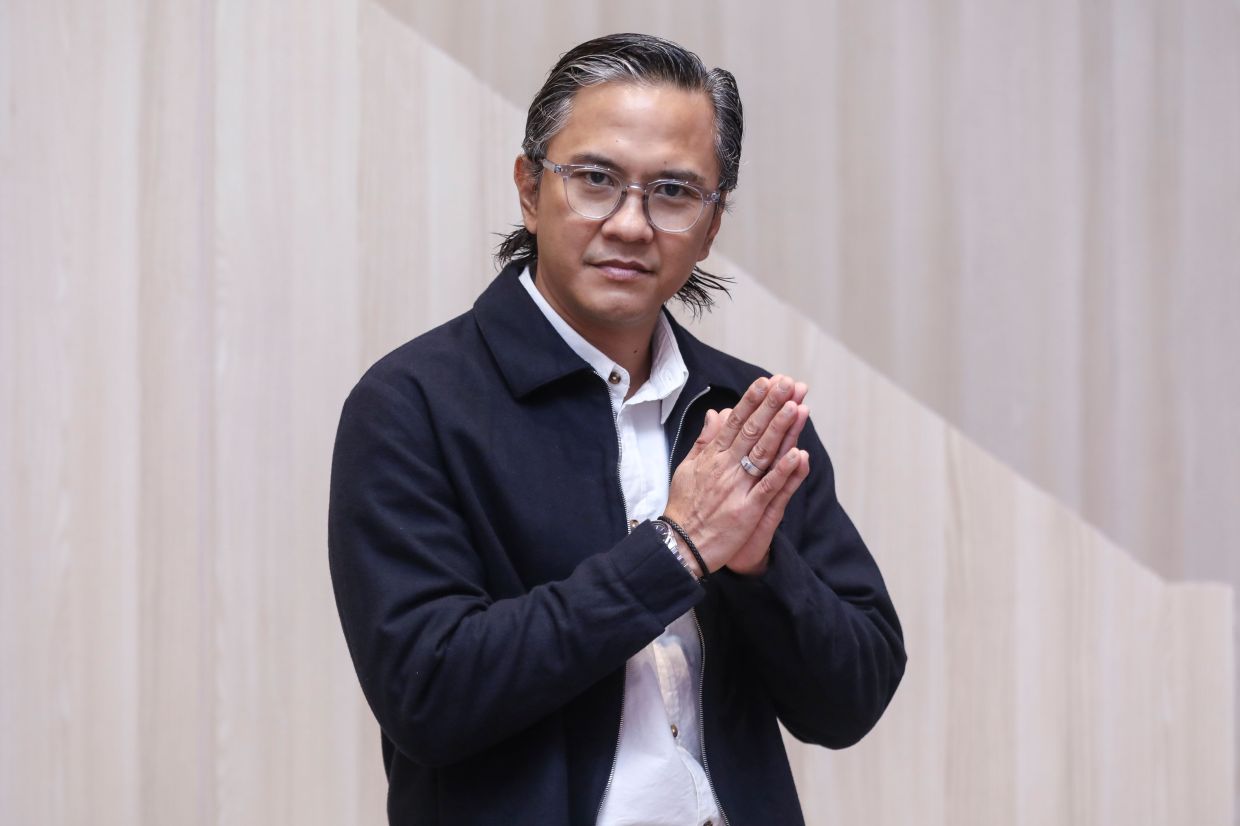
At 46, veteran actor Beto Kusyairy has reached a career inflection point where commercial success matters less than artistic integrity. The Malaysia Film Festival Best Actor winner now gravitates towards projects offering creative substance rather than mainstream appeal, a philosophy that guides his work across mediums—film, television and even radio drama. This measured approach to role selection reflects a broader confidence in his standing within the industry and a desire to pursue endeavours that provide genuine satisfaction rather than fleeting recognition.
His recent involvement with an eight-episode Astro Originals series exemplifies this selective strategy. The production casts him as a father whose young son disappears and is subsequently discovered murdered, with circumstances forcing police to view the protagonist himself as a suspect despite his ostensible devotion to his child. The narrative architecture deliberately exploits these contradictions, creating ambiguity that sustains tension across the series. Beyond its function as a gripping crime narrative, however, the production ventures into considerably more fraught territory, weaving examinations of childhood trauma, sexual abuse and child exploitation into its storytelling fabric.
The audience reception has exceeded industry expectations in measurable terms. Astro Shaw's data indicates the series ranks among Malaysia's most discussed local productions this year, catalysing substantial digital conversation. The platform's engagement metrics reveal striking penetration: over 58 million video views accumulated across Astro's ecosystem, whilst social media reach extended to 9.5 million individual users. This momentum subsequently translated into tangible international validation when Netflix included the series in its Top 10 rankings for six consecutive weeks—an achievement that underscores the production's resonance beyond the domestic market and its capacity to compete with global content on an international streaming platform.
The actor's active engagement with audiences across Instagram and Threads, mirrored by his co-stars, has become integral to the show's cultural conversation. Rather than passive consumption, viewers adopted the role of amateur investigators, generating theories about plot developments and competing interpretations of character motivations. Kusyairy recognises this participatory dynamic as a fundamental success metric, evidence that audiences maintain investment sufficiently intense to drive organic discussion. The phenomenon transforms what might otherwise remain a solitary viewing experience into communal interpretation, where viewers collectively construct meaning alongside the narrative itself.
As the series progressed through its episode run, however, audience interaction underwent qualitative transformation. Comments sections and direct messages evolved beyond plot speculation into personal disclosure. Viewers began articulating experiences mirroring scenarios portrayed on screen, sharing accounts of trauma previously confined to private memory or familial concealment. Kusyairy frames this development as particularly meaningful—the production had inadvertently created psychological safety sufficient for individuals to articulate painful histories, however limited the forum. He views this emergence of testimony as potentially therapeutic for those expressing suppressed experience, even when the outlet remains confined to social media rather than extending into formal support systems or institutional channels.
This audience willingness to confront sensitive material reflects deeper cultural recalibration regarding traditionally taboo subjects. Kusyairy locates the shift within generational change and evolving parental attitudes. Previous decades prioritised family reputation and social standing above disclosure of abuse or trauma, creating systemic silence around exploitation and harm. Contemporary Malaysian society increasingly prioritises justice and victim support over protective silence, a transition accelerated by broader global movements highlighting institutional failures to adequately safeguard vulnerable individuals. Public conversation around sexual abuse and harassment, whilst still challenging, has become substantially more feasible than in earlier decades, with survivors increasingly willing to pursue accountability.
The production team neither anticipated nor deliberately engineered this outcome during development. Initial creative objectives centred on honest storytelling and hope that narrative authenticity would generate viewer identification. That the series would catalyse substantive discussion about abuse and exploitation exceeded their explicit ambitions. Yet this unexpected resonance demonstrates something measurable about Malaysian audience capacity and cultural readiness. Rather than requiring didactic programming or explicitly educational frameworks, Kusyairy argues that well-crafted drama inherently facilitates engagement with complex subject matter. The key variable remains narrative execution—when sensitive material receives subtle, sophisticated treatment rather than sensationalism or graphic exploitation, audiences demonstrate genuine appetite for serious engagement.
Kusyairy situates this production within Malaysia's evolving entertainment landscape more broadly. The domestic film and television industry has demonstrably advanced across production values, narrative ambition and genre diversity. Contemporary Malaysian productions span action spectacle, comedic entertainment, crime thrillers and horror, reflecting industry maturation and audience sophistication sufficient to sustain varied storytelling approaches. This expansion represents meaningful progress, yet Kusyairy identifies substantial runway for continued development. He perceives the series as potentially contributing to this trajectory, offering creative practitioners permission to pursue ambitious narratives addressing meaningful themes.
The actor's perspective ultimately synthesises personal aspiration with industry responsibility. Invoking Eugene Bell Jr's notion of aspiring to inspire, Kusyairy articulates faith that his professional choices carry influence beyond immediate commercial metrics. By selecting projects of substance and participating authentically in audience conversation, he models an alternative to celebrity built on visibility alone. He advocates for screenwriters, directors and producers to embrace narrative risks, pushing storytelling beyond formulaic convention toward genuine exploration of human complexity. This philosophy suggests that Malaysian cinema and television need not choose between commercial viability and artistic integrity, that audiences possess the sophistication to sustain both simultaneously.

