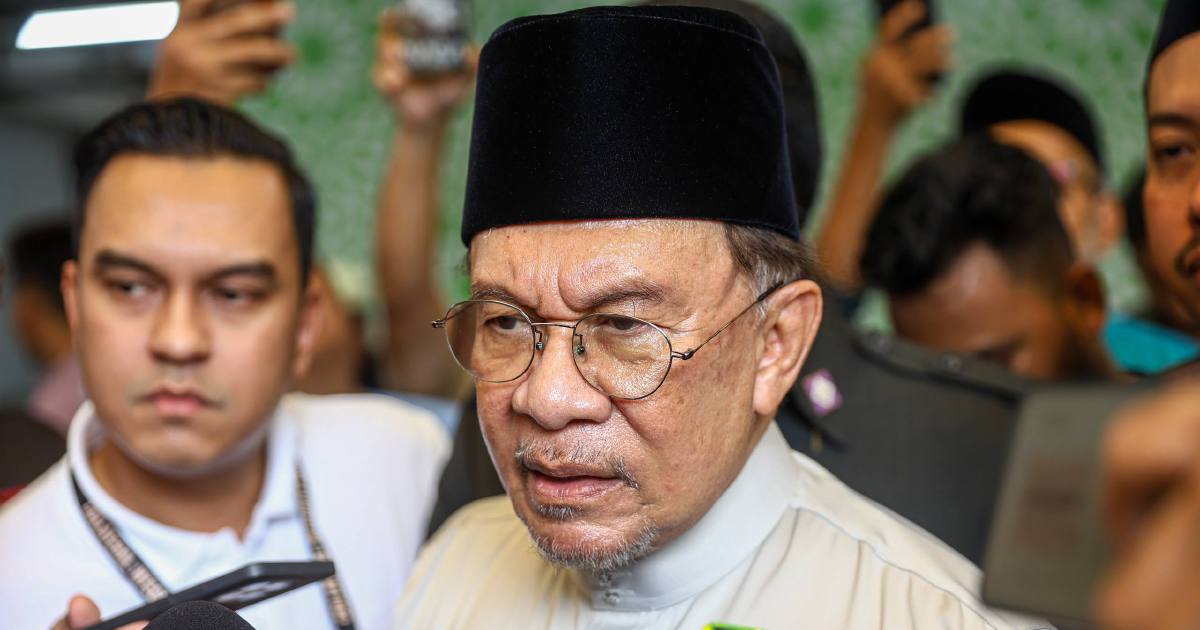
Prime Minister Datuk Seri Anwar Ibrahim has made clear that Malaysia will steadfastly maintain its position regarding Low Taek Jho—the internationally wanted businessman known as Jho Low—irrespective of whether the United States extends him presidential clemency. His statement underscores Kuala Lumpur's commitment to pursuing accountability in connection with the 1Malaysia Development Berhad scandal, one of the largest financial frauds ever uncovered in Southeast Asia.
Jho Low remains at the centre of investigations spanning multiple jurisdictions, having allegedly orchestrated the theft of billions of ringgit from the 1MDB sovereign wealth fund between 2009 and 2015. The scale of his alleged wrongdoing extends across borders, with authorities in Malaysia, the United States, Singapore, and other nations pursuing overlapping cases. His continued absence from Malaysian soil and his evasion of extradition attempts have become a defining feature of the broader anticorruption efforts launched after the change of government in 2018.
The timing of Anwar's remarks carries significance given the recent change in US administration and speculation about potential uses of presidential pardoning powers. A pardon granted by Washington would not automatically nullify Malaysia's separate legal claims or investigations into Jho Low's alleged crimes within Malaysian jurisdiction. The fugitive faces multiple charges domestically, and any clemency from abroad would have no bearing on the country's independent justice system.
Malaysia's determination reflects the deep domestic impact of the 1MDB scandal, which shook public confidence in governance and institutions. The affair resulted in the imprisonment of the fund's former chief executive officer Arul Kanda Kandasamy and implicated numerous other senior figures. For ordinary Malaysians, the case symbolises how unchecked corruption at the highest levels can drain public resources intended for development and welfare.
Jho Low's elaborate network of intermediaries and shell companies, established to facilitate the alleged fraud, demonstrates the transnational nature of modern financial crime. He is believed to have utilised international banking systems, offshore jurisdictions, and complex corporate structures to obscure the origins and movement of misappropriated funds. His ability to remain fugitive despite widespread legal pressure highlights vulnerabilities in cross-border law enforcement cooperation that nations across Southeast Asia have been working to address.
The Malaysian government's unwavering position also reflects broader regional concerns about ensuring that high-profile offenders cannot escape justice through geographic displacement or political manoeuvring. Neighbouring countries facing similar challenges with white-collar criminals fleeing beyond their borders observe how Malaysia handles the Jho Low matter. Any perceived softening would send problematic signals about the seriousness with which the region treats accountability among the wealthy and well-connected.
International cooperation remains crucial to this pursuit. The United States Department of Justice has itself pursued cases against Jho Low and his associates, resulting in convictions and asset seizures. Malaysia's federal law enforcement agencies maintain active coordination with American counterparts through established bilateral channels and multilateral frameworks such as the International Criminal Police Organization. A presidential pardon would not dissolve these institutional relationships or erase the evidence compiled by investigators across jurisdictions.
The stakes for Malaysian credibility in anticorruption efforts are substantial. Since 2018, successive governments have made institutional reform and the prosecution of high-level corruption central to their legitimacy and reformist credentials. Accepting a scenario where a fugitive evades accountability through a foreign pardon would undermine these commitments and weaken public belief in the rule of law. Anwar's statement therefore serves not merely as a legal position but as a reassurance to Malaysian citizens that the state will not be subordinated to external political decisions.
Regionally, the matter resonates beyond Malaysia's borders. Singapore pursued its own investigations into Jho Low's activities within its financial system. The United Arab Emirates and other jurisdictions have similarly engaged with aspects of his alleged criminal network. A coordinated international response rooted in independent national investigations has proved far more difficult to circumvent than isolated efforts. Malaysia's refusal to defer to a foreign pardon reinforces the principle that each nation must pursue its own justice for crimes committed within its territory.
For Malaysian business and investment communities, clear signals about the government's commitment to pursuing financial fraud provide reassurance about the robustness of regulatory frameworks. Institutional investors assess the strength of rule of law as a factor in their decisions about market confidence. Demonstrating that even the most resourceful and internationally connected fugitives will face sustained legal pressure helps restore faith in Malaysia's governance structures after years of uncertainty.
The case also illustrates the evolving landscape of transnational crime prosecution. Modern financial fraud often requires cooperation between tax authorities, banking regulators, central banks, and law enforcement agencies across multiple continents. Malaysia has invested in strengthening these institutional capabilities since 2018, including through enhanced training for prosecutors and investigators in complex financial crime. Jho Low's alleged activities, by their nature, demand precisely these sophisticated interdisciplinary approaches.
Anwar's remarks provide clarity at a moment when geopolitical shifts and changes in foreign leadership might otherwise create uncertainty about Malaysia's commitments. The statement confirms that Malaysian national interest in accountability will not be negotiated away or subordinated to external political considerations. For a nation that has invested considerable political and institutional capital in anticorruption efforts, such clarity is essential to maintaining public confidence and international standing.

