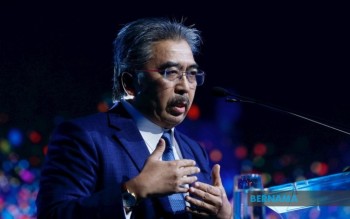
The Malaysian government is navigating a delicate balancing act between accelerating electric vehicle adoption and building the supporting infrastructure needed to make this transition viable. During a Dewan Negara session, Investment, Trade and Industry Minister Datuk Seri Johari Abdul Ghani clarified that no decision has been made to impose a proposed EV levy, but rather that the government remains in the early stages of assessing the most workable approach to channel funding into the development of a comprehensive public charging network across the nation.
The levy under consideration would be applied to every EV sold, with proceeds dedicated to a specialised fund aimed at expanding Malaysia's public charging infrastructure. This approach reflects a growing recognition that private manufacturers and distributors alone cannot bear the full burden of building the extensive network needed to support mass EV adoption. Johari's acknowledgement of this constraint stems partly from the scale of infrastructure investments required—a challenge exemplified by China's experience with its substantially larger charging network, which operates at a scale difficult for Malaysia to replicate without dedicated public funding mechanisms.
A fundamental tension underpins this policy debate: whether cost burdens should fall primarily on manufacturers or ultimately on consumers. Johari explicitly noted that if levies are imposed on vehicle manufacturers, these additional expenses will likely flow through to consumers in the form of higher vehicle prices. This reality underscores the government's dilemma—shifting costs upstream merely redistributes rather than eliminates public expense. The minister's candid assessment suggests that policymakers recognise the inevitability of some form of consumer impact regardless of the mechanism chosen, making the focus shift toward finding the optimal level at which charges should be set and which stakeholder bears primary responsibility.
The government's fiscal constraints add another layer of complexity to this equation. Operating under a deficit creates limited room to fund infrastructure expansion through general taxation or direct government spending. Johari articulated this reality plainly, asking rhetorically where funding would come from if not through levy mechanisms or existing budget allocations. This fiscal pressure means that sustainable infrastructure development cannot rely indefinitely on government subsidies, even as Malaysia continues to provide various incentives to promote EV uptake. The minister's emphasis on understanding "the broader picture" reflects frustration with public discourse that treats individual policy elements in isolation rather than recognising the interconnected trade-offs involved.
Malaysia's energy generation profile adds further context to the infrastructure challenge. The country remains substantially dependent on gas and coal-fired electricity generation to power its grid, meaning that expanding EV charging capacity entails not only physical infrastructure investment but also ensuring adequate electricity supply. Any comprehensive EV ecosystem development must account for this energy dimension, including the costs of upgrading generation capacity, transmission networks, and distribution systems. This reality distinguishes Malaysia's situation from countries with predominantly renewable or nuclear power bases, where EV expansion carries different economic implications.
The coexistence principle that Johari emphasised—ensuring internal combustion engines and electric vehicles can operate alongside one another during a transition period—reflects pragmatic acknowledgement that Malaysia cannot immediately abandon fossil fuel vehicle infrastructure. This gradualist stance means that for years, the economy will need to support dual transportation systems, creating multiple infrastructure costs that cannot easily be avoided or deferred. Charging networks must expand while fuel distribution systems remain operational, representing a period of elevated aggregate infrastructure spending before efficiencies from eventual consolidation emerge.
International comparisons suggest that successful EV transitions typically require deliberate funding mechanisms. Nations pursuing rapid EV adoption generally employ some combination of levies, dedicated taxes, and direct government investment. The Malaysian government's exploration of these options places it within a mainstream policy approach rather than charting an unusual path. However, the specific design of any levy—its rate, scope, exemptions, and uses—will significantly affect its acceptability to stakeholders and its effectiveness in generating sustainable funding.
The minister's emphasis on broad public understanding represents an important recognition that infrastructure development policies require social licence. Technical solutions mean little if public opposition becomes overwhelming. Johari's attempt to frame the levy discussion within the context of fiscal realities and the costs of modern infrastructure development suggests that MITI intends to build public acceptance through transparent communication about government constraints and the necessity of cost-sharing arrangements. This approach differs markedly from simply imposing charges without explanation, suggesting a preference for collaborative rather than merely directive policymaking.
Looking forward, the government faces several key decisions beyond the basic question of whether to impose a levy. The rate structure, collection mechanisms, exemptions for specific vehicle categories, timeline for implementation, and governance of the dedicated fund will all require careful consideration. Early signals from MITI indicate that decisions will reflect consultation with manufacturers, consumers, and other stakeholders rather than predetermined positions. This deliberative process, while potentially slow, may produce more durable policy outcomes than rapid unilateral action.
For Malaysian consumers and the automotive industry, the ongoing assessment period presents both opportunity and uncertainty. Those considering EV purchases face questions about whether and when costs might increase through manufacturer levies or other mechanisms. Manufacturers must evaluate how potential charges might affect their competitive positioning and investment decisions. Consumers already driving EVs monitor discussions carefully, knowing that infrastructure funding mechanisms will influence their ownership experience and vehicle values. The government's apparent commitment to transparent deliberation offers hope that eventual policy decisions will reflect genuine engagement with these diverse interests rather than narrow fiscal expedience.

