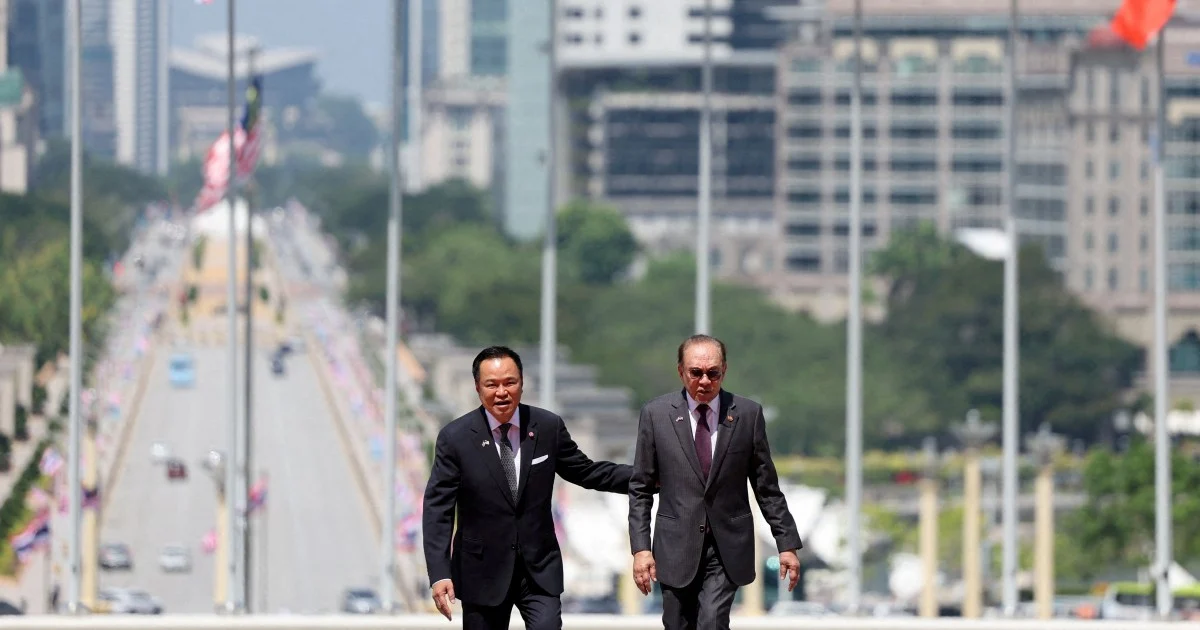
Malaysia believes that Myanmar's escalating political turmoil requires a fundamentally different approach—one grounded in comprehensive dialogue involving all relevant parties rather than exclusionary tactics or externally imposed solutions. Prime Minister Datuk Seri Anwar Ibrahim articulated this position during remarks in Putrajaya, positioning Malaysia as a voice advocating for negotiated settlement over continued confrontation in the region's most troubled state.
The Malaysian government's stance reflects growing concern about the humanitarian toll and regional destabilisation stemming from Myanmar's internal conflict. Since the military coup in February 2021, the country has endured cycles of violence, economic deterioration, and displacement affecting millions. The international community remains deeply fractured over how to respond, with China and Russia backing the junta while Western nations have imposed sanctions and demanded democratic restoration.
Anwar's emphasis on inclusivity carries particular weight given Malaysia's position as a Southeast Asian neighbour directly affected by Myanmar's instability. The Kingdom has hosted hundreds of thousands of Rohingya refugees, straining social services and creating longstanding tensions. Additionally, thousands of Myanmar nationals fleeing the turmoil have crossed into Malaysian territory, adding pressure on border communities and undocumented migrant populations already numbering in the millions across Malaysia.
The concept of inclusive engagement, as articulated by Malaysia, suggests a willingness to bring multiple factions to the negotiating table. This includes representatives from the military establishment, the deposed National League for Democracy, ethnic armed organisations controlling territory along Myanmar's borders, civil society groups, and international mediators. Such an approach contrasts sharply with current realities, where the junta maintains tight control over most urban centres while facing armed resistance from various opposition forces and ethnic militias.
What distinguishes Malaysia's advocacy is its foundation in the principle of self-determination. Rather than prescribing specific political outcomes or governance structures, the Malaysian position allows for Myanmar's diverse population to choose their own path forward. This reflects sensitivity to Myanmar's complex ethnic composition—comprising the Bamar majority alongside numerous minority groups with distinct political aspirations and historical grievances. Any imposed settlement risks reopening old fractures or creating new ones.
ASEAN diplomacy traditionally rests on non-interference and consensus-building, principles that have sometimes limited the regional bloc's effectiveness in addressing crises. Malaysia's intervention in the Myanmar discourse attempts to balance these commitments with practical acknowledgment that prolonged conflict serves no one's interests. The framework proposed—inclusive dialogue leading to self-determined outcomes—provides diplomatic cover for both protective and progressive positions within ASEAN.
The timing of Malaysia's public advocacy matters significantly. Regional economies face mounting pressure from refugee flows, smuggling networks, and supply chain disruptions tied to Myanmar's chaos. Thailand's northern regions have experienced spillover violence, and both Vietnam and Laos face questions about how long they can maintain pragmatic engagement with the junta. Bangladesh, already overwhelmed by Rohingya camps, has explicitly warned that Myanmar's continued instability threatens the entire region.
International precedent offers mixed lessons. The Myanmar military has historically resisted external mediation and demonstrated remarkable resistance to economic pressure. Earlier democratic transitions—particularly the 2015 elections that empowered the NLD—occurred only when the military calculated political advantage in managed liberalisation. Understanding these internal incentives becomes crucial when designing engagement frameworks. Malaysia's call for inclusive dialogue implicitly acknowledges that sustainable settlement must address what the various stakeholders believe they have to gain from negotiated outcomes.
For Malaysia specifically, the inclusive engagement framework offers pathways toward reducing refugee pressures and addressing transnational crime networks that have exploited Myanmar's state weakness. Stabilisation could eventually allow repatriation of Rohingya refugees, though the thorny question of citizenship rights within Myanmar remains largely unresolved. Meanwhile, restoring Myanmar's economic functionality would ease some migration pressures affecting Malaysian labour markets and social cohesion.
The emphasis on Myanmar's people determining their own future also carries resonance for other Southeast Asian populations watching their governments' responses to internal crises. Malaysia's framing suggests respect for popular agency rather than technocratic or authoritarian solutions. This positioning aligns with Malaysia's own recent democratic strengthening following the transition from Najib Razak's tenure, lending credibility to advocacy for inclusive political processes.
Challenges to realising this vision remain substantial. The junta shows no indication of voluntarily surrendering power or agreeing to meaningful power-sharing arrangements with opponents. Various armed groups have conflicting objectives and limited trust in one another. International actors continue pursuing divergent strategies. Yet Malaysia's insistence on inclusive engagement provides at least a conceptual framework for diplomatic efforts, distinguishing between resolution mechanisms that might eventually work versus those destined to perpetuate cycles of violence.

