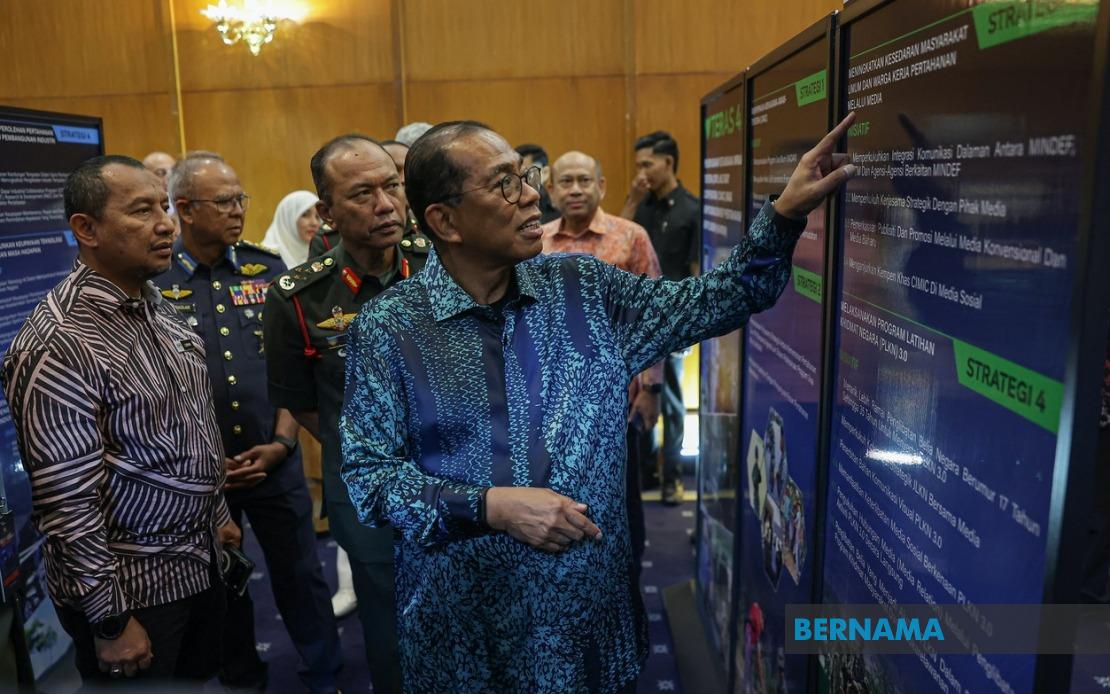
Malaysia's Defence Ministry has unveiled two pivotal planning documents intended to anchor the nation's military preparedness over the next five years amid an increasingly volatile regional and global security landscape. The National Defence Strategic Plan (PSPN) and Defence Capacity Blueprint (RTKP) were launched to provide a coherent roadmap for addressing both traditional and non-traditional security threats while ensuring the Malaysian Armed Forces remain equipped and prepared for contemporary challenges.
Defence Minister Datuk Seri Mohamed Khaled Nordin framed the initiatives as essential responses to a world grappling with mounting geopolitical tensions, rapid technological disruption particularly around artificial intelligence and automation, and multifaceted security challenges that transcend conventional military domains. The strategic documents were refined through a comprehensive Mid-Term Review of the Defence White Paper, a process designed to identify structural gaps in Malaysia's defence architecture and recalibrate planning frameworks to accommodate the unpredictable nature of modern security threats.
The PSPN operates as the overarching strategic instrument, establishing the fundamental direction and ambitions for Malaysia's defence sector through seven interconnected strategic pillars. These pillars encompass the operational readiness and effectiveness of the Malaysian Armed Forces, advancement of defence technologies and capabilities, personnel welfare and veteran support systems, innovation in defence technologies, and broader strategic considerations. By anchoring defence planning within these pillars, the ministry seeks to create a holistic approach that addresses capability gaps while maintaining focus on the human dimension of defence—often overlooked in purely technological modernisation efforts.
The RTKP functions as the implementation mechanism, translating strategic intentions into concrete action by identifying and strengthening the institutional, financial, and human capacities required to execute the defence strategy. Rather than simply articulating defence goals, this blueprint acknowledges that strategic ambitions remain merely aspirational without corresponding investments in resources, expertise, and administrative infrastructure. The minister emphasised the distinction: while the PSPN answers the question of where Malaysia's defence sector should move, the RTKP addresses the more challenging question of how to marshal the necessary resources and coordination to arrive at that destination.
Critically, the blueprint incorporates multifaceted capacity requirements extending beyond traditional military procurement. These include sustained financial resourcing mechanisms, cultivation and retention of skilled human capital within defence establishments, advancement of technological expertise through research and development initiatives, and establishment of effective inter-agency coordination frameworks. This broader conception of capacity reflects sophisticated defence planning that recognises military effectiveness depends not solely on hardware acquisition but on organisational competence, professional standards, and integration across multiple government agencies and private sector actors.
The strategic approach also embraces what Malaysian officials describe as a whole-of-government and whole-of-society framework, rejecting the notion that national defence represents a narrow bureaucratic responsibility confined to the Defence Ministry. Instead, the documents position defence as a comprehensive national concern requiring coordination across multiple ministries, private industry, civil society, and the broader population. This conceptualisation has particular resonance for Malaysia, given the country's exposure to diverse security challenges ranging from maritime piracy and territorial disputes to transnational terrorism and cyber threats—each requiring engagement across different government and societal actors.
The ministry's recent acquisitions signal concrete progress in capability enhancement aligned with these strategic frameworks. Three ANKA Medium Altitude Long Endurance Unmanned Aircraft Systems arrived in March and have already been operationalised at Labuan Air Base, expanding Malaysia's surveillance and reconnaissance capabilities across the archipelago. These systems represent strategic investments in persistent intelligence gathering capacity, particularly valuable given Malaysia's extensive maritime domain and vulnerable offshore interests. The deployment timeline also demonstrates the ministry's ability to transition from acquisition to operational deployment relatively efficiently.
Further capability enhancements are projected across multiple domains within the planning period. The Malaysian Armed Forces anticipate receiving FA-50M light combat aircraft, representing significant enhancement of air combat capabilities and technological sophistication compared to legacy platforms. Maritime patrol aircraft acquisitions address critical gaps in coastal surveillance and maritime security operations, particularly relevant given ongoing concerns about maritime piracy, illegal fishing, and potential unauthorised activities in Malaysian waters. The second batch of Littoral Mission Ships represents continued investment in littoral warfare capability, enabling the navy to conduct sustained operations in shallow-water environments critical to Southeast Asian maritime defence.
These procurement trajectories reflect the strategic documents' emphasis on modernisation while managing fiscal constraints common to developing defence sectors. Rather than pursuing comprehensive fleet overhauls or transformative acquisitions, the ministry adopts a measured approach prioritising systems addressing identified capability gaps in surveillance, coastal defence, and air operations. This pragmatic strategy acknowledges budget limitations while ensuring incremental but meaningful improvements in operational effectiveness.
The timing of these announcements carries regional significance given persistent geopolitical tensions in the South China Sea and broader Indo-Pacific region. As major powers increase military presence and regional states face competing pressures, Malaysia's articulation of comprehensive defence planning demonstrates commitment to maintaining credible deterrence while avoiding provocative escalation. The emphasis on capacity building and inter-agency coordination suggests Malaysia seeks sustainable rather than spectacular military modernisation, building institutional strength that can endure through political and budgetary fluctuations.
For Malaysia's defence industry and technology sector, these frameworks create planning horizons extending beyond immediate procurement cycles. The emphasis on innovation, technological expertise, and research within the RTKP suggests potential opportunities for domestic companies and research institutions to contribute to defence objectives. Similarly, the whole-of-society approach creates engagement opportunities for non-traditional defence stakeholders, from cyber security firms to maritime industries to technology entrepreneurs.
The strategic documents also position Malaysia within evolving regional security dynamics. Unlike some Southeast Asian nations that have adopted more aligned stances toward major power competition, Malaysia's framework emphasises autonomous capacity building and whole-of-society resilience. This approach reflects a desire to enhance deterrence credibility while maintaining strategic flexibility and avoiding entrapment in great power rivalries. The balance between capability enhancement and strategic autonomy will likely characterise Malaysian defence policy during the planning period.
Implementing these ambitious frameworks presents substantial challenges beyond document launch ceremonies. Translating strategic intentions into sustained capability improvements requires consistent political commitment, adequate budgetary allocation across multiple years, effective inter-agency coordination mechanisms that often prove elusive in practice, and maintenance of focus through changing administrations. The Defence Ministry's track record in previous modernisation initiatives will likely influence stakeholder confidence in these frameworks' ultimate realisation.

