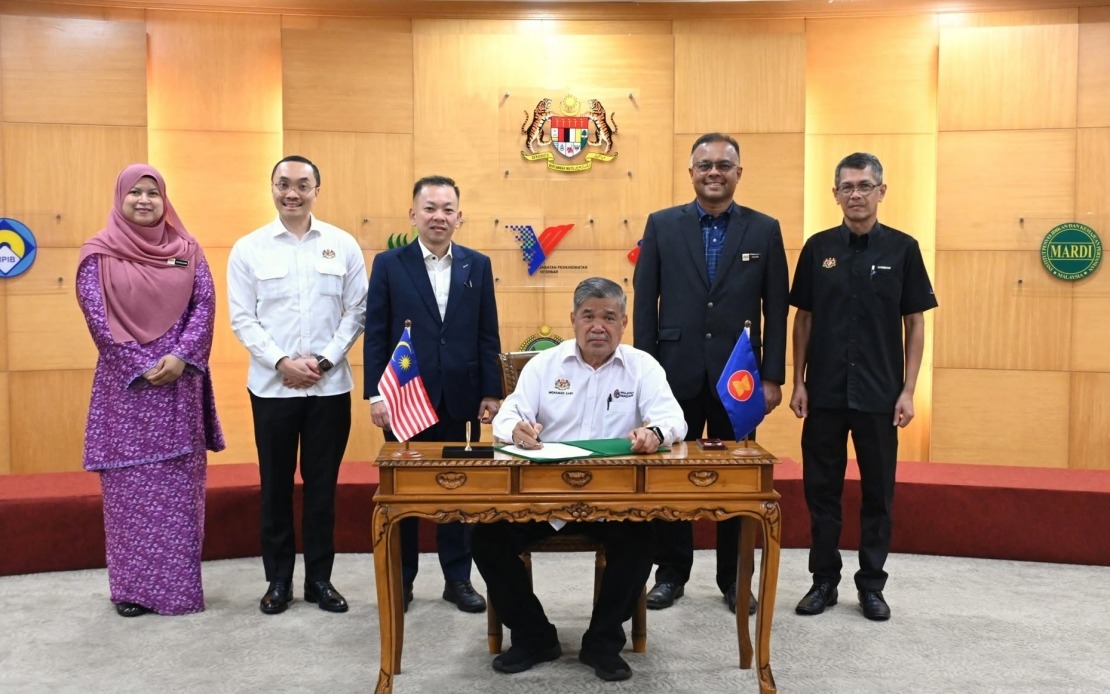
Malaysia has positioned itself to capture significant commercial opportunities across Southeast Asia through two landmark memoranda of understanding signed during the ASEAN Ministers on Agriculture and Forestry meeting in Putrajaya. The agreements, which Datuk Seri Mohamad Sabu endorsed on behalf of the Malaysian government, represent a strategic push to fortify the nation's standing within regional agricultural networks while simultaneously advancing its sustainability credentials on the global stage.
The inaugural accord, titled the ASEAN Cooperation in Agriculture and Forest Products Scheme, establishes a framework encompassing five interconnected strategic pillars designed to reshape how member states approach food systems and natural resource stewardship. These pillars address fundamental challenges confronting the region: bolstering collective food security in an era of climate volatility, streamlining cross-border trade mechanisms for agricultural and forestry goods, mobilising capital flows toward agricultural enterprises, implementing conservation protocols that protect ecosystems without compromising productivity, and crafting unified negotiating positions when member states engage with international forums and trading partners.
Under this first accord, Malaysia has assumed leadership responsibilities for specific commodity categories critical to national economic interests. The Ministry of Plantation and Commodities assumes the lead role for palm oil and cocoa—sectors deeply embedded within Malaysia's export economy and subject to considerable international scrutiny regarding environmental impact and labour standards. Simultaneously, the Ministry of Agriculture and Food Security takes the lead for agri-food products, a portfolio encompassing everything from processed foods to fresh produce that collectively represent substantial export revenue and employment.
The framework explicitly enables ASEAN member states to orchestrate coordinated marketing campaigns that defend the reputational standing of regional agricultural products in competitive global markets. This collaborative approach addresses a persistent vulnerability: individual nations often lack the negotiating heft to counter negative characterisations of their commodities. By presenting a united front, member states can more effectively counter accusations about sustainability or labour practices while simultaneously highlighting quality attributes and competitive pricing advantages that distinguish ASEAN products from alternatives sourced from other continents.
Beyond commodity defence, the scheme substantially widens commercial pathways for agricultural diversification. Industrial crops—encompassing everything from rubber to specialty oils—alongside livestock products, medicinal herbs, and forest-derived goods such as wild honey and premium nuts represent growth categories that Malaysian producers can leverage to penetrate regional supply chains and ultimately reach end-consumers across Asia and beyond. This diversification imperative reflects recognition that over-reliance on traditional commodity exports leaves economies vulnerable to price volatility and shifting consumer preferences.
The second memorandum, negotiated between ASEAN as a collective body and China, introduces a complementary dimension centring on technological transfer and climate adaptation. Spanning eighteen cooperation areas and extending across five years, this accord positions Southeast Asia to absorb Chinese agricultural innovation while simultaneously establishing mutually beneficial trade arrangements that acknowledge China's role as both a significant market for ASEAN agricultural products and a source of advanced farming methodologies.
The climate dimensions embedded within this second agreement carry particular significance for Malaysia. The compact specifically emphasises low-carbon, climate-intelligent agriculture—farming approaches that maintain or enhance productivity while reducing greenhouse gas emissions and improving resilience to weather extremes. Through this collaboration, Malaysian farmers and agribusiness enterprises gain structured access to technologies, training programmes, and research findings that can accelerate adoption of practices aligned with both environmental objectives and profitability imperatives.
Sustainable forest management provisions within the China accord address deforestation concerns that have long complicated Malaysia's international relations and trade negotiations. By embedding forest conservation as a formal cooperation objective, the agreement creates institutional mechanisms through which member states—including Malaysia—can demonstrate genuine commitment to responsible resource stewardship rather than relying solely on rhetorical assurances or voluntary initiatives.
The agreement's inclusion of disaster risk management and agricultural insurance components reflects hard-learned lessons from recent Southeast Asian weather catastrophes. Droughts and flooding have repeatedly devastated agricultural output across the region, disrupting domestic food supplies and export commitments. By establishing insurance frameworks and coordinated disaster preparation protocols, member states can buffer farmers against climate-induced losses while maintaining supply chain continuity that protects regional food availability and international market relationships.
Cross-border pest and disease control mechanisms embedded within both agreements address a mounting threat to regional agricultural productivity. Transnational pests and diseases—ranging from crop-destroying insects to livestock ailments—do not respect borders and require coordinated surveillance, early warning systems, and harmonised response protocols. Malaysia, positioned geographically between major Asian agricultural zones and serving as a transportation hub, benefits substantially from frameworks that prevent disease spread through neighbouring territories and disrupt pathogen transmission networks.
For Malaysian policymakers and agribusiness stakeholders, these agreements represent calculated positioning within evolving regional hierarchies. Rather than viewing agricultural policy as a domestic concern, these accords embed Malaysia within transnational governance structures that provide both obligations and opportunities. The nation's assumption of leadership roles for particular commodities and products signals confidence in Malaysian expertise while creating platforms for policy influence within ASEAN deliberations.
The research and development cooperation dimensions carry long-term strategic weight. By institutionalising technology-sharing mechanisms and joint research initiatives with China and fellow ASEAN members, Malaysia positions its agricultural sector to access innovations that might otherwise remain inaccessible due to cost or technological barriers. This access accelerates sectoral modernisation and enhances competitiveness relative to producers in non-ASEAN territories.
These agreements ultimately represent Malaysia's recognition that agricultural prosperity in an interconnected world requires multi-layered engagement: securing market access through regional partnerships, adopting sustainability practices demanded by international consumers and investors, building resilience against climate and biological threats, and leveraging technological advances that enhance both productivity and environmental stewardship. The dual memoranda operationalise this comprehensive vision.

