Malaysia's government has reaffirmed its commitment to preserving all forms of public assistance programmes despite projecting expenditure of almost RM40 billion on petroleum product subsidies in 2024, a burden intensified by regional instability in West Asia. Deputy Finance Minister Liew Chin Tong made the declaration during parliamentary question time, directly addressing concerns from lawmakers about whether the administration might scale back welfare initiatives given the escalating costs of protecting domestic fuel prices from international market volatility.
The geopolitical tensions in West Asia, which peaked in March and April, created significant upward pressure on global crude oil prices. This external shock forced the government to substantially increase its subsidy commitments to insulate Malaysian consumers from world market fluctuations. Rather than pass these costs to the public through higher petrol pump prices, the administration chose to absorb the difference, reflecting a policy priority of maintaining household purchasing power and protecting lower-income groups from energy inflation.
Liew specifically highlighted the government's determination to maintain direct cash assistance schemes including Sumbangan Tunai Rahmah and Sumbangan Asas Rahmah, alongside broader support mechanisms. These targeted transfer programmes represent a cornerstone of the administration's social safety net strategy, designed to provide immediate relief to vulnerable populations. The commitment to preserve these payments underscores the government's view that welfare programmes and fuel subsidies serve complementary objectives in cushioning citizens from external economic shocks.
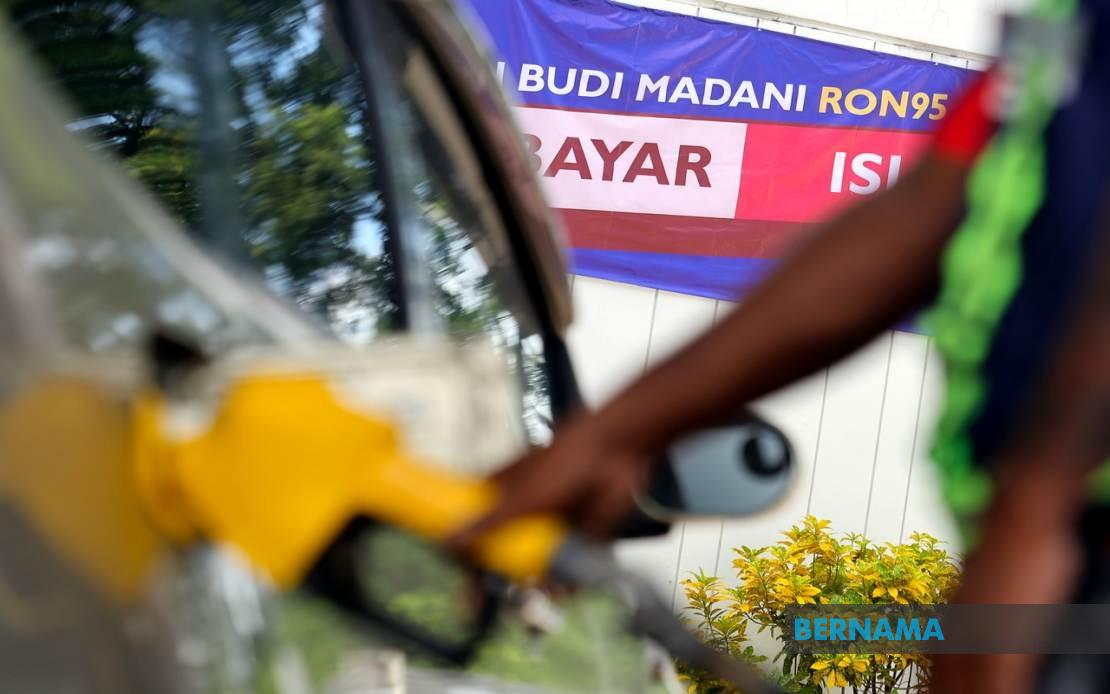
The centrepiece of Malaysia's fuel price management strategy remains the BUDI MADANI RON95 scheme, which launched in September of the previous year. This programme establishes a fixed ceiling price for the most commonly purchased petrol grade while implementing a quota system to regulate supply and demand dynamics. The mechanism proved particularly valuable during the March-April crisis period when unregulated global prices surged to approximately RM5 per litre, yet Malaysian drivers continued purchasing fuel at the controlled rate of RM1.99 per litre, creating a substantial gap that the government bore through increased subsidy expenditure.
The pricing stabilisation achieved through BUDI95 delivers dual benefits to the Malaysian economy and society. First, it provides certainty for households and businesses engaged in transport-dependent activities, enabling more reliable budgeting and planning. Second, it shields smaller enterprises and informal sector workers—who depend heavily on petrol for livelihoods—from sudden income shocks caused by fuel price volatility. This protection becomes especially significant during periods of international crisis when oil prices become unpredictable, as demonstrated by the West Asian situation.
Beyond price protection, the BUDI95 scheme addresses supply security concerns that have historically troubled Malaysia. By coupling price controls with supply guarantees, the programme ensures that petrol availability remains consistent despite global market pressures. This supply dimension distinguishes Malaysia's approach from purely price-focused subsidies, preventing scenarios where price controls inadvertently create shortages or black markets. Liew's parliamentary remarks emphasised this aspect, noting that Malaysians can rely on uninterrupted fuel availability even amid international turbulence.
The government's willingness to absorb RM40 billion in petroleum subsidies reflects policy choices with significant fiscal implications. This expenditure represents a meaningful proportion of government revenue and directly affects budgetary flexibility for other programmes. Yet the administration has prioritised maintaining both fuel price stability and welfare payments, suggesting that policymakers view these expenditures as essential investments in social cohesion and economic resilience rather than discretionary spending subject to cost-cutting pressures.
For ordinary Malaysians, the practical consequence is that fuel costs have remained manageable despite external turbulence, supporting household budgets and business operations. The combined effect of fuel subsidies and cash assistance programmes creates a protective buffer against global economic shocks, particularly valuable for workers in transport, logistics, and service sectors sensitive to energy costs. The government's commitment to maintain these programmes signals confidence that the fiscal burden, while substantial, remains sustainable and preferable to the social and economic disruption that would accompany sudden subsidy removal.
The parliamentary exchange also reflected broader political considerations. Lawmakers questioned whether fiscal pressures might force trade-offs between different assistance programmes, a reasonable concern given RM40 billion represents significant budgetary allocation. The Deputy Finance Minister's firm response indicated no such trade-offs are contemplated, at least in the near term, suggesting government confidence in revenue adequacy or willingness to accommodate higher deficits to preserve social spending. This stance has implications for Malaysia's fiscal trajectory and debt management, areas where regional investors and rating agencies maintain close attention.
The situation illustrates enduring tensions between responding to international market forces and maintaining domestic price stability. Many developing economies face similar dilemmas when commodity prices surge, often choosing to reduce subsidies to contain fiscal costs. Malaysia's alternative approach—absorbing costs while maintaining protections—requires sustained fiscal commitment but delivers political and social benefits that policymakers apparently regard as worthwhile. This strategy becomes more defensible when combined with targeted assistance that channels support toward genuine need rather than providing universal subsidies that benefit all income groups equally.
Looking forward, the sustainability of Malaysia's approach depends partly on whether West Asian tensions moderate, reducing pressure on global oil prices and consequently lowering subsidy requirements. Should geopolitical risks persist or escalate further, the fiscal burden could intensify, potentially forcing difficult decisions about programme prioritisation. For now, however, the government has staked its position clearly, signalling that maintaining both fuel price stability and social assistance remains non-negotiable policy despite substantial short-term costs.

