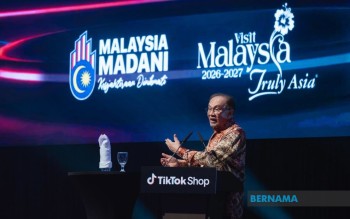
Malaysia is preparing to implement stricter evaluation processes for incoming investment applications to guarantee that foreign and domestic businesses genuinely contribute to local employment and economic growth rather than simply exploiting the country as a transit hub or warehousing point. Prime Minister Datuk Seri Anwar Ibrahim announced the policy shift on Tuesday while addressing participants at the TikTok Shop Summit 2026 in Kuala Lumpur, signalling the government's determination to prevent what he characterised as economically hollow operations from establishing a foothold in the country.
The Ministry of Investment, Trade and Industry (MITI) has flagged an emerging pattern of problematic investment behaviour that demands urgent corrective action. According to Anwar, certain companies have secured approval to operate warehouses and conduct transit activities within Malaysia while contributing virtually nothing to the nation's workforce or generating measurable economic advantages. The government has already begun blocking some of these ventures, but Anwar stressed that a comprehensive review mechanism for prospective applicants is now essential to prevent similar arrangements from proliferating.
This pivot reflects growing frustration within government circles regarding the exploitation of Malaysia's open-market framework. While the country's commitment to free trade and welcoming foreign capital remains unchanged, policymakers have recognised that regulatory gaps allow operators to establish minimal local presence while maximising their extraction of value from Malaysian consumers and markets. The decision to intensify scrutiny represents a calibrated response designed to maintain Malaysia's reputation as an attractive investment destination while protecting domestic interests from being systematically undermined.
A particularly troubling phenomenon involves international e-commerce platforms such as Temu and Pinduoduo channelling cheap imported goods directly into Malaysian markets through cross-border digital commerce mechanisms. These platforms have created pathways for overseas products to flood local retail landscapes at prices that domestic suppliers and small businesses struggle to compete against. When questioned about this dynamic during the summit's Q&A session, Anwar acknowledged that Malaysia's digitalisation and rapid adoption of online trading have inadvertently created conditions allowing what he termed "dumping" of low-cost foreign inventory designed principally to capture market share rather than deliver genuine consumer value.
Equally concerning is the emergence of what Anwar described as pseudo-local enterprises, where investors establish small companies under authentic-sounding Malaysian business names—such as coffee shops or traditional retailers—yet stock shelves entirely with imported merchandise. These operations create the optical appearance of supporting local entrepreneurship while in reality funnelling foreign goods directly to consumers. The practice exploits branding conventions and consumer expectations surrounding locally-owned businesses without delivering any substantive benefit to genuine Malaysian entrepreneurs or communities. Such arrangements represent sophisticated regulatory circumvention requiring greater investigative capacity from enforcement authorities.
The Port Klang warehouse model exemplifies another problematic investment pattern. Large international operators have leased substantial warehouse facilities at Malaysia's primary port complex, establishing regional distribution hubs that require minimal local workforce engagement and generate no meaningful demand for Malaysian products or services. These operations utilise Malaysian infrastructure and real estate while outsourcing employment and procurement to their home countries or other jurisdictions. The model proves economically extractive rather than generative, transferring wealth outward rather than circulating capital within the domestic economy.
Anwar's emphasis on employment generation and local supply-chain integration reflects a strategic recalibration of Malaysia's investment philosophy. Rather than pursuing growth metrics based solely on capital inflows and registered business numbers, the government increasingly recognises that true economic development requires investments that create quality jobs for Malaysians and stimulate demand for locally-produced goods and services. This perspective acknowledges that not all foreign investment delivers equivalent developmental benefits—some arrangements may actually undermine local competitiveness and entrepreneurial capacity.
The timing of this announcement carries significance given Malaysia's ongoing efforts to position itself as a regional digital economy leader. The TikTok Shop Summit 2026 represents Malaysia's ambition to become an e-commerce hub, yet Anwar's concurrent warnings about uncontrolled product dumping through cross-border platforms suggest government recognition that rapid digitalisation without appropriate guardrails risks creating a marketplace where foreign operators capture value at the expense of domestic retail networks. Balancing openness with protection has emerged as a central policy tension requiring sophisticated regulatory architecture.
Enforcement officers have already begun implementing stricter monitoring and taking action against non-compliant operators, according to Anwar, indicating that the government possesses both the political will and operational capacity to implement these reviews. However, translating political commitment into effective enforcement will require MITI and other relevant agencies to develop clearer investment criteria and strengthen their investigative capabilities to identify shell operations and verify actual local employment and supply-chain claims. International investors and multinational enterprises must recognise that Malaysia's tolerance for economically hollow arrangements has reached its limits.
The broader implication extends beyond Malaysia to signal shifting attitudes across Southeast Asia regarding foreign investment quality. As regional governments mature and their domestic economies strengthen, policymakers increasingly demand that foreign capital prove its developmental credentials through measurable contributions to local employment, skills development, and supply-chain integration. The Malaysian government's more assertive posture may influence investment behaviour across the region, encouraging multinational operators to structure their regional operations with greater consideration for local content and employment obligations.
For Malaysian businesses and entrepreneurs, this policy shift potentially creates breathing room within the domestic market by limiting the competitive pressure from predatory cross-border e-commerce operators and hollowed-out foreign entities. However, local enterprises must simultaneously recognise that complacency invites continued challenges. The government's protection through stricter investment review must be matched by domestic business innovation, quality improvement, and competitive adaptation. Malaysia's approach ultimately aims to construct a market ecosystem where both foreign and local operators contribute genuinely to national prosperity rather than merely extracting value.

