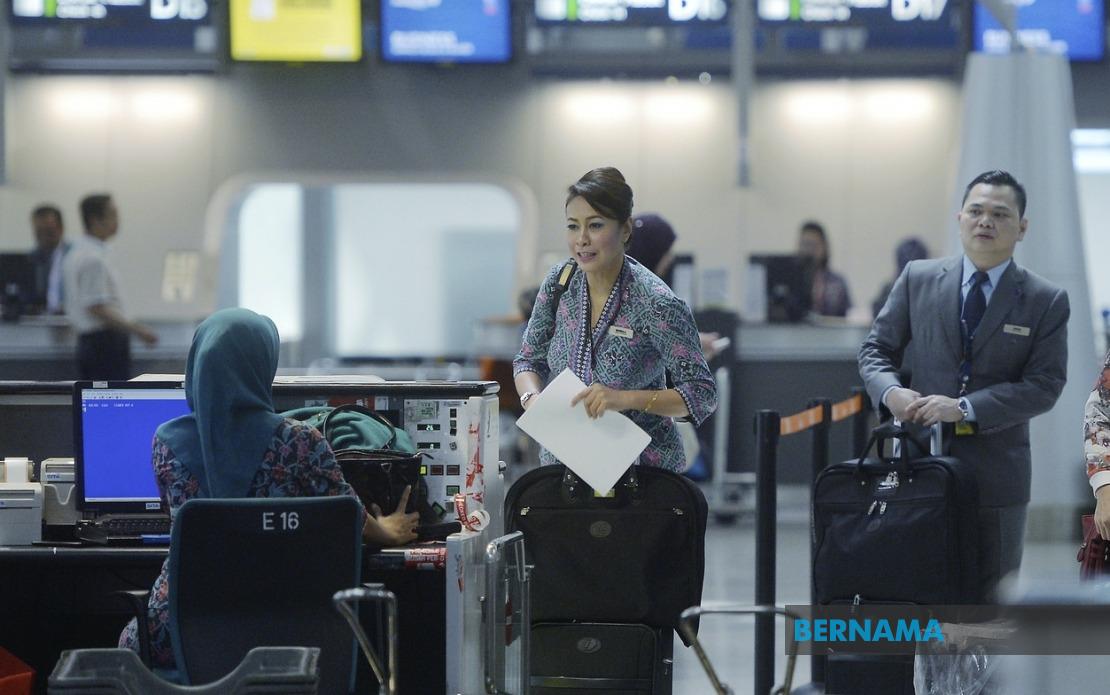
Malaysia's aviation security framework is undergoing significant revision after a high-profile incident exposed potential vulnerabilities in existing screening procedures at the nation's airports. The Malaysian Border Control and Protection Agency (AKPS) has announced that comprehensive measures to enhance security protocols for pilots and flight crew will be rolled out nationwide, prompted by the arrest of a Malaysian pilot in Indonesia on suspicion of drug smuggling.
The decision emerged from an urgent meeting convened by the Transport Ministry's secretary-general Datuk Seri Jana Santhiran Muniayan, which brought together senior officials from AKPS, the Royal Malaysia Police (PDRM), and Malaysia Aviation Group (MAG). AKPS director-general Datuk Seri Mohd Shuhaily Mohd Zain disclosed the outcome at a press conference in Sepang, emphasising that all stakeholders are treating the security breach with considerable gravity. The collaborative effort signals recognition that aviation security requires constant reassessment, particularly given the critical responsibilities entrusted to flight crew members who interact with sensitive airport infrastructure and systems.
The triggering incident involved a 39-year-old Malaysian pilot who was apprehended shortly after landing at Soekarno-Hatta International Airport in Jakarta on July 29. According to Indonesia's Director-General of Customs and Excise Djaka Budi Utama, customs officials discovered approximately 25 kilogrammes of ecstasy concealed in the suspect's luggage, with an estimated street value of around Rp60 billion (approximately RM13.5 million). The pilot had just completed an international passenger flight from Kuala Lumpur when Indonesian authorities made the arrest, raising troubling questions about how such a significant quantity of narcotics could have passed undetected through Malaysian airport security.
What makes this case particularly concerning for aviation authorities is that the suspect successfully cleared all standard security procedures at Kuala Lumpur International Airport (KLIA) before his departure on July 28. Mohd Shuhaily confirmed that routine scanning equipment identified no suspicious images during the examination of both the pilot's luggage and personal items. The fact that the drugs were detected only upon arrival in Jakarta, rather than at the point of departure, suggests that either the concealment method proved sophisticated enough to defeat Malaysia's current detection capabilities, or that the screening process contains procedural gaps requiring immediate attention.
The implications of this incident extend well beyond a single criminal case. Pilots and flight crew members occupy uniquely privileged positions within aviation ecosystems, possessing access credentials, security clearances, and detailed knowledge of airport operations that criminals might attempt to exploit. The successful passage of 25 kilogrammes of drugs through Malaysian airport security by someone with insider knowledge demonstrates that even trained personnel with familiarity of security systems can potentially circumvent existing measures. This realisation has prompted authorities to acknowledge that current screening standards, while perhaps adequate for general passengers, may require recalibration when applied to aviation staff.
The enhanced procedures now being developed will include substantially more comprehensive screening protocols targeting all pilots and crew members, as well as other airport staff with access to sensitive areas. These expanded measures represent a significant shift in security philosophy, moving from screening based on standard passenger protocols toward specialised procedures tailored to individuals whose roles grant them particular privileges and responsibilities. The Transport Ministry and AKPS have signalled that implementation will occur in the near future, though specific timelines and technical details of the new procedures have not yet been disclosed publicly.
For Malaysian aviation operators and the broader travel industry, these developments carry important operational implications. Malaysia Aviation Group representatives participated fully in the ministerial discussions, indicating that the country's major aviation enterprises have acknowledged their stake in maintaining robust security standards. Enhanced screening of their own personnel may create some procedural delays, but the alternative—a compromised reputation for aviation safety and security—carries far greater commercial and reputational risks for Malaysian carriers operating in international markets. The industry's apparent cooperation suggests recognition that proactive security measures ultimately serve their interests by preventing incidents that could damage public confidence.
The timing of this security review also reflects broader regional concerns about aviation-related drug trafficking. Southeast Asia faces persistent challenges from organised criminal networks seeking to exploit aviation infrastructure for narcotics distribution, particularly given the region's geographic position between major drug production areas and lucrative consumption markets. A pilot's insider knowledge and legitimate access to aircraft could make them attractive targets for recruitment by trafficking syndicates. Malaysia's response to this particular case may set important precedents for how other Southeast Asian nations approach similar vulnerabilities within their own systems.
Mohd Shuhaily acknowledged that AKPS continues awaiting detailed feedback from the Royal Malaysia Police investigation to fully understand how the suspect managed to clear screening procedures. This acknowledgment reveals a systematic gap in current understanding—authorities have identified that a breach occurred but have not yet completely determined the specific mechanism. This honest assessment actually strengthens the credibility of the enhancement initiative, demonstrating that officials are approaching the problem analytically rather than simply implementing theatrical security measures designed to create appearances of action without substantive improvement.
The case also raises questions about information-sharing and coordination between Malaysian authorities and their Indonesian counterparts. That the drugs were discovered in Jakarta rather than Kuala Lumpur suggests that intelligence and evidence-gathering will require cross-border cooperation. The Transport Ministry's coordination of responses indicates that Malaysian officials are conscious of maintaining strong relationships with neighbouring countries' aviation authorities while addressing legitimate security concerns within domestic systems.
Looking forward, the rollout of enhanced screening procedures will likely become a model for how Malaysia addresses similar vulnerabilities across its security infrastructure. The focus on personnel with legitimate access to sensitive facilities represents a maturing recognition that modern security threats often exploit insider access rather than attempting to breach perimeters directly. By treating pilots and crew as subjects requiring enhanced scrutiny—not from a basis of suspicion but from organisational prudence—Malaysian authorities are implementing a best-practice approach increasingly adopted by major aviation hubs worldwide.
For travellers and industry stakeholders, these measures ultimately serve to strengthen confidence in Malaysian aviation's safety and security standards. While enhanced screening may create minor inconveniences for legitimate crew members, the alternative—allowing gaps that criminals can exploit—carries far greater costs. As details of the new procedures emerge in coming weeks, the transport sector will be watching closely to see whether Malaysia's security agencies can establish screening protocols that are both genuinely effective and operationally sustainable for the aviation industry.

