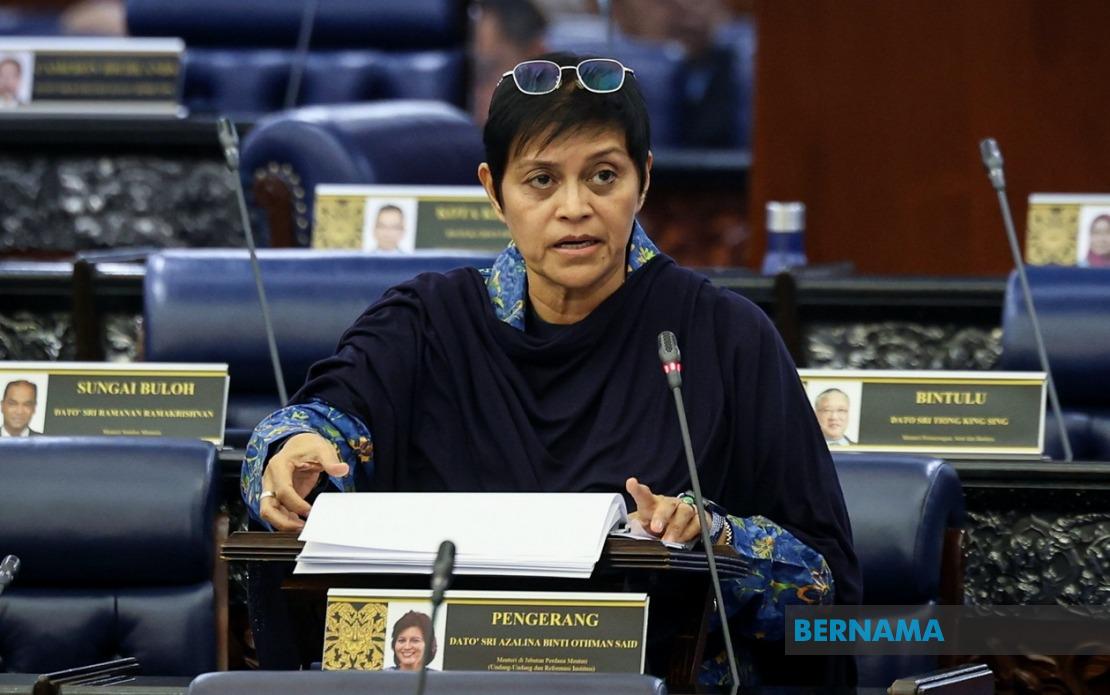
Malaysia's institutional reform agenda reaches a critical juncture this week as the government prepares to table a Special Select Committee report proposing the formal separation of the Attorney General and Public Prosecutor positions. The move represents a significant overhaul of the country's prosecutorial framework, addressing long-standing concerns about the concentration of power within a single office and the need for greater independence in the justice system. Datuk Seri Azalina Othman Said, Minister in the Prime Minister's Department (Law and Institutional Reform), confirmed that the report would be presented to the Dewan Rakyat, emphasizing that the initiative embodies the MADANI Government's broader commitment to institutional strengthening and judicial transparency.
The committee, which convened across seven sessions, has developed a comprehensive set of proposals aimed at fundamentally reshaping how the Public Prosecutor operates within Malaysia's constitutional framework. Rather than simply divorcing the two positions administratively, the reform package addresses the underlying structural vulnerabilities that have raised questions about prosecutorial independence in Southeast Asia's third-largest economy. The proposals reflect extensive deliberation among legislators, legal experts, and institutional stakeholders regarding optimal practices for maintaining both professional autonomy and democratic accountability in prosecution services.
Central to the reform framework is the introduction of a fixed non-renewable seven-year term for the Public Prosecutor, a modification designed to insulate the office from political pressures and provide operational stability. This appointment period would replace the previous arrangement that permitted indefinite tenure subject to political considerations. Such a defined term ensures that successive administrations cannot perpetually retain prosecutorial leadership aligned with their preferences, thereby creating meaningful separation between the executive and prosecutorial branches. The mechanism reflects international best practices observed in established common-law jurisdictions where prosecutorial independence has proven crucial to public confidence.
A cornerstone innovation involves restructuring the appointment process to exclude direct prime ministerial and Cabinet involvement. Instead, the Judicial and Legal Service Commission (SPKP) would recommend candidates to the Yang di-Pertuan Agong, whose appointment power would operate on the commission's advice rather than governmental direction. This architectural shift significantly narrows the executive's influence over prosecutorial selection, placing decision-making authority within constitutional bodies explicitly designed to maintain judicial independence. The removal of Cabinet involvement particularly addresses concerns about potential politicization of prosecution decisions affecting high-profile cases or sensitive matters.
Parliamentary oversight receives substantial enhancement through proposed constitutional amendments to Article 145A, Clause (18) of the Federal Constitution. Under the revised framework, the SPKP would submit recommended candidates to the Dewan Rakyat Speaker, enabling the Parliament Select Committee to conduct detailed scrutiny before returning recommendations to the commission. This intermediate parliamentary examination stage introduces a critical transparency mechanism, permitting elected representatives to assess qualifications and suitability of prospective Public Prosecutors. The arrangement creates a vetted selection process where candidates face public and legislative evaluation, reducing opportunities for opaque decision-making within executive or judicial circles alone.
The committee has further proposed establishing a comprehensive Code of Ethics for Public Prosecutors, establishing professional standards and conduct expectations specific to prosecutorial roles. Such a code operationalizes the distinction between prosecutorial and attorney general functions by defining prosecutorial conduct norms independently from governmental legal advice responsibilities. The ethics framework would guide prosecutorial discretion in case selection, charging decisions, and resource allocation, creating institutional guardrails against potentially politically-motivated prosecutions. This codification acknowledges that prosecutorial power, though necessary for justice administration, requires explicit ethical boundaries to prevent abuse.
Beyond these structural modifications, the committee recommends empowering Parliament to enact further legislation strengthening the Public Prosecutor's institution as circumstances require. This provision creates flexibility within the reform framework, permitting future adjustments responding to evolving challenges or institutional experience. Rather than establishing an immutable constitutional arrangement, the proposal recognizes that institutional reform requires iterative refinement as practices develop and vulnerabilities become apparent. This legislative pathway also respects Parliament's primary role in defining institutional frameworks, maintaining consistency with democratic governance principles.
For Malaysian observers, the timing of this reform carries particular significance. The initiative emerges amid broader regional discussions regarding prosecutorial independence in Southeast Asia, where several jurisdictions have confronted questions about whether prosecution services operate free from political interference. Malaysia's proposal positions the country among regional leaders addressing institutional governance forthrightly. The reform demonstrates that even established constitutional systems can undertake substantial restructuring when consensus emerges regarding institutional vulnerabilities, potentially influencing neighboring democracies grappling with similar concerns.
The government's framing emphasizes that the separation strengthens rather than undermines justice administration. By creating distinct prosecutorial and attorney general functions, the system theoretically permits the Public Prosecutor to focus exclusively on criminal prosecution while the Attorney General concentrates on governmental legal advice and representation. This functional specialization potentially enhances both offices' effectiveness and professional expertise. Moreover, independent prosecutorial decision-making, insulated from governmental policy considerations, may enhance public perception that prosecutions reflect legal merit rather than political calculus.
Implementation of these proposals requires constitutional amendment, necessitating two-thirds parliamentary approval. This threshold ensures broad multi-partisan support, preventing any single political coalition from unilaterally imposing prosecutorial structures. The requirement effectively mandates cross-party consensus on fundamental institutional arrangements, reinforcing that judicial independence transcends partisan politics. Achieving such majorities demonstrates that competing political interests can converge on institutional strengthening when reform addresses genuine public concerns about justice system integrity.
The implications for Malaysian civil society are substantial. Independent prosecution authority responsive primarily to law and professional ethics rather than governmental preferences may enhance confidence in criminal justice outcomes. Citizens dissatisfied with prosecutorial decisions would possess clearer institutional accountability mechanisms through Parliament and ethics frameworks rather than merely petitioning political authorities. For business interests and foreign investors, clearer prosecutorial independence standards reduce uncertainty regarding whether commercial disputes might attract politically-motivated prosecution. The reform thereby addresses practical governance concerns affecting economic activity and social stability.
Longer-term institutional consequences remain subject to implementation details yet to be elaborated through subsequent legislation. The constitutional separation provides a framework, but operational effectiveness depends upon subsequent laws defining prosecutorial powers, resources, and relationships with other institutions. Parliamentary committees will require substantial capacity to meaningfully scrutinize prosecutorial candidates. The Public Prosecutor must build internal institutional cultures valuing independence and ethics alongside prosecutorial effectiveness. These implementation challenges require sustained political commitment beyond merely tabling proposals.

