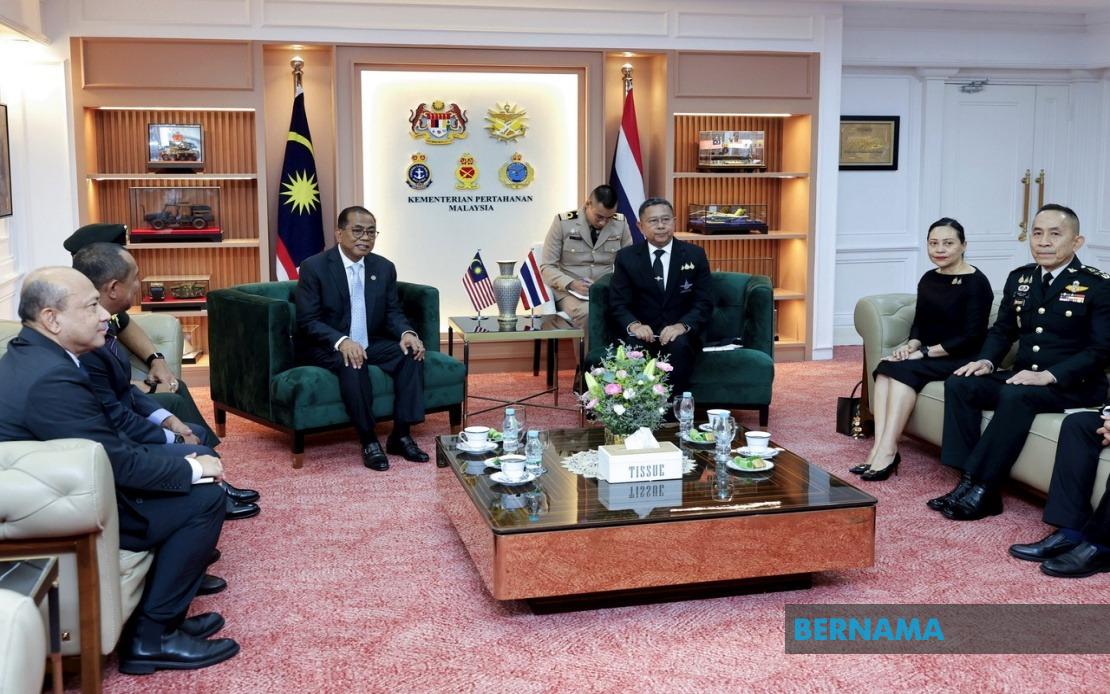
Malaysia has pledged to work more intensively with Thanut Suvarnananda, Thailand's newly appointed chief of the Peace Dialogue Panel under the Royal Thai Government, to support ongoing regional initiatives aimed at achieving lasting peace and stability across southern Thailand. Defence Minister Datuk Seri Mohamed Khaled Nordin made this commitment during discussions with visiting Thai Defence Minister Lieutenant General Adul Boonthumjaroen, signalling Kuala Lumpur's strong backing for Bangkok's diplomatic approach to the decades-long conflict in the region.
Mohamed Khaled's endorsement of Thanut's appointment reflects Malaysia's strategic interest in regional stability. The appointment itself signals Thailand's determination to pursue dialogue-based solutions alongside its security operations in the southern provinces, where a long-running insurgency has claimed thousands of lives and displaced countless communities. By welcoming this personnel change, Malaysia is positioning itself as a reliable partner in Thailand's multifaceted peace strategy, one that balances military operations with confidence-building diplomatic engagement.
Thailand's decision to elevate a new peace dialogue chief carries symbolic weight in the region. It suggests Bangkok is committed to refreshing its negotiating team and potentially injecting new momentum into stalled peace talks. For Malaysia, which has served as the neutral facilitator since 2013 through Datuk Rabin Basir, this development offers an opportunity to demonstrate the value of its mediation efforts and build stronger working relationships with Thailand's civilian peace machinery. The appointment comes at a time when various stakeholder groups in southern Thailand are seeking reassurance that dialogue remains a viable pathway forward.
Crucially, Mohamed Khaled was careful to delineate Malaysia's boundaries as a facilitator, emphasising that military operations and internal security governance remain exclusively within Thailand's sovereign purview. This clarification is important for both nations, as it prevents misunderstandings about Malaysia's role and reassures Bangkok that Kuala Lumpur respects its decision-making authority on security matters. The distinction also protects Malaysia from becoming embroiled in contentious military decisions, allowing it to maintain the neutrality essential for effective mediation between the Thai government and armed groups.
Beyond the peace process itself, the bilateral defence engagement between the two countries encompasses practical security cooperation. Mohamed Khaled and his Thai counterpart agreed to intensify efforts against smuggling networks operating across their shared border and to prevent the unauthorised movement of insurgent elements between the two nations. These operational measures reflect the reality that effective peace-building requires both diplomatic channels and robust border management to prevent armed groups from using cross-border sanctuaries to undermine negotiation efforts.
The Malaysia-Thailand General Border Committee, a long-standing mechanism for bilateral coordination, will host its 57th meeting in Malaysia this year. This gathering is expected to tackle a comprehensive agenda spanning border security operations, joint military initiatives, socio-economic programmes in frontier communities, and disaster response frameworks. The breadth of topics demonstrates that bilateral security cooperation extends well beyond conflict management, encompassing the development and welfare of border populations whose livelihoods and stability are often affected by regional tensions.
Malaysia's diplomatic posture extends beyond its immediate bilateral relationship with Thailand. Mohamed Khaled reaffirmed Malaysia's backing for Thailand's commitment to resolving its border disputes with Cambodia through bilateral negotiations conducted in the spirit of the ASEAN Way, a regional doctrine emphasising non-interference and peaceful dialogue. Additionally, Malaysia has briefed the Philippines, which will chair ASEAN in 2026, about these border issues with the expectation that Manila will help defuse regional tensions through its future leadership role.
The convergence of Malaysian and Thai positions ahead of the ASEAN Defence Ministers' Meeting and its expanded format, which will take place in the Philippines, reflects a coordinated regional security outlook. Both nations are aligning their messaging on transnational security challenges, demonstrating that bilateral cooperation serves as a building block for broader regional consensus. This synchronisation strengthens ASEAN's collective voice when engaging major powers and international partners on regional security architecture.
Furthering their strategic partnership, Malaysia and Thailand are preparing to sign a Memorandum of Understanding this year designed to bolster regional security cooperation and deepen collaboration in defence industrial development. This agreement would enable both nations to leverage their respective capabilities and experiences in weapons manufacturing and military technology, potentially creating opportunities for joint ventures and technology transfer that benefit both defence establishments. Such industrial cooperation can also generate economic benefits for both countries while reducing their dependence on external suppliers.
The simultaneous advancement of multiple cooperation tracks—peace dialogue facilitation, border security, defence industry partnerships, and regional alignment—reflects a mature bilateral relationship between Malaysia and Thailand. Rather than viewing these issues in isolation, both countries are integrating them into a comprehensive framework that addresses immediate security concerns while building longer-term institutional relationships. This multifaceted approach offers Southeast Asia a model for how neighbouring states can manage complex transnational challenges through sustained diplomatic engagement and institutional cooperation.
For Malaysia, the renewed focus on its facilitation role comes at a time when international attention on southern Thailand's conflict has waned. By actively supporting Thailand's new peace dialogue leadership and strengthening bilateral mechanisms, Kuala Lumpur is signalling that regional stability remains a priority despite other pressing challenges. The depth of commitment shown in these recent discussions suggests Malaysia views its facilitation role not merely as a diplomatic courtesy but as a strategic investment in regional peace architecture that ultimately enhances stability across Southeast Asia.

