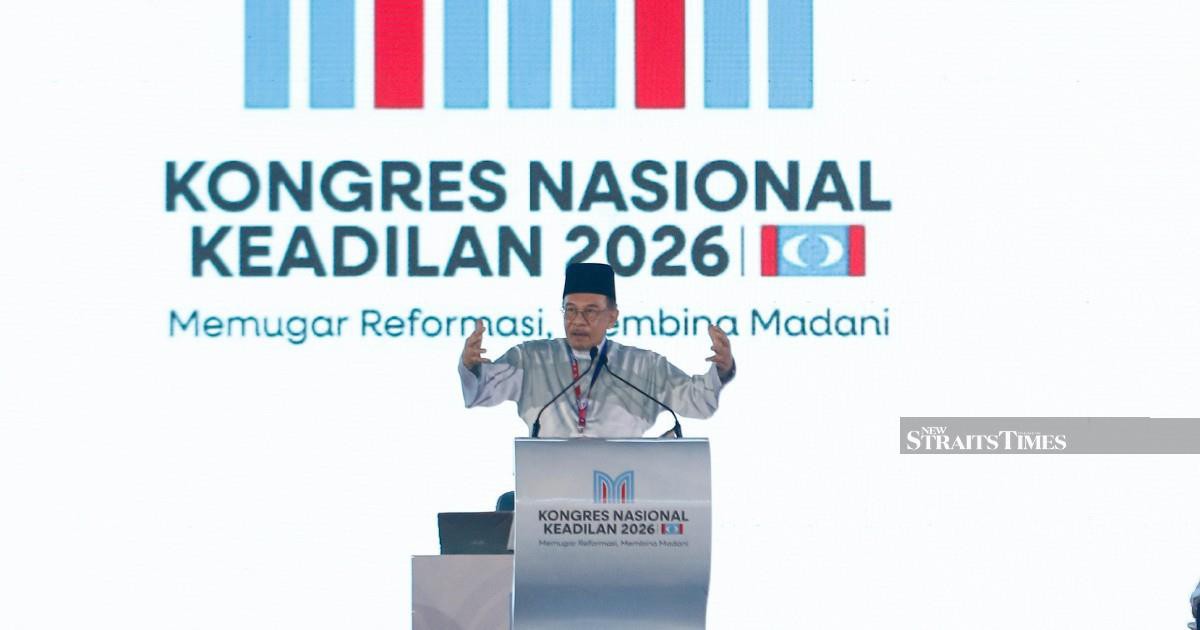
Prime Minister Datuk Seri Anwar Ibrahim has announced that Malaysia's government will dismantle the Universities and University Colleges Act 1971 (Act 30), a sweeping declaration that signals fundamental changes to how the nation's tertiary institutions operate and are regulated.
The announcement, made at Ayer Keroh, represents one of the most substantial institutional overhauls to affect Malaysia's university system in recent decades. Act 30 has served as the primary legislative framework governing public universities and university colleges since its enactment over five decades ago, establishing the regulatory architecture that has defined institutional autonomy, governance structures, and operational parameters for higher education institutions across the country.
The decision to abolish this foundational legislation carries profound implications for Malaysia's approximate 20 public universities and numerous university colleges that have operated under its provisions. These institutions collectively educate hundreds of thousands of students and employ tens of thousands of academics and administrative staff. The move suggests the government intends to implement a new legislative framework that would reshape how universities function, manage their finances, hire staff, and make academic decisions.
Higher education reform has emerged as a priority for the current administration, reflecting broader concerns about the competitiveness of Malaysian universities in regional and global rankings. Universities in Malaysia have faced persistent challenges in attracting and retaining top talent, modernising curricula to match evolving industry demands, and operating with sufficient financial flexibility to respond to changing circumstances. The existing Act 30 framework, critics argue, has imposed rigidities that constrain institutional responsiveness and innovation.
The abolition of Act 30 will likely trigger a cascade of legislative and regulatory changes throughout the higher education ecosystem. Government policymakers will need to develop replacement legislation addressing governance structures, student protection mechanisms, academic standards, financial accountability, and the relationship between universities and the state. This reconstruction process offers opportunities to introduce contemporary governance models that balance institutional autonomy with public accountability, potentially incorporating best practices observed in other regional education systems.
For Malaysian universities seeking greater autonomy and operational flexibility, the prospective reform could unlock new possibilities. Institutions may gain expanded authority over academic programming, financial management, and human resource decisions. Greater freedom to establish partnerships with international universities and research institutions could facilitate knowledge exchange and enhance Malaysia's position as an educational destination in Southeast Asia, where regional competition for students and research prestige continues intensifying.
Yet the transition to new legislation also presents genuine risks requiring careful navigation. Without robust replacement frameworks, universities could face governance vacuums that create confusion regarding accountability and operational standards. Students may face uncertainties about institutional stability and degree recognition. Academic staff could encounter ambiguity regarding employment protections and professional standards. The government must therefore ensure that any new legislative framework addresses these concerns while advancing reform objectives.
The announcement reflects broader regional trends in higher education governance. Countries throughout Southeast Asia are reassessing university regulatory frameworks, seeking models that provide greater institutional autonomy while maintaining public accountability. Singapore's approaches, for instance, balance university independence with performance-based funding mechanisms. Thailand and Indonesia have similarly undertaken higher education reforms aimed at enhancing competitiveness and operational flexibility. Malaysia's decision to abolish Act 30 positions the country alongside regional peers pursuing substantive governance modernisation.
International observers of Malaysian higher education will closely monitor how the government develops replacement legislation. The process will reveal whether policymakers intend to pursue genuinely transformative reform or more incremental adjustments to existing frameworks. The specific provisions addressing university governance, resource allocation, academic standards, and quality assurance mechanisms will determine whether the new system achieves intended improvements in institutional performance and global competitiveness.
For Malaysian students, academics, and education stakeholders, this development warrants close attention. The transition from Act 30 to new legislation will occur during a period when universities face multiple pressures—recovering from pandemic-related disruptions, adapting to hybrid learning modalities, managing financial constraints, and competing internationally for enrollment and research funding. Effective reform could enhance institutional capacity to address these challenges, whilst poorly designed legislation could exacerbate existing difficulties.
The government's commitment to consulting stakeholders during the reform process will prove essential for success. Universities, academic unions, student representative bodies, employers, and international education partners should have meaningful opportunities to contribute perspectives to the legislative development process. Such consultation could help ensure that replacement frameworks reflect diverse stakeholder interests and anticipated real-world implementation challenges.
The abolition of Act 30 also signals confidence that Malaysia possesses sufficient institutional capacity and expertise to develop new higher education legislation appropriate to contemporary circumstances. This undertaking demands substantial technical expertise, international benchmarking, and careful consideration of practical implementation details. Success will require coordination across government agencies, active engagement with university leadership, and sustained commitment throughout what could be a multi-year reform process.

