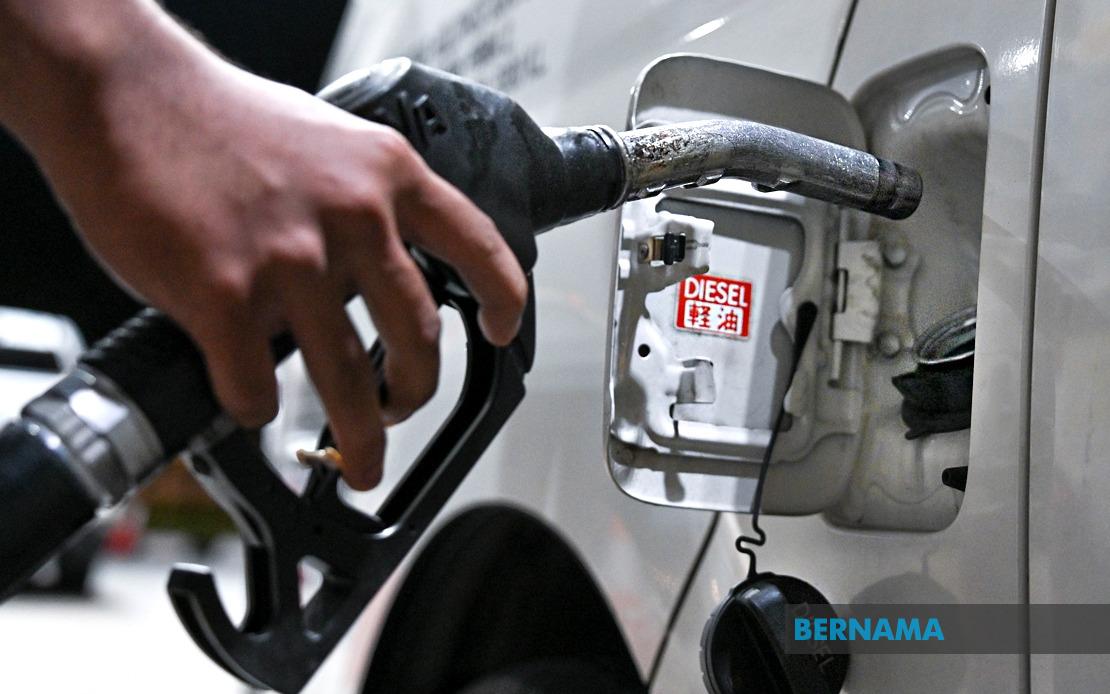
Malaysia's government is moving forward with a comprehensive diesel subsidy reform programme designed to slash wastage and redirect billions in public funds to citizens who genuinely need fuel assistance. The BUDI MADANI Diesel initiative, rolling out from July at a capped price of RM2.10 per litre, is projected to unlock annual savings of up to RM2 billion by stemming leakages that have ballooned fuel import costs and strained the national budget. The announcement came from Second Finance Minister Datuk Seri Amir Hamzah Azizan, underscoring the government's determination to modernise how it manages one of the economy's most costly subsidies.
The crux of the reform lies in addressing a crisis that emerged starkly in early 2024. Monthly subsidy spending on petrol and diesel, previously hovering around RM800 million, surged to approximately RM4.7 billion in March and RM4.9 billion in April as global crude prices climbed. What makes this explosion particularly telling is how diesel consumption patterns deviated sharply from historical norms, jumping from roughly 624 million litres monthly to nearly 1.2 billion litres—a near doubling that points to systemic leakages rather than legitimate demand shifts. These irregularities exposed vulnerabilities in how Malaysia's fuel subsidy system operates and who benefits from it.
The leakage problem manifests across multiple channels, each draining resources intended for ordinary Malaysian drivers. Cross-border smuggling remains a persistent headache, with diesel flowing into neighbouring countries despite being priced below-market within Malaysia. Equally troubling are subsidy-access abuses, where vehicles and distributors entitled to purchase unsubsidised fuel instead exploit weak verification mechanisms to buy cheaper, subsidised diesel at retail pumps. Such activities compound pressure on government finances and create genuine scarcity risks for legitimate users, potentially disrupting supply chains reliant on predictable diesel availability. The situation in Sabah and Sarawak epitomises the scale: current consumption approaches two billion litres annually against an estimated genuine requirement of around one billion litres, suggesting roughly one billion litres annually leak through illicit or irregular channels.
Malaysia's answer mirrors its earlier successful BUDI RON95 petrol subsidy programme, extending a MyKad-based verification system to diesel. Under BUDI MADANI Diesel, approximately 700,000 private diesel vehicle owners qualify to purchase subsidised fuel at the RM2.10 per-litre benchmark, with eligibility confirmed instantly at petrol station counters via identity card scanning. This technological approach replaces the previous cash-assistance model, where certain recipients received RM400 monthly without necessarily purchasing fuel through formal channels, with direct subsidies tied to actual consumption. The shift creates a cleaner audit trail and narrows opportunities for diversion or cross-border arbitrage.
Transitioning existing beneficiaries represents a logistical consideration that the government has attempted to streamline. Individuals currently receiving RM400 monthly cash support under the old BUDI Diesel Individual scheme will automatically migrate to the new MyKad verification mechanism without requiring fresh applications. This automatic transition is designed to minimise friction and ensure coverage continuity, though the practical implementation across Malaysia's diverse populations and digital readiness levels will test rollout efficiency. The government has scheduled early access beginning June 27, 2026, for qualifying private diesel vehicle owners in Peninsular Malaysia, allowing a phased onboarding period ahead of the full July 1 launch.
The RM2.10 per-litre price point itself warrants scrutiny in the regional context. While representing a subsidised rate relative to global benchmarks, it also signals the government's intent to maintain affordability for genuine consumers while reducing the fiscal drag on taxpayers. For truck operators, small-business owners, and commuters, the fixed price provides some budgeting predictability amid volatile global markets. However, the subsidy still commits public resources, meaning success hinges on preventing leakage rather than eliminating support entirely. Malaysia's experience with targeted subsidies for RON95 petrol offers encouraging precedent: similar verification systems have reduced smuggling and curbed irregular consumption patterns, though maintaining system integrity requires continuous enforcement coordination.
Beyond immediate budgetary relief, this reform carries broader economic and political dimensions. Subsidy management has long shaped Malaysian fiscal policy and public perception of government competence. Effective implementation of BUDI MADANI Diesel would demonstrate the authorities' capacity to modernise social programmes using digital infrastructure, a capability relevant across multiple sectors from welfare distribution to healthcare. Moreover, restoring fuel supply stability benefits manufacturers, logistics operators, and transportation networks that depend on uninterrupted diesel availability and predictable costs. For regional competitiveness, a leaner subsidy system frees resources for infrastructure, education, or productivity-enhancing investments that could boost long-term growth.
Regional observers are watching Malaysia's latest subsidy reform effort closely. Indonesia, Thailand, and other Southeast Asian economies grapple with similar fuel subsidy pressures and leakage challenges. If Malaysia's MyKad-based approach succeeds in curbing smuggling and stabilising supply, the model may offer lessons for peers managing their own subsidy burdens. Conversely, any implementation stumbles could provide cautionary tales about the complexity of reorienting established subsidy systems amid political sensitivities around cost-of-living concerns. The intersection of fiscal discipline and social protection remains delicate across the region.
The government's emphasis on ensuring subsidies reach "those who are genuinely eligible" reflects a policy philosophy increasingly common in middle-income countries: targeted rather than universal support. This approach acknowledges that blanket fuel subsidies benefit high-income earners disproportionately, since they consume more fuel and vehicles, while straining resources available for pro-poor programmes. By restricting BUDI MADANI Diesel to 700,000 registered private diesel vehicle owners, Malaysia implicitly accepts that agricultural workers, smallholder farmers, and certain commercial operators may fall outside the subsidy net—a trade-off that demands complementary support mechanisms to avoid unintended hardship. Transparency about eligibility criteria and regular audits will be crucial to maintaining public confidence.
Looking ahead, the success of BUDI MADANI Diesel will be measured not only in the RM2 billion savings achieved but also in whether supply-chain disruptions ease, cross-border leakage diminishes, and eligible Malaysians can reliably access affordable fuel. Implementation challenges include ensuring MyKad readers function reliably across thousands of petrol stations, preventing system hacking or identity spoofing, and maintaining political will to enforce restrictions when subsidy access becomes contentious. The timeline—early access from late June and full rollout in July—is compressed, requiring coordination between the Finance Ministry, Domestic Trade and Cost of Living Ministry, Treasury, and retail fuel operators. Any bottlenecks could undermine confidence and invite informal workarounds that recreate the very leakages the reform aims to eliminate.