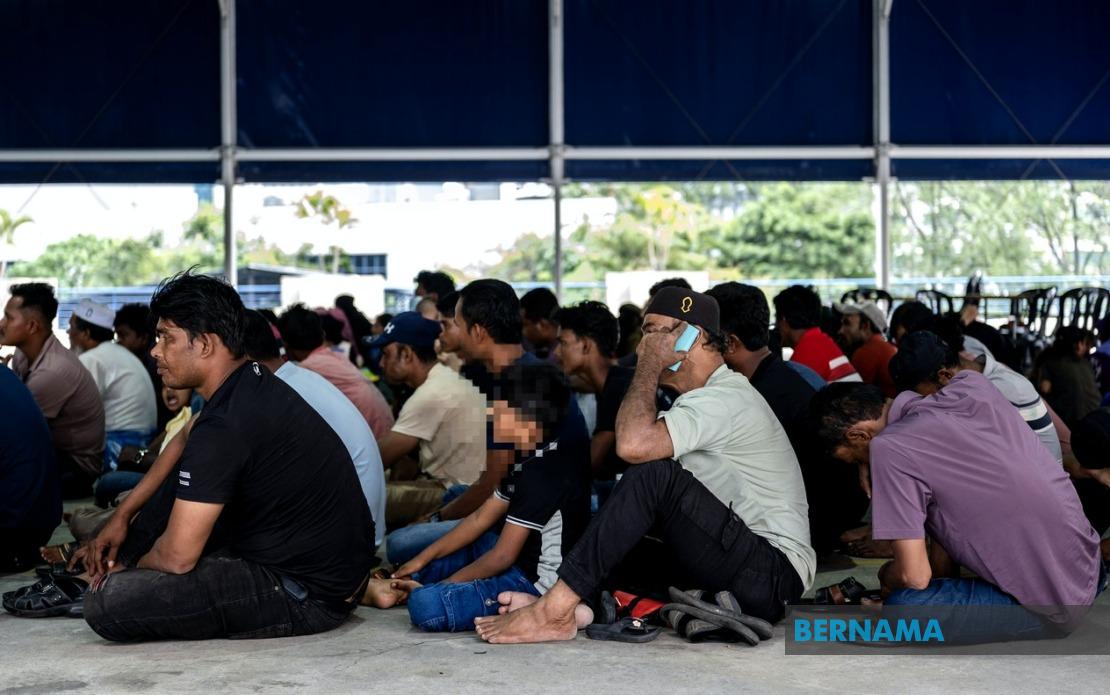
Malaysia's Home Minister Datuk Seri Saifuddin Nasution Ismail has indicated that the country will have its first comprehensive dataset on Myanmar refugees by the end of 2024, marking a significant milestone in the government's systematic approach to managing the displaced population. The preliminary figures will emerge from the Refugee Registration Document (DPP) programme, a biometric registration initiative that the Immigration Department has been rolling out in collaboration with various agencies and international partners. Speaking at a public event in Putrajaya on Friday, Saifuddin Nasution pledged transparency regarding the eventual figures, signalling the government's commitment to providing the public with concrete information about the scale of Myanmar displacement within Malaysian borders.
The DPP programme represents a fundamental shift in how Malaysia documents and processes refugee populations within its territory. Rather than relying on fragmented records or estimates, the initiative systematically collects verified biometric and identity information from individuals claiming refugee status, creating a unified database that allows for precise enumeration and categorisation. This structured approach aligns with the revised National Security Council Directive No. 23 from 2023, which establishes the operational framework for managing refugees and displaced persons across Malaysian jurisdiction. The data collection effort reflects broader regional concerns about population management and security, particularly given the complex geopolitical dynamics affecting Myanmar and the humanitarian implications of ongoing instability in the neighbouring country.
The timing of the announcement carries particular significance for Malaysia, which has hosted one of Southeast Asia's largest Myanmar refugee populations. The fourth-quarter deadline provides a concrete endpoint for what has been an extended registration process, though officials have emphasised that the collection phase represents only the initial stage of a longer-term management strategy. Home Ministry officials have stressed that securing participation from the refugee community remains a critical challenge, requiring sustained outreach and public communication to encourage individuals to register voluntarily. The government has indicated that publicity campaigns will be intensified to explain the programme's purpose and assure potential participants that registration serves humanitarian and administrative rather than punitive objectives.
Once the initial data becomes available, verified individuals identified as legitimate refugees will gain priority consideration for repatriation arrangements facilitated through Malaysia's Ministry of Foreign Affairs, Wisma Putra. This sequencing reflects the government's position that those with credible refugee claims should have expedited access to assisted return programmes or onward resettlement opportunities, distinguishing them from other categories of undocumented migrants. The repatriation pathway attempts to balance Malaysia's responsibility to vulnerable populations with its stated preference for temporary rather than permanent displacement solutions. By identifying genuine refugees early, the government can direct limited resources more efficiently and address the broader irregular migration challenge affecting the country.
Home Minister Saifuddin Nasution clarified that the DPP initiative extends beyond Myanmar nationals, encompassing displaced persons from multiple origins seeking refuge in Malaysia. This wider scope underscores the country's complex migration landscape, where refugees from Afghanistan, Pakistan, Syria, and other conflict-affected regions coexist with Myanmar's displaced population. The comprehensive approach enables the government to develop evidence-based policies responsive to diverse humanitarian needs while maintaining consistent operational standards across all refugee populations. By treating all groups under a unified framework, Malaysia aims to ensure equitable processing and reduce administrative fragmentation that has historically complicated refugee management efforts.
The registration effort responds to longstanding criticisms that Malaysia lacks accurate data on refugee numbers and demographics, constraining policy effectiveness and international coordination. Precise figures enable the government to engage more credibly with regional and global partners on burden-sharing initiatives and to advocate for international support proportionate to the scale of displacement Malaysia has absorbed. The data will also facilitate service planning in areas including healthcare, education, and social assistance, allowing targeted interventions where refugee populations concentrate. Additionally, comprehensive biometric records strengthen Malaysia's broader security and border management capabilities by enabling cross-referencing against watchlists and detection of fraudulent claims.
The programme's implementation has proceeded alongside Malaysia's participation in broader regional responses to Myanmar's political crisis. The country has maintained official neutrality regarding Myanmar's internal governance while continuing to provide humanitarian assistance to displaced populations. The DPP initiative demonstrates Malaysia's commitment to managing this tension by establishing orderly, documented processes that respect humanitarian principles while protecting state interests. The August announcement of anticipated Q4 results suggests the registration phase has progressed sufficiently that officials feel confident in projecting a reasonable completion timeline, though unforeseen implementation challenges could alter the schedule.
For Malaysian society, the release of concrete refugee figures will inform public discourse increasingly shaped by concerns about irregular migration, social integration, and resource allocation. Transparent data enables more informed debate about the appropriate balance between humanitarian responsibility and immigration controls, reducing space for speculation and politically motivated claims. Community organisations, academic researchers, and international observers will gain access to empirical foundations for evaluating integration outcomes and assessing programme effectiveness. The published figures will likely become reference points in ongoing policy discussions about refugee policy evolution and Malaysia's regional positioning on displacement issues.
Looking forward, the fourth-quarter data release represents an interim milestone rather than programme completion. The government has indicated that initial registration will be followed by verification processes, appeals mechanisms for rejected applications, and ongoing monitoring of registered individuals. The subsequent phases will likely involve developing targeted support services, establishing coordination frameworks with international organisations, and refining repatriation and resettlement pathways. The DPP programme thus constitutes the foundation for comprehensive refugee management architecture rather than a standalone initiative, with implications extending across multiple government agencies and policy domains. Success will ultimately be measured not merely by registration completeness but by how effectively the resulting data informs humanitarian responses and policy outcomes benefiting both displaced persons and receiving communities.

