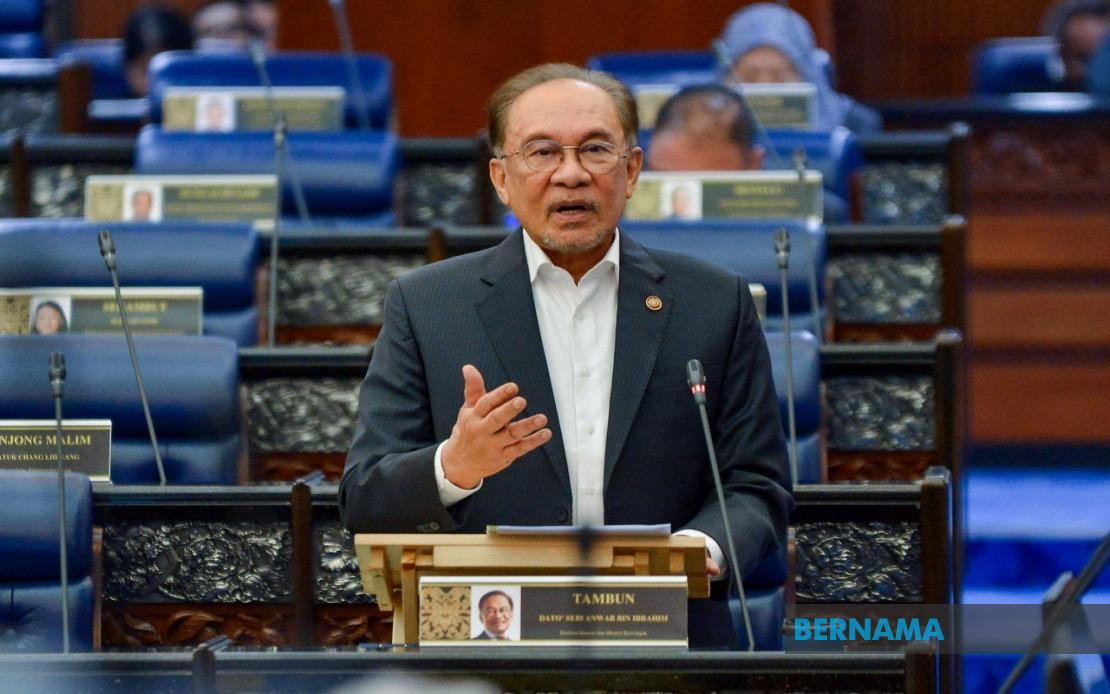
Malaysia will continue pursuing diplomatic negotiations and adherence to the United Nations Convention on the Law of the Sea (UNCLOS) 1982 as the primary mechanism for resolving maritime boundary disputes with its neighbours, Prime Minister Datuk Seri Anwar Ibrahim declared in Parliament this week. The statement underscores Kuala Lumpur's preference for multilateral legal frameworks over confrontational approaches, even as several regional maritime claims remain contested and complex.
Anwar acknowledged that while Malaysia supports the International Maritime Organization's involvement in maritime affairs, the IMO itself operates within the constraints of UNCLOS 1982, which establishes the overarching legal architecture for ocean governance. This legal framework provides clarity and international legitimacy to negotiations, though the Prime Minister cautioned that different countries often interpret the convention's provisions in varying ways. He noted that UNCLOS alone cannot resolve every boundary dispute, suggesting that practical solutions frequently require supplementary agreements and ongoing dialogue between concerned parties.
The South China Sea presents a particularly intricate example of this approach. ASEAN member states have collectively agreed to use UNCLOS as the negotiating foundation while working with China to finalise a Code of Conduct intended to manage tensions and prevent escalation. However, Anwar pointed out that discussions involving the Philippines prove more complicated due to overlapping claims and the unresolved Sabah question, which injects additional layers of complexity into what is already a delicate regional negotiation. With other ASEAN partners, Malaysia has adopted a patient approach, engaging in multiple rounds of talks and accepting temporary adjournments when discussions stall, before returning to the negotiating table.
Malaysia's experience with joint development arrangements involving Thailand and Vietnam illustrates how competing sovereignty claims need not preclude economic cooperation. These innovative mechanisms allow neighbouring countries to jointly exploit resources and share benefits from disputed maritime zones without either party formally conceding its underlying territorial position. Anwar described this model as a practical compromise that acknowledges the difficulty of resolving boundary disputes definitively while enabling mutual prosperity. The arrangement with Vietnam exemplifies this philosophy—the disputed area remains designated without prejudice to either nation's sovereignty claim, yet both countries have benefited from coordinated development initiatives.
As a maritime nation with multiple overlapping boundary claims, Malaysia navigates a complex diplomatic landscape involving Brunei, Thailand, Indonesia, Singapore, the Philippines, and China. Rather than allowing these disputes to fester or escalate, the government has consistently prioritized measured diplomacy to prevent tensions from spreading into broader regional instability. This stance reflects Malaysia's pragmatic understanding that prolonged maritime disputes serve no nation's interests and that managed coexistence offers superior outcomes to confrontation.
Progress varies across these different boundary negotiations. Talks with Brunei have advanced substantially, though a few outstanding areas involving the Sarawak state government remain unresolved. These discussions occur within Malaysia's federal structure, requiring coordination between federal authorities and state leadership to ensure coherent positions. Negotiations with Indonesia similarly require consultation with Sabah, reflecting the federal dimensions of maritime claims and the necessity of securing state government buy-in for any settlement.
Anwar's parliamentary address comes against a backdrop of heightened maritime tensions across Asia, where numerous nations assert overlapping claims to strategically valuable ocean zones. By reiterating Malaysia's commitment to UNCLOS-based negotiations, the Prime Minister signals that Kuala Lumpur will not resort to unilateral actions or military posturing to advance its maritime interests. This stance carries particular weight given Malaysia's position as a maritime trading nation whose prosperity depends on stable, predictable passage through critical sea lanes including the Straits of Malacca.
The emphasis on legal frameworks and multilateral conventions reflects a broader Southeast Asian consensus that international law provides more durable solutions than military competition or strategic coercion. However, the varying interpretations of UNCLOS across different countries underscore persistent challenges—competing readings of ambiguous treaty language can sustain disputes even within a nominally agreed legal structure. Malaysia's approach addresses this reality by supplementing legal frameworks with practical cooperation mechanisms that generate mutual benefits.
For Malaysian policymakers, the prioritization of negotiation over confrontation also reflects resource constraints and strategic preferences. Malaysia lacks the military capabilities to enforce claims through force and would suffer disproportionately from regional maritime instability given its dependence on sea trade. Pursuing peaceful resolution through international law and joint development authorities therefore represents both a principled position and a rational strategic calculation.
The regional implications of Malaysia's approach extend beyond bilateral disputes. By anchoring its maritime strategy in UNCLOS and multilateral negotiation, Malaysia reinforces norms of peaceful dispute resolution that benefit all Southeast Asian nations. This positioning also allows Malaysia to maintain relationships with all claimant states, preserving its role as a constructive regional actor rather than a combatant in bilateral standoffs. As ASEAN continues efforts to finalise the Code of Conduct with China, Malaysia's consistent diplomatic approach strengthens the regional bloc's collective negotiating position.
Looking forward, Malaysia faces the challenge of maintaining this balanced approach amid evolving regional tensions. The joint development model, while successful in past instances, requires sustained political will from all parties and must adapt as resource scarcity and environmental pressures increase competition for maritime zones. Anwar's restatement of Malaysia's diplomatic commitment provides clarity to regional partners and domestic stakeholders that Kuala Lumpur will not deviate from negotiation-based strategies, even when maritime disputes generate domestic political pressure.

