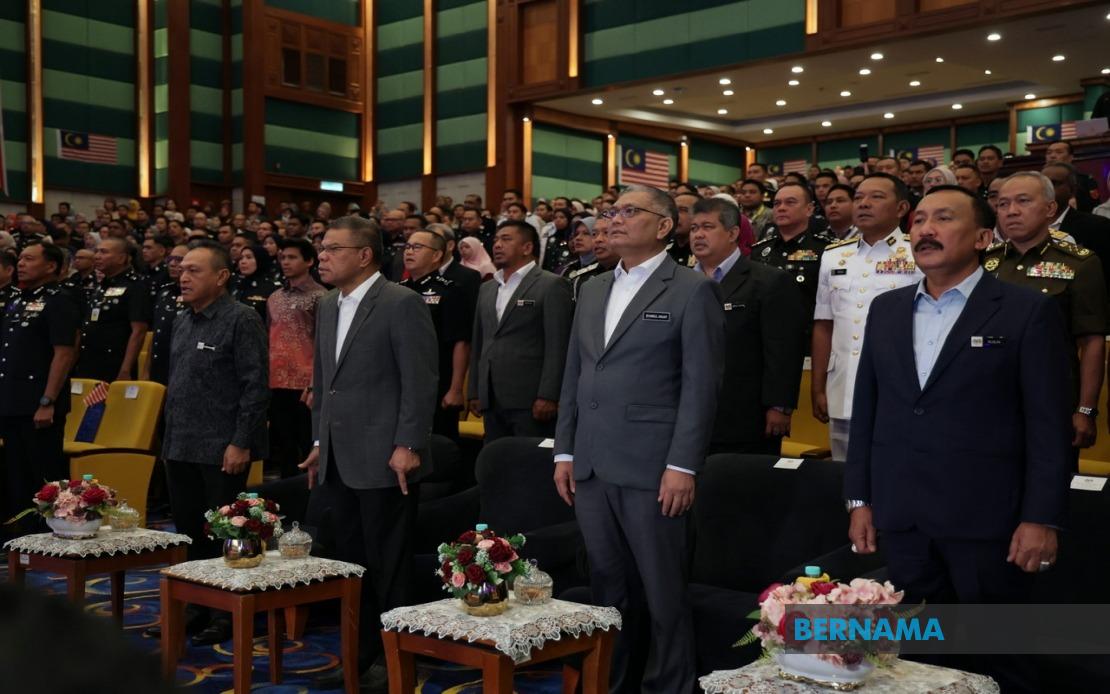
The Malaysian government is moving swiftly to address security vulnerabilities at its international entry points, with Home Minister Datuk Seri Saifuddin Nasution Ismail announcing that a comprehensive enhancement plan will reach Cabinet approval imminently. The strategy, developed in close cooperation with Transport Minister Anthony Loke, represents a coordinated governmental response to escalating concerns about border control effectiveness following high-profile incidents that have drawn unwanted international attention.
The urgency surrounding this initiative stems from several troubling cases in recent weeks that have exposed potential gaps in Malaysia's security apparatus. Most notably, a Malaysian pilot was detained in Indonesia after approximately 25 kilogrammes of MDMA were discovered at Soekarno-Hatta International Airport, an incident that prompted serious government reflection on the adequacy of current protocols. The case triggered Cabinet-level concern that such occurrences could undermine Malaysia's international standing and project an image of insufficient border oversight to the world.
What distinguishes this approach from previous ad-hoc responses is its deliberately integrated structure. Rather than allowing individual ministries to operate in isolation, the framework emphasizes breaking down departmental silos that have historically hampered coordination between agencies responsible for different aspects of entry point management. Saifuddin Nasution explicitly highlighted this philosophical shift, signaling that the government recognizes fragmented approaches have contributed to existing weaknesses. This collaborative architecture extends beyond the Home Ministry and Transport Ministry to encompass multiple relevant agencies, each bringing specialized knowledge to the table.
The substantive components under examination reflect both technological and human resource dimensions. Infrastructure improvements feature prominently, alongside systematic upgrades to closed-circuit television systems and scanning machinery at critical junctures. Equally important is the investment in personnel training, acknowledging that technology alone cannot compensate for insufficient operator competency or inadequate procedural adherence. The plan also contemplates human resource development more broadly, suggesting the government recognizes that institutional capacity must expand in tandem with equipment upgrades.
For Malaysian travelers and businesses reliant on efficient border processing, the initiative carries mixed implications. While enhanced security measures should theoretically reduce drug trafficking and organized crime, implementation challenges frequently slow airport operations. The government faces the delicate task of strengthening controls without creating bottlenecks that damage Malaysia's competitiveness as a regional aviation hub. Kuala Lumpur International Airport, specifically mentioned as a focus area, handles millions of passengers annually and cannot afford significant throughput reductions.
The investigation into the detained pilot's case has taken on investigative importance beyond the individual incident. Police cooperation with Indonesian authorities is yielding insights that may reveal whether the smuggling operation represents isolated criminal activity or part of broader international syndicate networks. This distinction matters considerably for determining where precisely system weaknesses exist and whether vulnerabilities are exploitable patterns or episodic failures. If syndicates have deliberately targeted Malaysian entry points, the security upgrade becomes even more strategically necessary.
Regionally, Malaysia's border security challenges reflect broader Southeast Asian struggles with transnational drug trafficking and organized crime. The region's geographic position, established logistics infrastructure, and multiple international connections make it attractive for criminals seeking smuggling routes. Other countries including Thailand, Indonesia, and the Philippines face comparable pressures, though responses vary considerably in sophistication and resources deployed. Malaysia's cabinet-level attention to the issue suggests the government views security at entry points as strategically significant.
The compressed timeline for developing this plan—accomplished within a fortnight of the Cabinet directive—demonstrates political commitment to rapid problem resolution. However, the speed raises questions about whether two weeks suffices for genuinely comprehensive strategic planning or whether the initiative represents a measured response to immediate political pressure. Implementation timelines and resource allocation will become clearer once Cabinet formally considers the proposal.
International perceptions of Malaysia as a secure and efficiently managed destination carry economic consequences extending beyond tourism and aviation. Foreign direct investment decisions factor in assessments of regulatory competence and border integrity. A country perceived as unable to control its entry points risks being relegated to higher-risk categories by international financial and business institutions, potentially affecting capital flows and economic opportunities. This reputational dimension likely informed the government's emphasis on preventing recurrence of high-profile security incidents.
The government's acknowledgment that entry point security requires comprehensive examination suggests recognition that previous incremental improvements have proven insufficient. Rather than implementing isolated technical fixes, this holistic approach attempts to identify systemic deficiencies across multiple dimensions. The plan's emphasis on studying infrastructure requirements, technological capabilities, and personnel competency indicates serious analytical work underlying the proposal.
For businesses and logistics operators dependent on Malaysia's ports and airports, clarity regarding the specific security measures will be essential. Import-export timelines, customs procedures, and throughput capacity directly affect supply chain efficiency. The Transport Ministry's involvement suggests attention to balancing security imperatives with commercial fluidity, though the specifics remain unknown pending Cabinet consideration. Industry stakeholders will likely seek reassurance that enhanced security need not translate into prohibitive delays.
As Cabinet prepares to receive this joint presentation from the Home Ministry and Transport Ministry, the decision carries implications extending across government coordination, border management, regional cooperation, and international perceptions of Malaysia's institutional capacity. The comprehensive approach signals that policymakers recognize entry point security as multifaceted, requiring technological investment, personnel development, and organizational coordination. The success of this initiative will ultimately be measured not merely by Cabinet approval but by tangible improvements in detection capabilities and demonstrable reductions in smuggling incidents in coming months.

