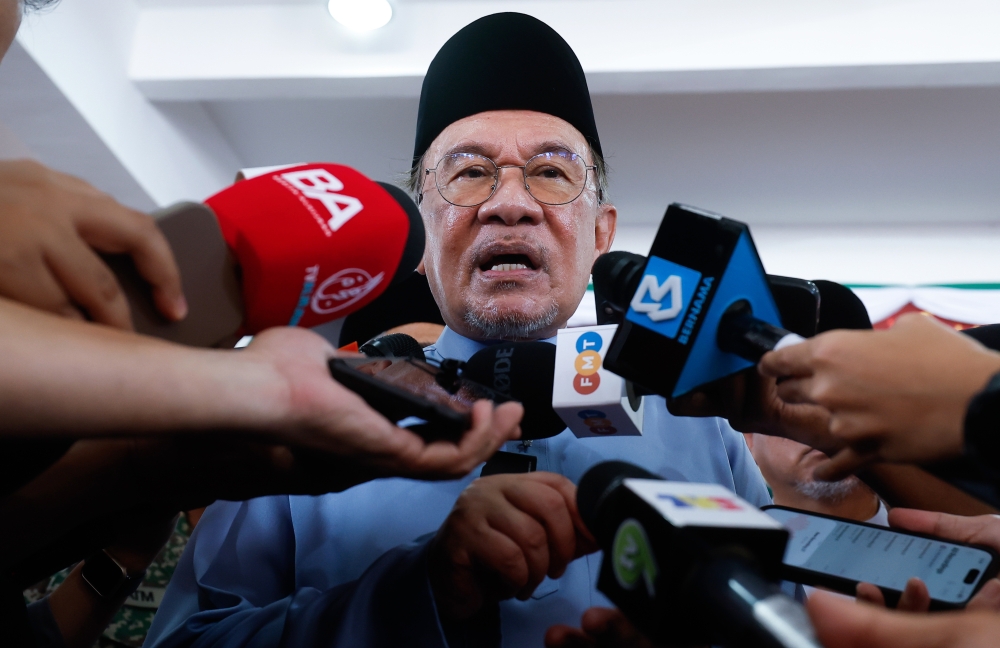
Malaysia remains committed to sustained engagement with the United States on tariff matters, according to Prime Minister Datuk Seri Anwar Ibrahim, who conveyed a degree of cautious optimism about the direction of bilateral trade discussions. Speaking in Port Dickson, Anwar acknowledged the complexities of the current trade environment while emphasizing the government's determination to navigate these negotiations in a manner that protects Malaysian economic interests and maintains the country's competitive position in global markets.
The Prime Minister's measured tone reflects a delicate balancing act facing the Malaysian administration. Trade tensions between Washington and its trading partners have created uncertainty across the region, with tariff announcements frequently generating market volatility and forcing governments to reassess their economic strategies. Anwar's decision to frame Malaysia's experience as relatively favourable compared to scenarios involving steeper tariffs suggests the government believes it has achieved a degree of success in its diplomatic efforts, at least in the immediate term.
Anwar's emphasis on continuing dialogue rather than accepting any arrangement as final indicates Malaysia's negotiating position remains fluid and responsive. The government appears to be calibrating its approach to avoid the kind of escalatory tariff spirals that have affected other nations, particularly in the technology and manufacturing sectors where Malaysia maintains significant economic stakes. This strategy underscores the administration's recognition that abrupt trade disruptions could damage local industries that depend on integrated supply chains spanning multiple countries.
For Malaysian readers, the implications of these tariff discussions extend far beyond headline figures. Malaysia's economy relies heavily on trade, with exports representing a substantial portion of gross domestic product. Industries ranging from semiconductors to palm oil production face potential exposure to elevated duties, which could ripple through domestic employment and investment patterns. The government's commitment to negotiating rather than accepting punitive measures reflects an understanding that proactive engagement may yield better outcomes than passive acceptance of unilateral trade actions.
The broader regional context amplifies the significance of Malaysia's tariff discussions with the United States. Other Southeast Asian economies face similar pressures, and Malaysia's negotiating approach may indirectly influence how other nations in ASEAN position themselves in comparable discussions. The way Anwar frames Malaysia's tariff situation—as manageable and subject to ongoing improvement—could set a tone of relative confidence that contrasts with more alarmist regional responses to trade policy shifts.
Anwar's relief regarding the tariff rate's relatively modest level suggests the government's earlier advocacy efforts may have prevented steeper levies. This interpretation aligns with Malaysia's traditional diplomatic strategy of quiet, behind-the-scenes negotiation rather than confrontational public posturing. The Prime Minister's public acknowledgment of the tariff arrangement indicates confidence that the current rate, while not ideal, remains within bounds that Malaysian businesses can absorb and adjust to accordingly.
The timing of these remarks carries additional weight given ongoing global economic uncertainties. Inflationary pressures, central bank policies, and recession concerns have created a fragile international environment where trade policy shifts can trigger cascading effects. Malaysia's ability to maintain open channels with the United States while securing relatively favourable tariff terms demonstrates diplomatic capability, though the sustainability of these arrangements remains contingent on broader geopolitical developments.
Looking forward, the government's commitment to continued negotiations suggests a recognition that the tariff situation remains dynamic rather than settled. Markets may interpret this ongoing engagement as either reassuring—indicating channels remain open for further concessions—or concerning, if negotiations stall or tariff rates subsequently increase. This ambiguity reflects the inherent unpredictability of trade diplomacy in a period of shifting international relations.
For Malaysian businesses operating in export-oriented sectors, Anwar's statements provide some reassurance that the government actively monitors trade relationships and pursues arrangements that minimise disruption. However, companies would be prudent to view current tariff levels as a baseline rather than a permanent ceiling, given the administration's explicit statement that negotiations continue. Contingency planning around potential tariff adjustments remains prudent business practice in this uncertain environment.
The Prime Minister's framing also touches on broader questions about Malaysia's strategic positioning in an increasingly competitive global trade landscape. By emphasizing negotiation over confrontation and relief over resistance, Anwar signals that Malaysia pursues pragmatic accommodation rather than ideological opposition to US trade policies. This approach carries both advantages—maintaining strong bilateral ties—and risks, particularly if other nations secure more favourable outcomes through more aggressive negotiating tactics or leverage alternative trade partnerships.
Ultimately, Anwar's statements reflect a government attempting to manage stakeholder expectations while maintaining room for diplomatic manoeuvre. The explicit commitment to continuing negotiations suggests Malaysia views the current tariff arrangement as provisional, subject to potential improvement through sustained dialogue. Whether this optimistic outlook proves justified will depend on developments in US trade policy, global economic conditions, and Malaysia's ability to leverage its strategic importance to American interests in maintaining stable Asian trade relationships.

