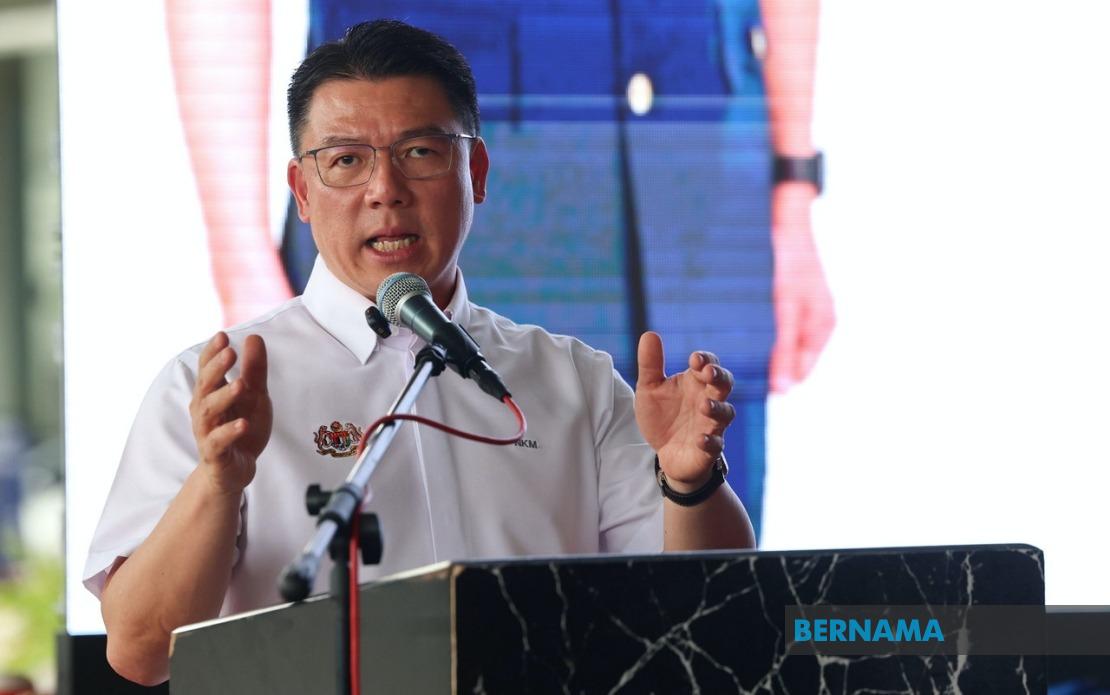
Malaysia is turning to Japan's proven waste management systems as a blueprint for embedding environmental responsibility into national culture and accelerating the country's shift towards a circular economy. Housing and Local Government Minister Nga Kor Ming highlighted Japan's systematic approach to waste separation at the point of generation as a model worthy of emulation, noting that the island nation has successfully transformed waste handling into an everyday practice rather than a burdensome requirement.
During a formal meeting with Japanese Ambassador to Malaysia Noriyuki Shikata, Nga underscored the critical distinction between enforced compliance and genuine cultural change. Japan's success lies not merely in regulatory frameworks but in cultivating habits from childhood, where citizens internalize the importance of waste categorization and environmental stewardship as intrinsic values. This observation carries particular relevance for Southeast Asia, where rapid urbanization and rising consumption levels have strained waste infrastructure across the region. Malaysia's challenge mirrors that facing other developing economies: moving beyond top-down mandates to foster voluntary adoption of sustainable practices.
The two nations are formalizing their partnership through a Memorandum of Understanding approved by Malaysia's Cabinet in the previous month. This bilateral arrangement will facilitate structured knowledge transfer regarding waste management innovations, technological solutions, and operational best practices. Such institutional cooperation provides Malaysia with direct access to Japan's accumulated expertise in areas where the latter has demonstrated measurable success—from advanced sorting facilities to community engagement strategies that have made recycling participation rates exceed 80 percent in major Japanese cities.
Malaysia has already established foundational frameworks for its circular economy ambitions, including the National Circular Economy Blueprint and the National Circular Economy Council, which coordinate policy implementation across multiple agencies. However, translating policy into sustained behavioral change requires more than institutional structures; it demands cultural reinforcement. By studying how Japan embedded waste separation into social norms, Malaysian policymakers can identify intervention points where education, incentive structures, and community leadership converge to reshape daily habits.
The government has already moved on several fronts to reduce environmental impact, including mandates requiring shopping malls to install recycling facilities as a condition of operating licenses and coordinated efforts to eliminate single-use plastic bags. These measures represent command-and-control approaches, which generate compliance but do not necessarily cultivate intrinsic motivation for environmental care. Japan's model demonstrates that when waste separation becomes culturally normalized—taught in schools, reinforced in homes, and modeled by peers—participation rates and sorting accuracy both improve dramatically without corresponding increases in enforcement costs.
Nga emphasized that the fusion of Japanese technological innovation with Malaysia's ongoing institutional reforms can create the conditions for meaningful environmental progress. This partnership extends beyond waste management narrowly defined; it encompasses broader questions about urban sustainability, resource efficiency, and quality-of-life improvements that affect all residents. For Malaysia, learning from a neighboring high-income economy with proven success provides a strategic advantage in leapfrogging older, less efficient waste systems.
The potential of this cooperation extends beyond bilateral engagement. Japanese Ambassador Shikata invited Malaysian officials and industry representatives to participate in GREEN×EXPO 2027, scheduled for Yokohama. This major international platform will showcase cutting-edge sustainable technologies and urban solutions, offering Malaysian participants opportunities to network with global leaders in circular economy development and to identify partnership prospects in areas including smart city infrastructure, renewable energy integration, and advanced manufacturing processes that minimize waste. Participation signals Malaysia's serious commitment to this transition and positions the nation within international networks driving sustainability innovation.
For Malaysian manufacturers, retailers, and municipal authorities, the timing of this cooperation is significant. Supply chains increasingly demand environmental credentials from their participants, and consumers—particularly younger demographics—show growing preference for sustainably produced and packaged goods. By adopting and adapting Japan's waste management philosophies, Malaysian businesses can enhance their competitive positioning while simultaneously reducing operational costs through material recovery and efficiency gains. Companies that move early on circular economy principles gain first-mover advantages in accessing markets with strict environmental standards.
Implementation challenges remain substantial. Japan's cultural homogeneity, high income levels, and advanced infrastructure differ markedly from Malaysia's diverse population, varying regional development levels, and existing waste handling disparities between urban centers and rural areas. Successful adaptation requires customization—what works in Yokohama may require modification for Kuala Lumpur, Penang, or smaller municipalities. This demands that knowledge exchange flows bidirectionally, with Japanese experts understanding Malaysia's specific constraints while Malaysian officials contribute insights from their experience managing diversity and regional variation.
The emphasis on education and cultural formation rather than enforcement alone represents a subtle but important conceptual shift in Malaysia's environmental policy. Rather than treating waste management as a technical problem solved through new facilities, or a behavioral problem solved through penalties, the Japanese approach recognizes it as fundamentally a cultural matter. Children who internalize waste separation in school will carry these habits into adulthood, eventually normalizing the practice across entire communities. This generational approach means results accumulate gradually but then become self-sustaining, creating virtuous cycles of environmental responsibility.
Regionally, Malaysia's partnership with Japan on circular economy matters positions it as a potential regional leader in sustainable development. Other Southeast Asian nations facing similar waste challenges may look to Malaysia's implementation experience as they chart their own transitions. Successfully adapting Japanese practices to local contexts would provide Malaysian policymakers with credibility and concrete examples to share with counterparts in neighboring countries, potentially catalyzing broader regional progress toward circular economies.
The collaboration also reflects growing recognition that environmental sustainability and economic prosperity are compatible objectives, not competing ones. Circular economy principles create new business opportunities in waste recovery, materials science, and technology services. By partnering with Japan—itself a leader in green manufacturing and environmental technology—Malaysia positions its companies to participate in these expanding sectors. The MoU thus serves dual purposes: advancing environmental goals while opening economic pathways for Malaysian enterprises seeking to diversify and upgrade their operations.

