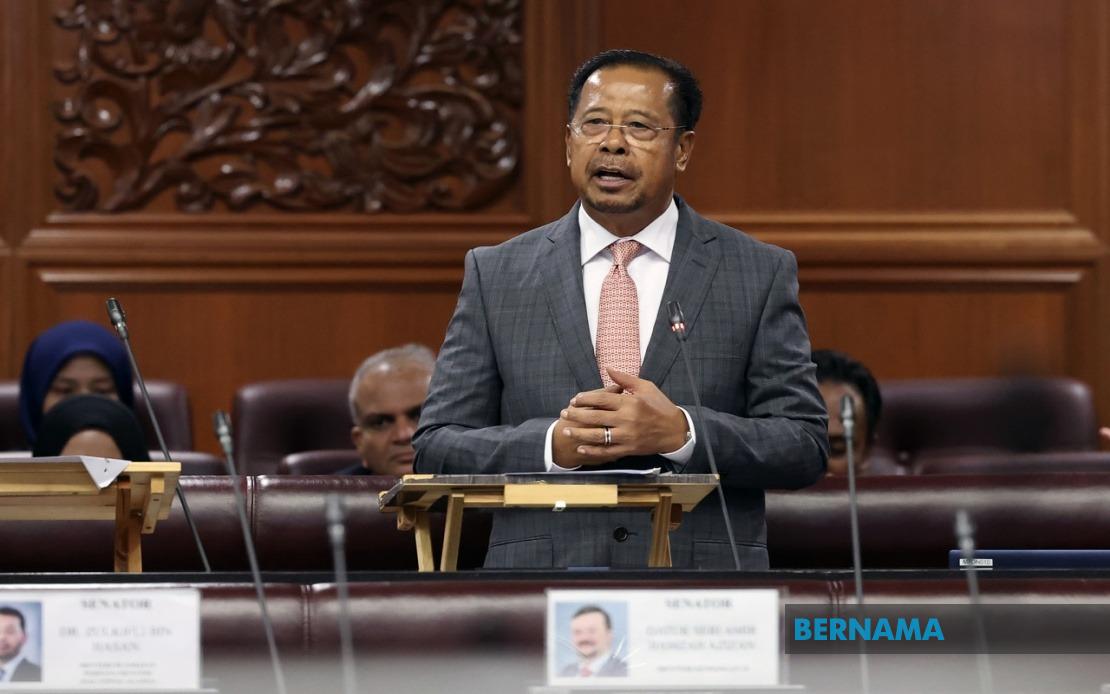
The Malaysian government has committed to a year-long research initiative to formulate a comprehensive Industrial Water Reclamation Policy, signalling a strategic pivot towards more sustainable management of the nation's water resources. Deputy Minister Datuk Seri Abdul Rahman Mohamad disclosed the plans during parliamentary proceedings in the Dewan Negara, framing the undertaking as essential to Malaysia's broader agenda of securing long-term water supply stability whilst enhancing operational efficiency across industrial sectors.
The policy framework being developed will primarily target industries where recycled water can substitute for treated drinking-quality supplies, addressing a significant opportunity for resource optimisation. Food and beverage manufacturers, data centres, semiconductor production facilities, and public cleaning services have been identified as priority sectors where reclaimed water integration could yield substantial benefits. These industries collectively represent considerable water consumption patterns, making them logical focal points for implementing water reclamation programmes that would reduce pressure on existing freshwater reserves.
The comprehensive examination underpinning policy development will encompass multiple dimensions of implementation feasibility. Technical assessments will evaluate infrastructure requirements and treatment methodologies necessary to ensure reclaimed water meets appropriate quality standards for industrial applications. Simultaneously, the study will analyse legal frameworks governing water reclamation, examining how existing regulations must evolve to accommodate widespread adoption whilst maintaining stringent safety protocols. Financial modelling will determine the economic viability of reclamation systems, calculating capital investment requirements, operational costs, and return timelines that would justify industrial participation.
Water quality control mechanisms represent a critical component of the policy architecture under investigation. Rather than imposing uniform standards across all applications, regulators recognise that different industrial uses demand differentiated quality thresholds. The study will establish clarity on quality benchmarks for various sectors, determining precisely which treatment levels prove necessary for semiconductor manufacturing versus public cleaning services, for instance. This nuanced approach reflects global best practice in water reclamation management, where one-size-fits-all regulation often proves inefficient and economically prohibitive.
Government engagement with stakeholder communities has already commenced, acknowledging that successful policy implementation depends upon buy-in from entities who would operate within the new framework. State governments will require consultation given their administrative responsibilities for water resources and local development planning. Water operators managing distribution infrastructure need involvement to assess technical feasibility and integration possibilities within existing systems. Indah Water Konsortium, managing the nation's sewerage network, occupies a pivotal position as the likely source of reclaimed water, necessitating their strategic integration into policy design. Industry participants must participate in consultations to express operational requirements, cost sensitivities, and implementation timelines that reflect commercial realities.
The initiative reflects Malaysia's recognition that conventional approaches to water security have become insufficient given demographic growth, urbanisation pressures, and climate variability patterns. Population expansion and industrial development continuously increase demand for freshwater resources precisely when climate change introduces uncertainty into precipitation patterns and hydrological systems. Water reclamation represents a non-conventional supply option that augments traditional sources without requiring major infrastructure investments in dam construction or inter-basin water transfers, both of which entail substantial environmental and social considerations.
Regional context amplifies the relevance of Malaysia's policy development. Southeast Asian nations increasingly confront water stress, with growing recognition that competition for freshwater resources will intensify over coming decades. Countries like Singapore have long pioneered water reclamation and reuse strategies out of necessity, achieving technological and regulatory sophistication that Malaysia can study and adapt. Thailand and Vietnam face competing demands across agriculture, urban consumption, and manufacturing. Malaysia's proactive approach to reclamation policy development positions the country as a regional leader addressing shared challenges whilst establishing domestic frameworks that enhance resilience against future constraints.
The semiconductor and data centre industries deserve particular attention within the policy framework given their strategic importance to Malaysia's economic trajectory and their substantial water requirements. These high-value manufacturing sectors increasingly influence government policy across water, energy, and environmental domains. Securing reliable water supply for semiconductor plants directly impacts semiconductor export competitiveness and investment attraction. Data centres similarly consume enormous quantities of water for cooling systems, with global operators evaluating water availability alongside electricity reliability when selecting operational locations. Developing reclamation policies that ensure stable water access for these sectors yields significant economic returns beyond mere resource conservation.
The policy study's financial analysis component will prove particularly illuminating for understanding adoption barriers and incentive requirements. Industrial reclamation systems demand capital investment for treatment infrastructure, monitoring systems, and distribution networks. Operating costs include energy for treatment and pumping, maintenance, and quality assurance activities. Companies will adopt reclamation only when costs prove competitive relative to existing freshwater sourcing or when regulations mandate participation. The study must therefore model scenarios where government subsidises initial infrastructure development, implements water pricing that reflects scarcity value, or mandates reclamation targets for industrial sectors, assessing which combinations produce economically rational adoption without imposing undue regulatory burden.
Implementation timelines following this study remain uncertain, though the government has indicated commitment to translating findings into operational policy. Consultation processes will extend discussions beyond the study completion, potentially requiring legislative amendments to water law, coordination across federal and state administrative jurisdictions, and negotiation regarding financing mechanisms. Early engagement with state governments through the current consultation phase suggests the government recognises federalism's role in water management and seeks consensus building rather than top-down imposition. This approach may slow initial policy development but should enhance ultimate implementation success by building stakeholder support.
The water reclamation policy represents merely one component within Malaysia's broader water security strategy. Complementary initiatives addressing demand management, infrastructure leakage reduction, agricultural efficiency, and freshwater ecosystem protection will operate alongside reclamation expansion. However, the industrial reclamation focus does signal government recognition that supply-side augmentation through recycled water constitutes a necessary element within comprehensive resource management. This positioning aligns Malaysia with international best practice whilst addressing distinctive national circumstances surrounding water availability, industrial structure, and climate context.

