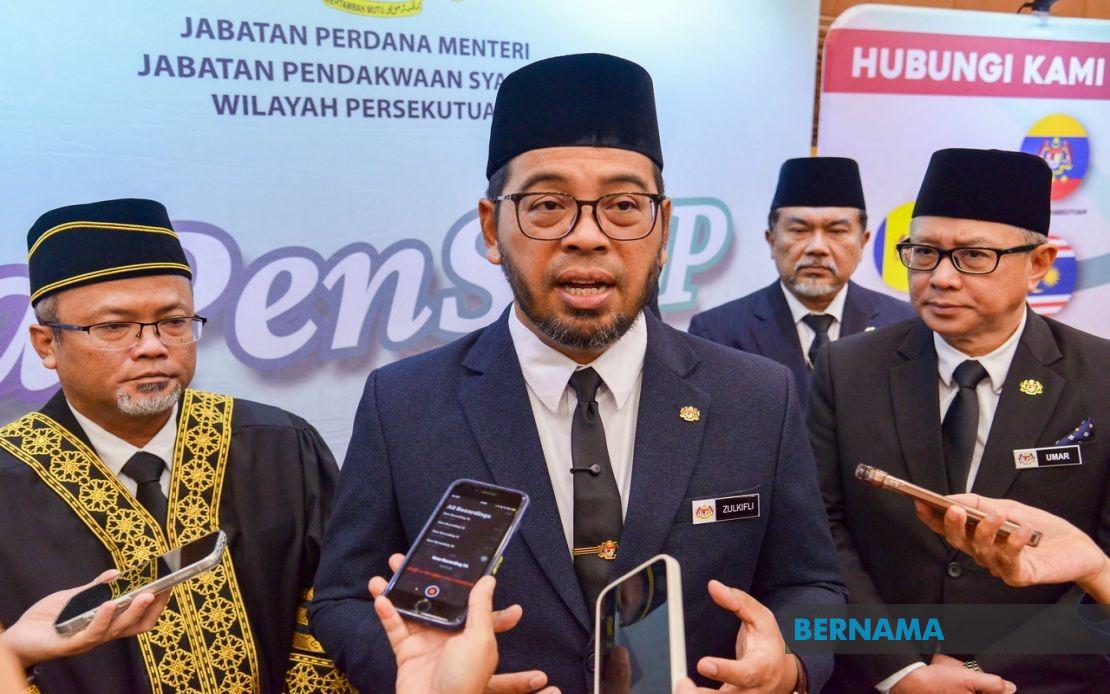
The Prime Minister's Department (Religious Affairs) has announced plans to investigate allegations that a government reference number was improperly employed to validate marriage documentation for the Rohingya community in Malaysia. Minister Dr Zulkifli Hasan made the disclosure at the second Malaysian Syariah Prosecutors Conference in Putrajaya on July 15, confirming that his department would launch a formal inquiry once complete information became available. The investigation centres on a marriage declaration letter purportedly issued by the Malaysia Rohingya Ulama Council that circulated widely on social media platforms, featuring the alphanumeric reference "JAKIM.PERH/LN.800-7(5)" attributed to the Department of Islamic Development Malaysia.
The emergence of this document has triggered significant concern within Malaysia's Islamic regulatory framework, particularly regarding the legitimacy of marriage recognition among the Rohingya population. State-level religious authorities have already distanced themselves from the letter's validity. The Perak Islamic Religious Department (JAIPk) explicitly stated it does not acknowledge the document as an authentic or acceptable instrument for legal purposes. More broadly, state religious bodies have signalled that marriages involving Rohingya individuals cannot be processed through formal registration channels due to unresolved policy questions that remain under review by state governments.
This development exposes deeper structural challenges in how Malaysia manages religious documentation and community recognition within an increasingly diverse population. The Rohingya situation in Malaysia presents unique complications, as the group exists in a legal grey zone—neither fully integrated into the national religious administrative system nor formally excluded from it. The attempted use of a JAKIM reference number suggests either deliberate misrepresentation or confusion about the proper procedures and authorities capable of legitimating such documents. The viral spread of the document underscores how quickly misinformation can circulate through social media, potentially creating false expectations among vulnerable communities.
Dr Zulkifli acknowledged during his remarks that the broader landscape of unaccredited religious content delivery online represents another pressing concern requiring immediate attention. Unqualified individuals posting religious lectures and teachings on social media platforms without proper credentials has become increasingly common, yet poses regulatory challenges that transcend simple administrative solutions. However, the minister emphasised that responsibility for monitoring and enforcing teaching accreditation standards fundamentally rests with state governments rather than federal authorities, creating a distributed regulatory environment that can sometimes lack coordination.
The delineation of authority between federal and state governments in religious affairs has created ambiguities that complicate enforcement efforts. While the Prime Minister's Department can establish guidelines and ensure speakers appearing on government-affiliated platforms hold proper accreditation, broader oversight of online religious content falls under state jurisdiction. This jurisdictional division, while structurally sound in Malaysia's federal system, has created gaps where problematic content or false documentation can circulate with limited immediate intervention. Dr Zulkifli indicated that his department is actively examining how best to address online religious teaching without proper credentials, though he cautioned that any approach must carefully navigate complex legal terrain.
The challenge of verifying credentials and preventing misuse of government reference numbers has grown as digital platforms democratise access to religious instruction. Many individuals lacking formal qualifications now reach large audiences through social media, sometimes providing incorrect religious guidance or, as in the Rohingya marriage case, potentially facilitating fraudulent documentation schemes. Dr Zulkifli noted that his department consistently verifies accreditation status before inviting religious scholars to appear on official media, but this level of scrutiny remains unavailable across the wider internet ecosystem.
From a practical standpoint, the Rohingya marriage document incident illustrates vulnerabilities within Malaysia's Islamic administrative systems when confronted with novel circumstances. The Rohingya population's unique status—lacking full citizenship recognition in many regional contexts while residing in Malaysia—creates situations where standard procedures may not apply cleanly. When communities cannot access ordinary registration mechanisms, alternative documentation systems sometimes emerge, occasionally blurring the line between improvised solutions and fraudulent representations. Clarifying proper channels for Rohingya marriage recognition would address not only this immediate issue but potentially prevent future document-related problems.
Dr Zulkifli used the platform of the Syariah Prosecutors Conference to highlight the necessity of modernising Malaysia's Islamic legal infrastructure to contend with emerging challenges, particularly those involving digital crimes and online misconduct. He stressed that Syariah prosecutors must develop advanced competencies in digital forensics, data analysis, and technological investigation methods to effectively prosecute increasingly sophisticated offences. This emphasis reflects recognition that religious law enforcement cannot remain confined to traditional methodologies when wrongdoing increasingly occurs through digital channels.
Coordination between agencies will prove essential for addressing both the immediate Rohingya document matter and the broader issue of unaccredited online religious content. Dr Zulkifli specifically identified the Malaysian Communications and Multimedia Commission (MCMC), the Royal Malaysia Police (PDRM), and the Attorney General's Chambers as critical partners in strengthening Syariah enforcement capacity. Effective prosecution of cyber-related religious offences requires these bodies to work seamlessly, sharing intelligence and coordinating enforcement actions across jurisdictional boundaries.
The investigation into the Rohingya marriage documents will likely establish precedent for how Malaysia handles similar cases involving potentially fraudulent use of government reference numbers to legitimise community documentation. Whether the reference number was deliberately forged or mistakenly attributed requires factual determination. The outcome could prompt policy revisions governing how JAKIM reference numbers are issued, monitored, and prevented from misuse. Additionally, this matter may catalyse broader discussions about formalising recognition processes for Rohingya community matters within Malaysia's existing religious legal structures.
For the Rohingya community specifically, the investigation underscores both the critical importance of legitimate documentation and the risks posed by unofficial channels attempting to fill institutional gaps. Many Rohingya individuals lack formal marriage recognition from Malaysian authorities, creating genuine hardship regarding inheritance, guardianship, and spousal rights. Rather than relying on improvised or questionable documents, establishing transparent and accessible procedures for marriage registration would serve both the community's interests and Malaysia's commitment to regulatory integrity.
As Malaysia continues developing its approach to religious governance in an increasingly complex social environment, this incident provides valuable lessons about documentation security, jurisdictional coordination, and the need to balance community support with regulatory enforcement. The results of the Prime Minister's Department investigation will offer important insights into how JAKIM reference numbers are managed, who has authority to issue official communications on behalf of Islamic authorities, and what additional safeguards might prevent similar incidents. Ultimately, establishing clarity around these processes protects both Malaysia's religious administrative systems and the vulnerable communities depending on legitimate documentation for legal recognition.

